Nitrogen Generators
Parker Nitrogen Generators for LC/MS and On-Demand Laboratory Gas Supply
Shop nitrogen generation systems designed to support reliable LC/MS performance, reduce cylinder dependence, and provide a continuous source of high-purity nitrogen
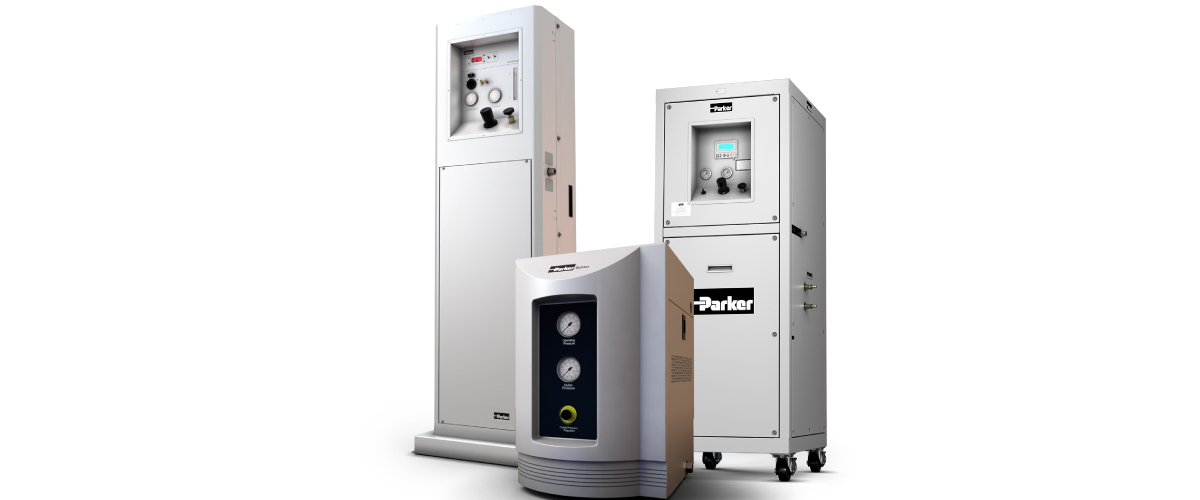
Parker nitrogen generators provide laboratories with a continuous, on-demand nitrogen supply for LC/MS applications and other analytical workflows that require dependable gas quality, stable delivery, and reduced reliance on cylinders. By producing nitrogen directly from compressed air, these systems help laboratories simplify gas management, reduce delivery interruptions, and improve day-to-day operating efficiency.
Built around advanced Pressure Swing Adsorption (PSA) technology, Parker nitrogen generators separate nitrogen from standard compressed air and deliver it at controlled pressures suitable for instrument use. This approach eliminates the storage and handling concerns associated with high-pressure gas cylinders while providing a more predictable and scalable source of nitrogen for laboratories with ongoing LC/MS demand.
For mass spectrometry laboratories, nitrogen purity, dryness, and consistent output can directly affect instrument uptime and method reliability. Parker systems are designed to achieve low dew points and nitrogen purity appropriate for LC/MS support, helping laboratories maintain stable performance across routine analytical work. Their quiet operation, energy efficiency, and minimal service requirements also make them attractive for facilities seeking a long-term gas generation strategy.
Parker nitrogen generators are commonly recommended for LC/MS environments where uninterrupted gas availability, long-term cost control, and reduced dependence on delivered cylinders are important. In addition to analytical laboratories, these systems can also support other manufacturing, industrial, and instrument-based processes that benefit from on-site nitrogen generation.
Why Laboratories Choose Parker Nitrogen Generators
- Provides a continuous, on-demand nitrogen source for LC/MS and related laboratory workflows
- Helps eliminate cylinder deliveries, storage requirements, and associated handling risks
- Uses PSA technology to generate nitrogen directly from compressed air
- Supports long-term cost stability and reduced dependence on outside gas supply logistics
- Designed for nitrogen purity and low dew point performance suitable for LC/MS support
- Offers quiet operation and energy-efficient day-to-day use
- Requires minimal routine maintenance compared with cylinder-based supply systems
- Recommended by leading LC/MS instrument manufacturers
Nitrogen Generation for LC/MS and Beyond
In LC/MS laboratories, a well-matched nitrogen generator can help improve workflow continuity by providing gas on demand without the delays and variability associated with tank replacement. This makes nitrogen generators especially valuable in laboratories running instruments daily, scaling throughput, or seeking to reduce manual intervention in gas supply management. Because the systems convert facility compressed air into usable nitrogen, they also support a cleaner and more centralized approach to laboratory infrastructure.
For users evaluating Parker nitrogen generators, the primary advantages typically include supply independence, simplified installation planning, predictable operating costs, and reduced disruption to analytical schedules. These benefits make nitrogen generation an increasingly common choice for laboratories moving away from bulk gas delivery and toward more self-sufficient instrument support systems.