Ultra HPLC

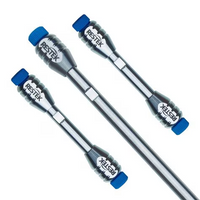
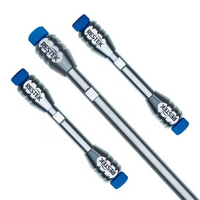
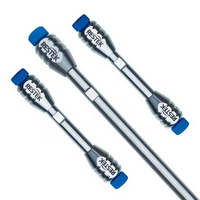
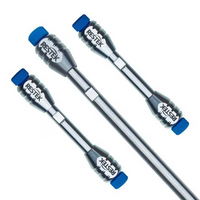
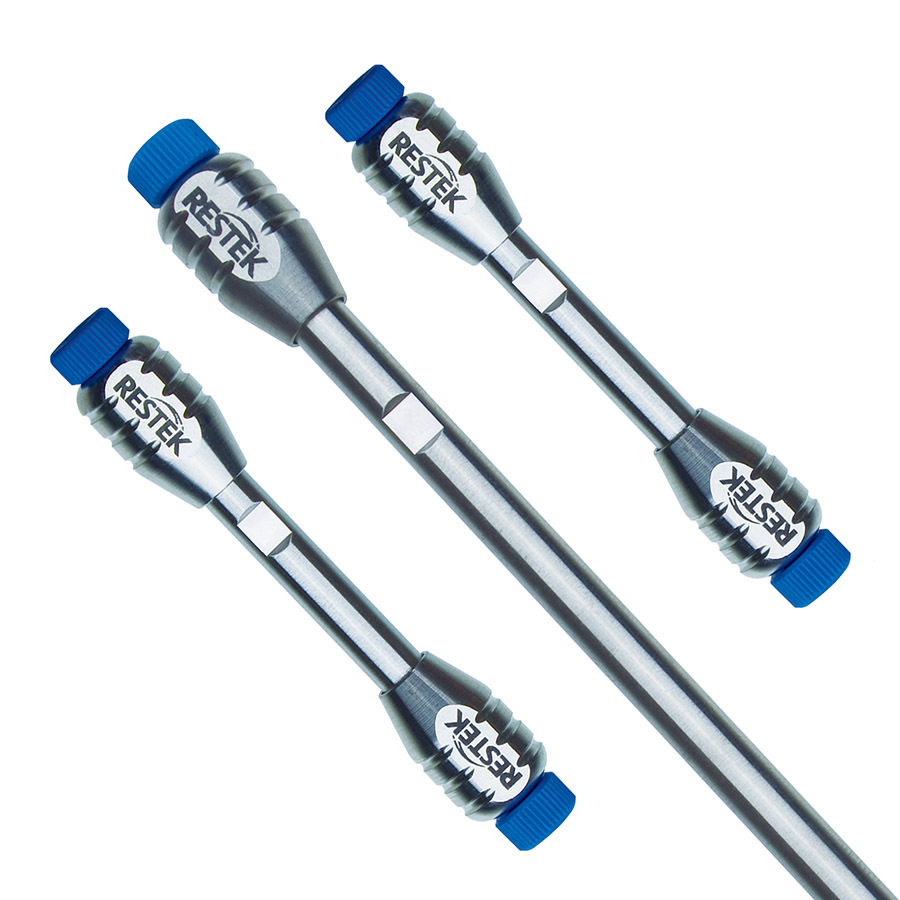
Restek Ultra HPLC Columns

Restek Ultra HPLC Columns are engineered for dependable reversed-phase performance across a wide range of analytical applications. Built with high-purity silica and optimized bonding chemistry, Ultra columns provide consistent retention, sharp peak shape, and reliable reproducibility for routine HPLC workflows.

Designed for laboratories that require robustness without sacrificing efficiency, Restek Ultra phases support method development, quality control, environmental testing, food safety, and pharmaceutical analysis. Their balanced surface chemistry ensures predictable selectivity and stable performance under typical HPLC pressure conditions.

Available in multiple dimensions and stationary phase options, Restek Ultra HPLC Columns allow chromatographers to tailor separation performance to sample complexity, throughput needs, and instrument configuration—making them a versatile choice for standard analytical systems.

Performance Characteristics

  • High-purity silica for consistent efficiency and reproducibility
  • Optimized bonded phases for stable reversed-phase separations
  • Reliable peak symmetry across a broad range of analytes
  • Compatible with conventional HPLC pressure ranges
  • Multiple particle sizes and dimensions to support method flexibility

Typical Applications

  • Pharmaceutical and impurity profiling
  • Food and beverage analysis
  • Environmental contaminant monitoring
  • Clinical and bioanalytical testing
  • General-purpose reversed-phase method development

Chrom Tech is an authorized distributor of Restek chromatography products and maintains inventory to support fast shipment and technical selection guidance for your laboratory.
Ultra HPLC Phases — Expand/Collapse All

Key Definitions
USP Phase Classification (L1, L7, L11, etc.)
The United States Pharmacopeia (USP) categorizes HPLC stationary phases by bonded chemistry and selectivity. Examples include L1 (C18), L7 (C8), L11 (Phenyl), L43 (PFP), and L3 (Bare Silica).
Polar-Embedded Phase
A reversed-phase column containing a polar functional group embedded within the alkyl chain. This design improves peak shape for basic compounds and enhances retention of polar analytes under highly aqueous conditions.
Carbon Load
The percentage of carbon bonded to the silica surface. Higher carbon load generally increases hydrophobic retention, while lower carbon load provides reduced retention strength.
End-Capping
A secondary bonding process that reacts residual silanol groups on the silica surface to reduce unwanted secondary interactions and improve peak symmetry—especially for basic analytes.
Pore Size (Å)
The average diameter of pores within the silica particles. Standard 100 Å pores are suitable for small-molecule separations, while larger pores are typically used for peptides and proteins.
HILIC (Hydrophilic Interaction Liquid Chromatography)
A chromatographic mode that enhances retention of polar compounds using high organic mobile phases and a polar stationary phase, such as bare silica or amino columns.
Monomeric Bonding
A single-layer bonding process that attaches individual alkyl ligands to the silica surface, typically resulting in predictable retention and broad applicability in general-purpose separations.
Frequently Asked Questions
What is the difference between Ultra C18 and Ultra C8?
Ultra C18 (L1) provides stronger hydrophobic retention due to its longer alkyl chain, making it ideal for general-purpose reversed-phase separations. Ultra C8 (L7) offers shorter-chain chemistry with reduced retention and often improved peak shape for basic compounds.
Which Ultra phase is best for aromatic compounds?
Ultra Biphenyl and Ultra Aromax provide enhanced π–π interaction selectivity for aromatic and conjugated analytes. Ultra Aromax delivers stronger retention when conventional phenyl phases are not sufficient.
Can Ultra columns be used with 100% aqueous mobile phases?
Yes. Certain phases such as Ultra IBD are compatible with 100% aqueous mobile phases and provide improved retention for polar compounds under highly aqueous conditions.
Are Restek Ultra columns suitable for LC-MS?
Yes. Many Ultra phases, including PFP Propyl, Biphenyl, and Aromax, are well suited for LC-MS applications and perform reliably with acidic mobile phases and gradient methods.
What particle sizes are available in the Ultra HPLC line?
Restek Ultra HPLC Columns are commonly available in 3 µm and 5 µm spherical particle sizes with 100 Å pore size, supporting a wide range of analytical HPLC applications.