
Understanding Endcapping in HPLC Columns
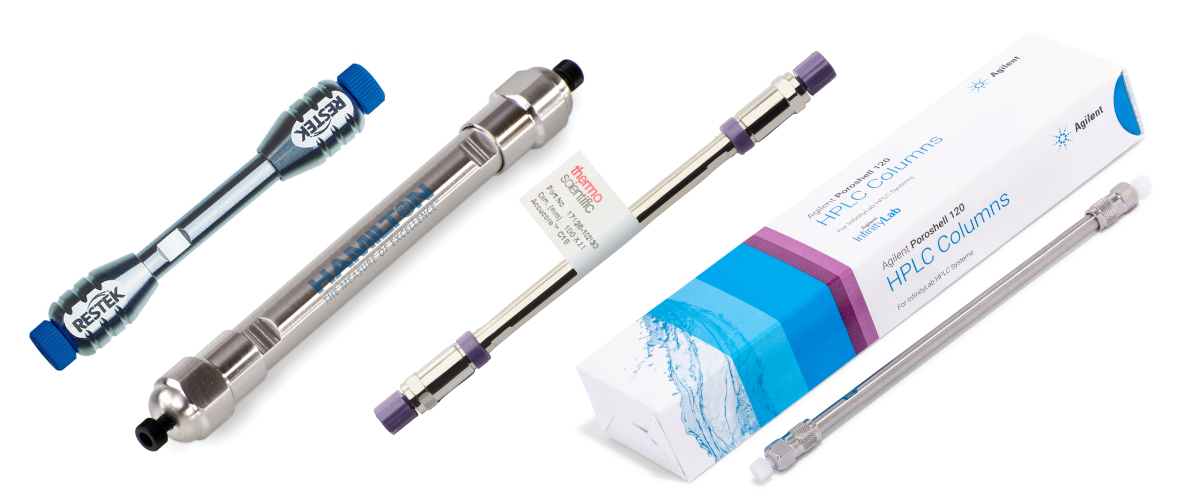
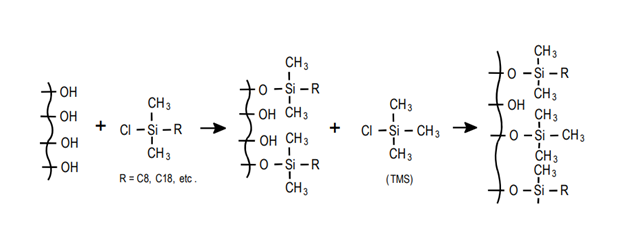
Endcapping is an important chemical modification used to improve the performance and stability of HPLC columns. After the main bonded phase is attached to the silica surface, some free silanol groups remain exposed. Endcapping reacts those remaining silanols with small trimethylsilyl (TMS) groups to reduce their activity.
This treatment helps reduce unwanted secondary interactions between analytes and residual silanol sites, improving peak symmetry, reproducibility, and column lifetime.
What Is Double Endcapping?
Double endcapping refers to repeating the endcapping process to further deactivate residual silanol groups. This additional treatment minimizes ion-exchange interactions and can improve column stability, especially in the mid-pH range of about pH 4 to 8, where single endcapping may not completely shield all remaining silanol sites.
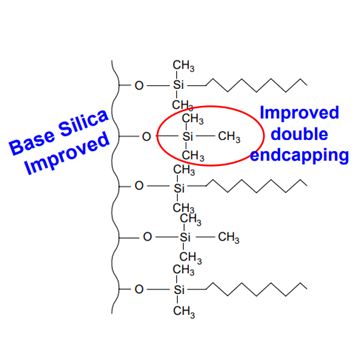
For analytical methods operating in neutral or slightly basic conditions, double- or triple-endcapped columns are often preferred. They help maintain more consistent selectivity, reduce tailing for basic compounds, and provide additional protection against silica dissolution at elevated pH.
When to Use a Non-Endcapped HPLC Phase
Non-endcapped phases are often used for very low-pH separations or when a small amount of silanol activity improves selectivity. One example is the Agilent ZORBAX StableBond line, which uses a non-endcapped, sterically protected bonded phase designed for extreme acidic stability down to pH 1.
Agilent StableBond Sterically Protected Surface Reaction
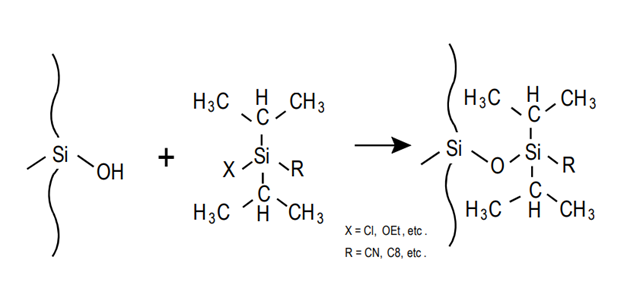
The StableBond series uses a sterically protected silane chemistry that resists hydrolysis and provides longer lifetime under low-pH conditions. Available selectivities include C18, C8, CN, Phenyl, and C3.
HPLC Columns for LC/MS Applications
When selecting HPLC columns for LC/MS systems, chromatographers often prioritize sensitivity, resolution, and detector compatibility. Endcapped C18 phases are commonly recommended for LC/MS because they reduce tailing of basic compounds and support cleaner ionization profiles.
Most LC/MS methods operate at lower flow rates and use narrow-bore columns, such as 2.1 mm ID, to conserve solvent and increase sensitivity. For high-throughput separations, the Agilent InfinityLab Poroshell 120 EC-C18 column is a strong option because it provides high resolution, controlled backpressure, and improved tolerance for dirtier matrices such as plasma or serum.
Best Practices for Column Longevity
To maximize column lifetime, the mobile phase pH should always be kept within the bonded phase’s recommended stability range. Endcapped columns are generally preferred for mid-pH applications, while non-endcapped columns are better suited to highly acidic methods when the phase chemistry is designed for low-pH stability.
Additional protective steps include using HPLC syringe filters, HPLC guard columns, and Idex fittings to reduce particulate contamination and protect the analytical column from premature fouling.
Choosing the right bonded phase depends on the analyte chemistry, pH conditions, and system requirements. Matching endcapping strategy to the method can improve peak shape, reduce secondary interactions, and support longer, more reproducible column performance.