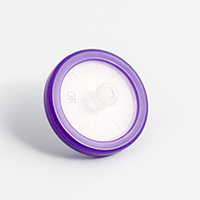
Syringe Filters
Syringe Filters for Sample Cleanup, Particle Removal, and Reliable HPLC Workflows
Shop syringe filters in multiple membrane types, pore sizes, and diameters designed to help protect columns, reduce particulate contamination, and support consistent analytical performance

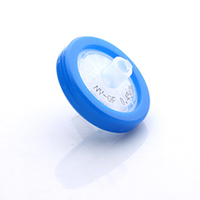
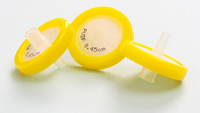
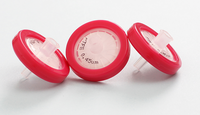
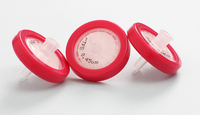
As chromatography has evolved toward higher pressures and smaller column dimensions, particle control has become critical to achieving reliable and reproducible results. Chrom Tech’s HPLC syringe filters are designed to prevent particulates from entering your system, minimizing buildup and reducing instrument downtime. Using the correct syringe filter protects sensitive components, extends column life, and maintains consistent data quality across applications.
- Available in two standard diameters: 13 mm and 30 mm
- Pore sizes: 0.2 µm and 0.45 µm for fine or general filtration
- Glass fiber filters available in 1.2 µm and 0.7 µm pore sizes
- Offered in seven color-coded membrane types for easy identification
Choose from a wide range of membrane materials, including Nylon, PTFE, PVDF, PES, Polypropylene (PP), Cellulose Acetate (CA), and Glass Fiber (GF)—each engineered for specific chemical compatibilities and performance needs. Learn more about selection in our guide on how to choose a syringe filter , or contact sales@chromtech.com for assistance.
All available membranes can also be purchased as sheets for custom applications.
| SKU | DESCRIPTION |
PORE SIZE
|
DIAMETER
|
MEMBRANE
|
GF PREFILTER
|
|---|---|---|---|---|---|
| SYRINGE FILTERS | |||||
| F13-CA020 | CA Syringe Filter | 0.2 µm | 13 mm | CA | — |
| F13-CA045 | CA Syringe Filter | 0.45 µm | 13 mm | CA | — |
| F13-NY020 | Nylon Syringe Filter | 0.2 µm | 13 mm | Nylon | — |
| F13-NY045 | Nylon Syringe Filter | 0.45 µm | 13 mm | Nylon | — |
| F13-PP020 | PP Syringe Filter | 0.2 µm | 13 mm | PP | — |
| F13-PP045 | PP Syringe Filter | 0.45 µm | 13 mm | PP | — |
| F13-PS020 | PES Syringe Filter | 0.2 µm | 13 mm | PES | — |
| F13-PS045 | PES Syringe Filter | 0.45 µm | 13 mm | PES | — |
| F13-PT020 | PTFE Syringe Filter | 0.2 µm | 13 mm | PTFE | — |
| F13-PT045 | PTFE Syringe Filter | 0.45 µm | 13 mm | PTFE | — |
| F13-PV020 | PVDF Syringe Filter | 0.2 µm | 13 mm | PVDF | — |
| F13-PV045 | PVDF Syringe Filter | 0.45 µm | 13 mm | PVDF | — |
| F13-GF070 | Glass Fiber Syringe Filter | 0.7 µm | 13 mm | Glass Fiber | — |
| F13-GF120 | Glass Fiber Syringe Filter | 1.2 µm | 13 mm | Glass Fiber | — |
| F30-CA020 | CA Syringe Filter | 0.2 µm | 30 mm | CA | — |
| F30-CA045 | CA Syringe Filter | 0.45 µm | 30 mm | CA | — |
| F30-GF070 | Glass Fiber Syringe Filter | 0.7 µm | 30 mm | Glass Fiber | — |
| F30-GF120 | Glass Fiber Syringe Filter | 1.2 µm | 30 mm | Glass Fiber | — |
| F30-NY020 | Nylon Syringe Filter | 0.2 µm | 30 mm | Nylon | — |
| F30-NY045 | Nylon Syringe Filter | 0.45 µm | 30 mm | Nylon | — |
| F30-PP020 | PP Syringe Filter | 0.2 µm | 30 mm | PP | — |
| F30-PP045 | PP Syringe Filter | 0.45 µm | 30 mm | PP | — |
| F30-PS020 | PES Syringe Filter | 0.2 µm | 30 mm | PES | — |
| F30-PS045 | PES Syringe Filter | 0.45 µm | 30 mm | PES | — |
| F30-PT020 | PTFE Syringe Filter | 0.2 µm | 30 mm | PTFE | — |
| F30-PT045 | PTFE Syringe Filter | 0.45 µm | 30 mm | PTFE | — |
| F30-PV020 | PVDF Syringe Filter | 0.2 µm | 30 mm | PVDF | — |
| F30-PV045 | PVDF Syringe Filter | 0.45 µm | 30 mm | PVDF | — |
| F25-NY020GF | Nylon Syringe Filter, GF Prefilter | 0.2 µm | 25 mm | Nylon | Yes |
| F13-NY020GF | Nylon Syringe Filter, GF Prefilter | 0.2 µm | 13 mm | Nylon | Yes |