Gas Generators

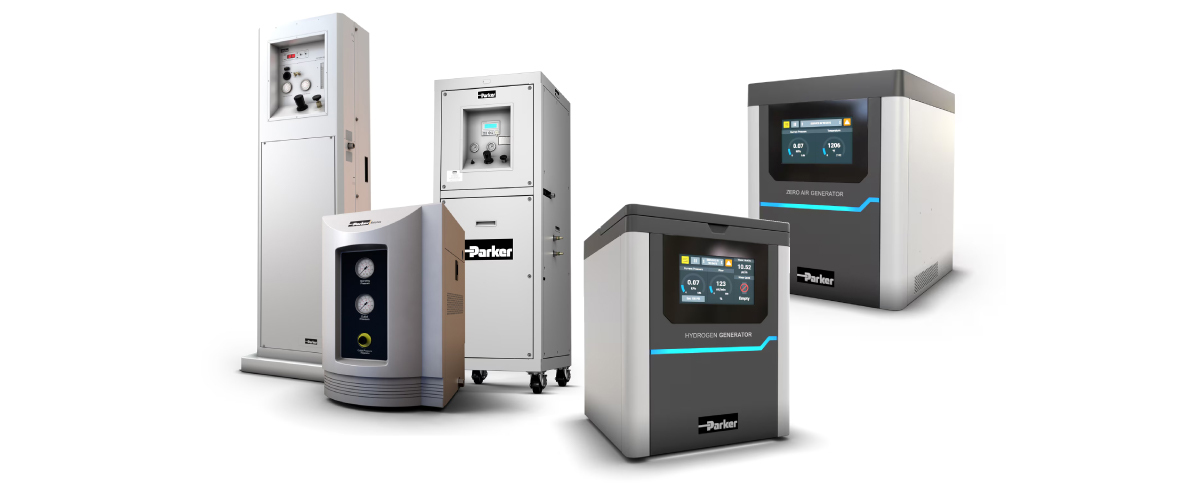
Parker lab gas generators provide on-demand, high-purity gas for chromatography and analytical instruments—helping labs replace cylinders with a cleaner, safer, and more consistent gas source. Chrom Tech offers Parker systems engineered for dependable performance across daily GC and LC/MS workflows, including Zero Air, Hydrogen, Nitrogen, and integrated FID Gas Stations.

By generating gas at the point of use, Parker generators help reduce the logistics and risks tied to cylinders, including storage concerns, changeout downtime, and supply interruptions. These systems are built for simple installation, stable flow delivery, and instrument-appropriate purity—supporting consistent baselines, reliable detector response, and repeatable analytical results.

For added gas quality control, Parker accessories like Hydrocarbon Scrubbers and Membrane Air Dryers help further condition supply air by reducing hydrocarbons and moisture where ultra-clean, dry gas is required. Pairing the right generator with the right conditioning components helps maximize uptime and protect sensitive detectors and instruments.

Need help selecting the right Parker configuration for your lab? Contact Chrom Tech for application guidance, recommended flow ranges, and the best match for your GC, FID, or LC/MS setup.

Parker Gas Generator Categories

Explore Parker gas generators and stations for clean, reliable GC and LC/MS gas supply with simplified installation and consistent performance.

Key Definitions
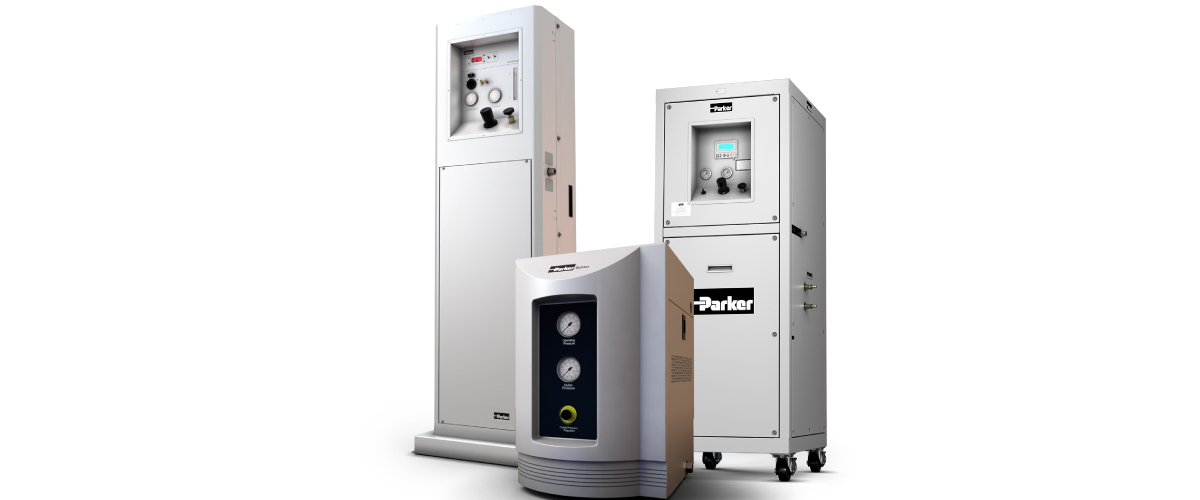
Parker Gas Generators
Laboratory systems that generate high-purity gases on demand—including hydrogen, nitrogen, and zero air—for chromatography and analytical instruments, eliminating cylinders while providing consistent flow and purity for GC, FID, and LC/MS applications.
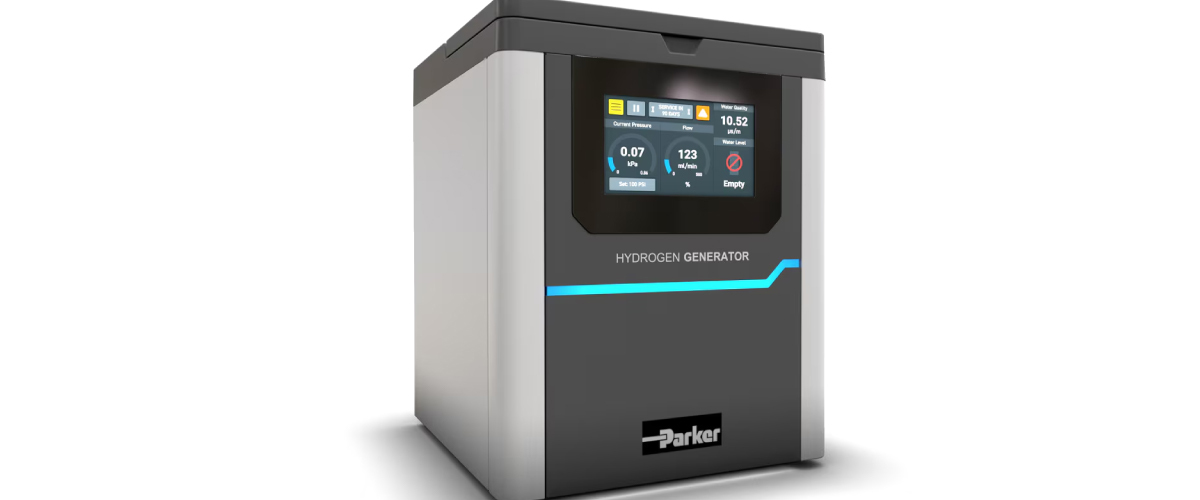
Hydrogen Gas Generator
A point-of-use system that produces high-purity hydrogen for GC carrier gas or FID fuel, helping reduce cylinder handling risks while delivering stable flow for consistent detector performance.
Nitrogen Gas Generator
An on-site nitrogen supply solution designed for LC/MS and analytical instruments, delivering clean, dry nitrogen continuously without reliance on delivered cylinders.
Zero Air Generator
A system that removes hydrocarbons and moisture from compressed air to produce ultra-clean air for GC applications, supporting stable baselines and reliable detector operation.
FID Gas Station
An integrated laboratory gas system combining hydrogen and zero air generation in a single unit, designed to support flame ionization detectors with simplified installation and consistent gas delivery.
Hydrocarbon Scrubber
A gas-conditioning component that removes trace hydrocarbons from compressed air or gas streams, helping improve GC baseline stability and protect sensitive detectors from contamination.
Membrane Air Dryer
A passive drying system that removes moisture from compressed air using selective membranes, providing dry supply air for gas generators and helping prevent condensation-related performance issues.
Frequently Asked Questions
Why choose Parker gas generators instead of cylinders?
Parker gas generators provide on-demand gas at the point of use, eliminating cylinder storage, reducing handling risks, and minimizing downtime from changeouts while delivering consistent purity and flow.
Which Parker generator is best for GC and FID applications?
For GC and FID systems, Parker Hydrogen Generators and Zero Air Generators supply clean, stable gases essential for reliable flame ionization detection and consistent chromatographic performance.
Are Parker nitrogen generators compatible with LC/MS?
Yes. Parker nitrogen generators deliver clean, dry nitrogen suitable for many LC/MS systems, helping support stable operation without relying on delivered cylinders.
What is an FID gas station?
An FID gas station combines hydrogen and zero air generation into a single compact system, simplifying installation while providing the gases required for flame ionization detectors.
Do I need Hydrocarbon Scrubbers or Membrane Air Dryers?
These conditioning components help further reduce hydrocarbons and moisture in supply air, improving gas quality and protecting sensitive detectors—especially in applications requiring ultra-clean, dry gas.