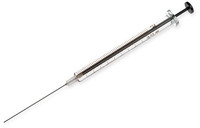
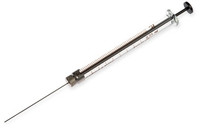
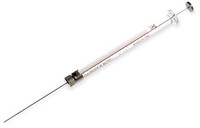
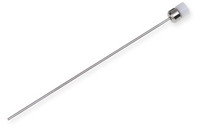
Manual HPLC Valve Syringes
Hamilton Manual HPLC Valve Syringes
Precision blunt-needle syringes for IDEX, Rheodyne, Upchurch, Valco, Beckman Coulter, Altex, and SSI manual valve injections
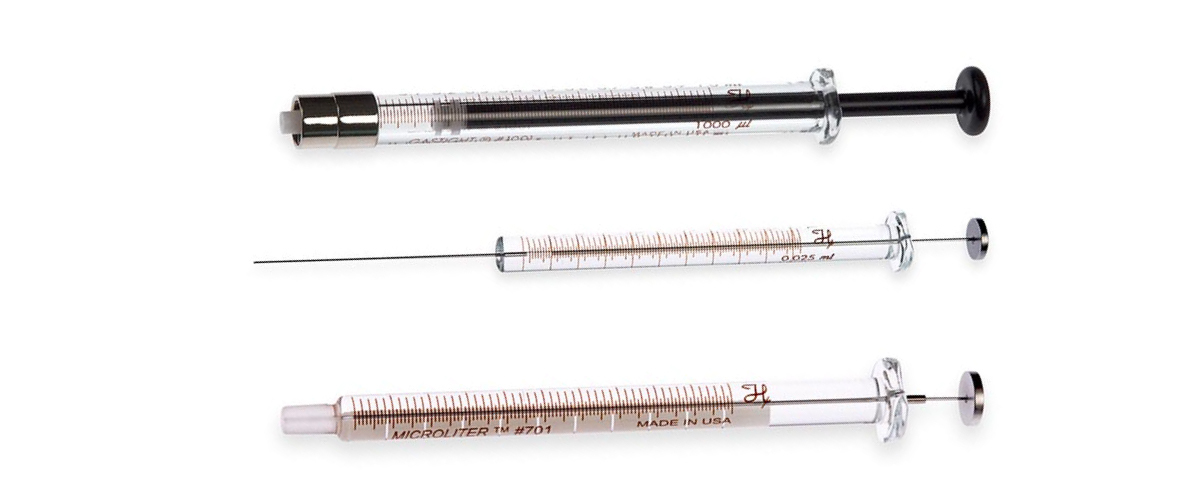
Hamilton manual HPLC valve syringes are designed for precise sample loading into manual liquid chromatography injection valves used across analytical and chromatography workflows. Chrom Tech supplies Hamilton syringes as an authorized distributor, helping laboratories select the correct syringe configuration for IDEX valves, including Rheodyne and Upchurch styles, as well as Valco, Beckman Coulter, Altex, and SSI manual injection valve systems. These syringes are built for controlled LC sample introduction where needle geometry, fit, and repeatable handling directly affect injection consistency and long-term valve performance.
Hamilton manual HPLC syringes are commonly configured with point style 3 blunt needles and 22 or 22s gauge options for compatibility with many high-pressure manual valve ports. The blunt, electropolished needle design helps the syringe slide more smoothly into the injection port while reducing wear on critical seals. This makes these syringes especially useful in laboratories that perform frequent manual injections and need dependable valve loading, accurate volume control, and long service life from both the syringe and the injection system.
Why Hamilton Manual HPLC Valve Syringes Are Used
Manual HPLC valve injection remains important in many laboratories for method development, routine analysis, system troubleshooting, and workflows where direct operator control is preferred. In these setups, the syringe must do more than hold a sample. It must align correctly with the injection valve, enter the port smoothly, and support controlled transfer into the loop without damaging valve seals or introducing unnecessary variation. Hamilton manual HPLC valve syringes are used because they are designed specifically around these LC valve requirements.
The selection of an HPLC valve syringe is influenced by the type of injection valve, the sample properties, and the injection volume. Because different manual valve platforms and loop sizes can require different syringe configurations, Hamilton offers a range of HPLC syringe options matched to established valve families. This helps laboratories choose a syringe based on actual LC injection conditions rather than relying on general-purpose syringe designs that may not provide the same fit or performance.
Built for Manual Valve Compatibility and Seal Protection
A key feature of Hamilton manual HPLC valve syringes is the blunt, electropolished needle construction used for many LC valve applications. Point style 3 blunt needles are widely used in manual HPLC injection because they are designed to move smoothly into high-pressure valve ports while helping reduce wear on the injection port seals. Over time, this can support longer valve seal life and more consistent daily performance, especially in laboratories where manual injections are performed frequently.
These syringes are commonly used with IDEX valve systems such as Rheodyne and Upchurch, along with Valco, Beckman Coulter, Altex, and SSI valve platforms. Matching the correct needle gauge, point style, and syringe volume to the valve family is important because the physical connection between syringe and valve directly influences loading consistency and operator control. A properly matched Hamilton syringe helps maintain smoother handling and more reliable manual injections.
Designed for Accurate Loop Filling and Repeatable LC Injections
Manual valve syringe selection also depends on how the sample loop is filled. In partial loop filling, the injection volume should remain below a portion of the loop capacity, while in complete loop filling the syringe must hold enough sample to fully load the loop with appropriate overfill. Because these injection techniques place different demands on syringe volume and handling, selecting the correct manual HPLC syringe is an important part of building a reliable injection workflow.
Hamilton manual HPLC valve syringes support this process by providing chromatography-specific syringe designs for accurate liquid handling and controlled sample introduction. Whether the application involves routine HPLC injections, loop loading for method development, or manual valve use across different instrument platforms, these syringes are designed to deliver the fit, precision, and seal-friendly operation needed for dependable LC performance.