
Connections for Manifolds and Caps
The right connection is essential for maintaining a reliable closed solvent system. Whether connecting mobile phase tubing to a reservoir cap or securing waste lines to a solvent waste manifold, properly matched fittings help prevent leaks, reduce solvent vapor exposure, and keep tubing securely in place.
Chrom Tech offers connection options for the most common laboratory tubing configurations. Compression fittings are available for rigid-wall tubing, typically 1/16" OD and 1/8" OD, while barbed fittings provide a secure connection for flexible tubing, most commonly 1/4" ID solvent waste lines. These connection styles cover the majority of HPLC and LCMS solvent delivery and waste collection applications.
In addition to these standard configurations, many other connection sizes and styles are available to accommodate specific instruments, tubing materials, and laboratory requirements. Whether you're building a complete closed solvent system or replacing individual components, Chrom Tech can help identify the proper connection for your application.


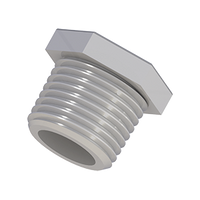
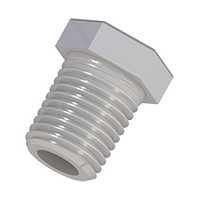
Closed Solvent System Connection
A fitting or adapter used to securely connect laboratory tubing to a mobile phase bottle cap, solvent waste manifold, or another component in a closed solvent delivery or waste collection system.
Compression Fitting
A connection that compresses a ferrule or sealing component around rigid-wall tubing to create a secure, leak-resistant fluid connection.
Barbed Fitting
A fitting with raised ridges designed to grip the inside of flexible tubing and help prevent the tubing from pulling loose during solvent delivery or waste collection.
Rigid-Wall Tubing
Laboratory tubing that maintains its shape under normal operating conditions and is commonly connected with compression fittings. Typical chromatography sizes include 1/16" OD and 1/8" OD tubing.
Flexible Tubing
Soft laboratory tubing that can bend easily and is commonly secured to a barbed fitting. A typical solvent waste line uses 1/4" ID flexible tubing.
Outside Diameter (OD)
The measurement across the outside of a tubing wall. Compression fittings are typically selected according to the tubing outside diameter.
Inside Diameter (ID)
The measurement across the open interior of a tube. Barbed fittings are commonly selected according to the tubing inside diameter.
Mobile Phase Reservoir Cap Connection
A connection that secures solvent inlet tubing, venting components, or other fluid-handling accessories to a mobile phase bottle cap.
Solvent Waste Manifold Connection
A fitting used to secure one or more instrument waste lines to a solvent waste manifold while helping maintain a closed waste collection system.
Why is the correct connection important in a closed solvent system?
A properly matched connection helps prevent leaks, reduce solvent vapor exposure, and keep tubing securely attached to a mobile phase bottle cap or solvent waste manifold.
What is the difference between a compression fitting and a barbed fitting?
Compression fittings are generally used with rigid-wall tubing and seal around the tubing outside diameter. Barbed fittings are designed for flexible tubing and grip the tubing inside diameter.
Which tubing sizes are commonly used with compression fittings?
Common chromatography configurations include compression fittings for 1/16" OD and 1/8" OD rigid-wall tubing. The fitting must match the exact tubing outside diameter.
Which tubing size is commonly used with solvent waste barbed fittings?
A common HPLC and LCMS solvent waste configuration uses 1/4" ID flexible tubing connected to a matching barbed fitting.
Should I select a fitting by tubing ID or OD?
Compression fittings are typically selected according to tubing outside diameter, or OD. Barbed fittings are usually selected according to tubing inside diameter, or ID.
Can the same fitting be used for rigid and flexible tubing?
Not usually. Rigid-wall tubing is generally connected with a properly sized compression fitting, while flexible tubing is typically connected with a matching barbed fitting. Tubing material and dimensions should be confirmed before selecting the connection.
Are connection sizes available beyond the common 1/16-inch, 1/8-inch, and 1/4-inch configurations?
Yes. Additional fitting sizes, tubing connections, adapters, and connection styles are available for specific instruments, tubing materials, and laboratory requirements.
Can these connections be used with both mobile phase caps and solvent waste manifolds?
Yes. Compatible fittings can be used to connect mobile phase tubing to reservoir caps or to secure instrument waste lines to solvent waste manifolds. The correct connection depends on the component port, tubing size, tubing material, and application.
How do I select the correct connection for my manifold or cap?
Identify the tubing material, tubing ID or OD, fitting style, component port, solvent chemistry, and intended use. Chrom Tech can help identify the proper connection when replacing an individual fitting or building a complete closed solvent system.