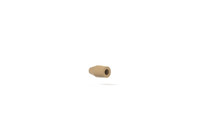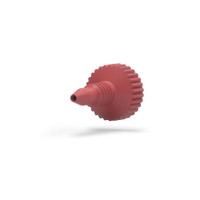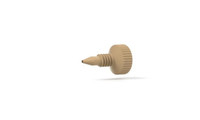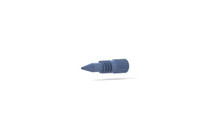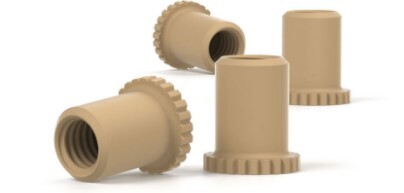
NanoPort Assemblies

HPLC NanoPort Assemblies

  • Designed for lab-on-a-chip and microfluidic applications
  • Wetted materials include PEEK and perfluoroelastomer

Idex (Upchurch Scientific®) NanoPort Assemblies deliver reliable, zero-dead-volume fluid connections for chip-based analytical systems. Engineered specifically for microfluidic and lab-on-a-chip workflows, NanoPort connections provide a secure interface between capillary tubing and microfabricated devices while maintaining uninterrupted fluid paths.

Once bonded in place, NanoPort assemblies can withstand operating pressures up to 500 PSI (34 bar). They are compatible with a wide range of substrates including silicon, quartz, glass, and select polymer materials. All NanoPort components are manufactured from inert, biocompatible PEEK (nuts and ports) and Perlast® perfluoroelastomer (ferrules and gaskets), ensuring excellent chemical resistance and suitability for sensitive analytical applications.

The NanoPort design prevents adhesive intrusion into the fluid pathway, eliminating a common source of contamination in chip-based connections. Because the tubing butts directly against the chip interface, NanoPort assemblies introduce virtually no additional internal volume, minimizing dispersion and preserving chromatographic performance.

When selecting the appropriate NanoPort Assembly, consider the following factors:

  • Tubing outer diameter and material
  • Chip hole diameter and thickness
  • Fitting configuration (one-piece or two-piece)
  • Nut head style (standard or headless)

Please note: Each NanoPort Assembly includes a fitting (one- or two-piece), NanoPort, gasket, a two-pack of preformed adhesive rings, and a clamp to secure the port during adhesive curing.


Key Definitions â–¸
NanoPort Assembly
A low-profile fluidic connection system designed to interface capillary tubing with microfluidic chips, providing a secure, zero-dead-volume connection for lab-on-a-chip applications.
Lab-on-a-Chip
A miniaturized analytical platform that integrates one or more laboratory functions onto a microfabricated chip, requiring precise, low-volume fluid connections.
Zero Dead Volume (ZDV)
A connection characteristic in which no excess internal volume exists at the interface, minimizing band broadening, sample dispersion, and carryover in microfluidic systems.
Perfluoroelastomer
A chemically inert elastomer material used in NanoPort gaskets and ferrules, offering excellent resistance to solvents, acids, and bases commonly used in analytical workflows.
PEEK (Polyether Ether Ketone)
A high-performance, biocompatible polymer used for NanoPort nuts and ports, valued for its chemical resistance, mechanical strength, and suitability for bioanalytical applications.
Adhesive Isolation Design
A NanoPort design feature that prevents adhesive from entering the fluid path during installation, preserving sample integrity and ensuring consistent analytical performance.
Frequently Asked Questions â–¸
What are NanoPort Assemblies used for?
NanoPort Assemblies create reliable, zero-dead-volume connections between capillary tubing and microfluidic chips in lab-on-a-chip and microanalytical applications.
What pressure can NanoPort Assemblies withstand?
Once installed, NanoPort Assemblies can withstand pressures up to 500 PSI (34 bar).
What materials are NanoPort Assemblies made from?
NanoPort Assemblies use biocompatible PEEK for ports and nuts, and perfluoroelastomer materials for ferrules and gaskets.
Which chip materials are compatible with NanoPorts?
NanoPorts can be bonded to silicon, quartz, glass, and select polymer-based microfluidic chips.
What is included with a NanoPort Assembly?
Each NanoPort Assembly includes the NanoPort, a one- or two-piece fitting, gasket, adhesive rings, and a clamp for curing.
Do NanoPort Assemblies add dead volume?
No. NanoPort Assemblies add virtually no internal volume, helping maintain peak shape and analytical performance.