
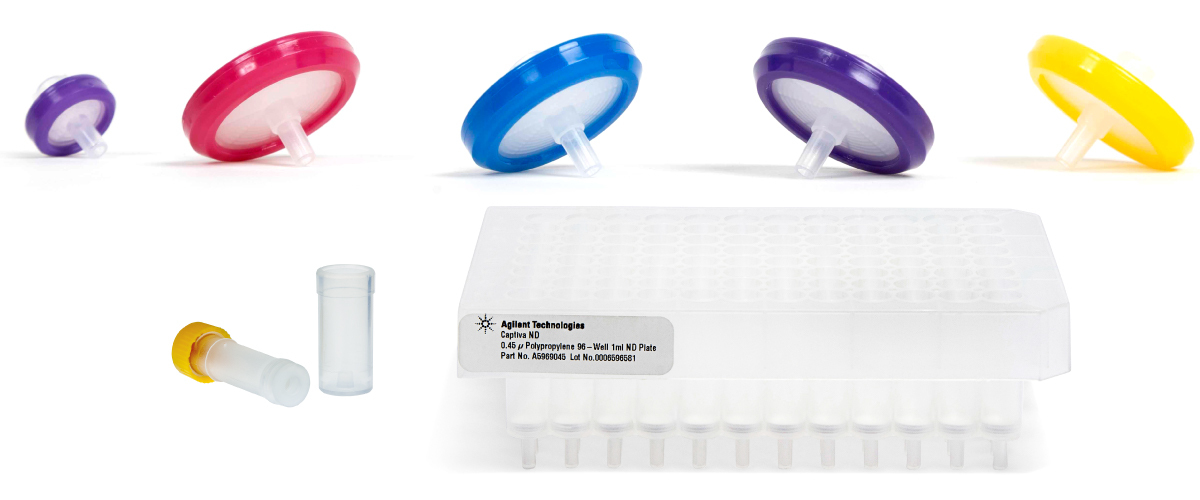
Proper sample filtration is an important step in chromatography because it affects both analytical accuracy and instrument protection. Cleaner samples help support more reliable results while also reducing wear on pump seals, injector valves, and columns. Among the most common filtration tools used in analytical laboratories is the syringe filter, valued for its simplicity, affordability, and broad range of membrane options.
Syringe filters are available in multiple membrane materials, pore sizes, and diameters, which gives laboratories flexibility across different sample types and solvent systems. Choosing the correct filter can improve sample cleanliness and help extend column life. For more membrane-specific guidance, see Chrom Tech’s related resource: How to Choose a Syringe Filter.
When a Standard Syringe Filter Is Not Enough
Many routine analytical samples can be filtered successfully with a standard single-layer syringe filter. But some samples contain enough particulate matter that the membrane clogs quickly, slowing filtration and increasing resistance. This is especially relevant in more difficult sample types, including particulate-heavy samples encountered in applications such as ethanol or environmental testing.
When this happens, adding a glass fiber prefilter can make filtration more practical and more efficient.
What a Glass Prefilter Does
A glass prefilter adds an initial filtration layer ahead of the main membrane. Its job is to capture larger particles before they reach the primary membrane surface. By intercepting the heaviest particulate load first, the prefilter helps prevent early membrane blockage and improves overall filtration performance.
In practical use, this can provide several benefits:
- Improved flow rate through the filter
- Reduced backpressure during manual filtration
- Longer usable life for each syringe filter
- Better handling of extra dirty or clog-prone samples
For laboratories filtering difficult matrices, these benefits can reduce frustration and improve consistency in sample prep.
When to Use a Syringe Filter with a Glass Prefilter
Glass prefilters are most useful when the sample is visibly dirty, contains suspended particulates, or tends to clog a standard membrane quickly. They are a strong option for extra dirty samples where filtration speed and membrane loading become a problem.
Examples from the current blog include difficult samples in ethanol and environmental applications, where the particulate burden may be high enough to justify a prefilter.
In these cases, a product such as a glass fiber prefilter syringe filter can provide better usability than a standard membrane-only filter.
When a Glass Prefilter May Not Be Necessary
Although prefilters are highly effective for challenging samples, they are not required for every workflow. For many routine analytical applications, a single-layer syringe filter is enough to prepare the sample for injection.
This matters because prefilter-equipped filters typically carry a slightly higher cost. If the sample is already relatively clean and does not clog the membrane easily, the added prefilter may not provide meaningful extra value.
Balancing Filtration Performance and Cost
Choosing whether to use a glass prefilter is often a balance between sample cleanliness and filtration efficiency. When clogging is frequent, the added prefilter layer can save time and reduce filter waste. When the sample is routine and easy to filter, a standard syringe filter is usually the more economical choice.
The goal is not to overcomplicate filtration, but to match the filter design to the sample challenge.
Chrom Tech Filtration Options and Support
Chrom Tech keeps a broad selection of syringe filters in stock, including versions with integrated glass prefilters, so laboratories can get the filtration products they need without delays. The current blog also emphasizes Chrom Tech’s focus on high-quality syringe filters at economical pricing, helping laboratories maintain performance while controlling consumables cost.
In addition to syringe filters, Chrom Tech also offers filter vials, filter plates, and other sample preparation tools designed to streamline analytical workflows.
For help selecting the right filtration option for your sample, visit the Chrom Tech website or connect with the Chrom Tech team for product guidance.