
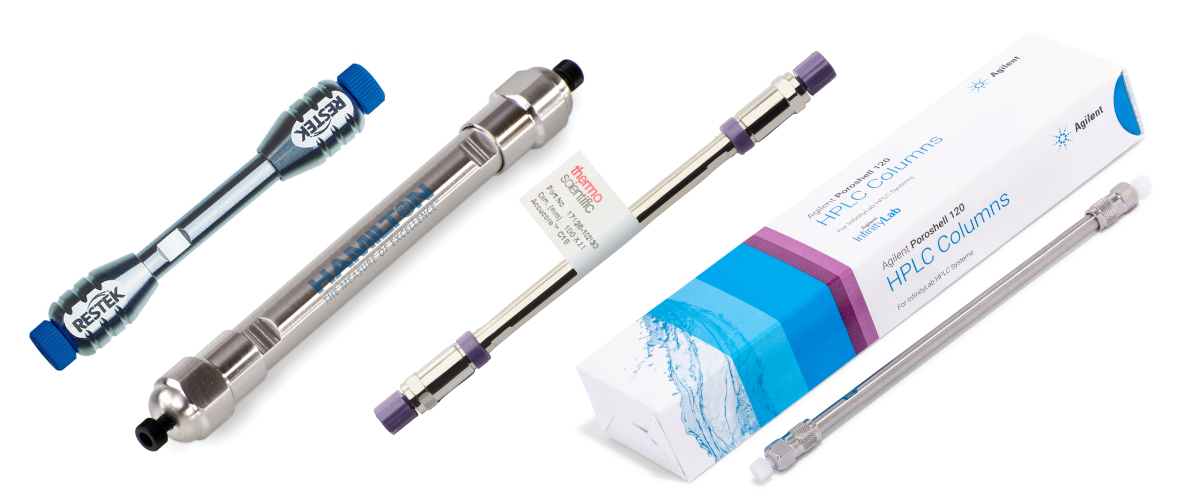
The temperature of an HPLC column plays an important role in determining retention time, selectivity, peak shape, and system pressure. Proper temperature control improves reproducibility and helps maintain consistent chromatographic performance across repeated analyses.
Whether an HPLC method is run near room temperature or under elevated conditions, understanding how temperature affects chromatographic behavior is essential for building robust methods and optimizing resolution.
Temperature and Retention Time
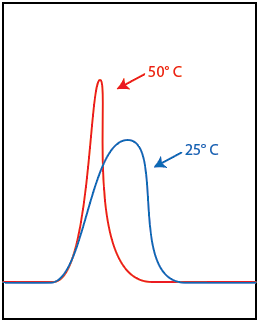
Retention time is the time required for an analyte to travel from injection to detection. In standard reversed-phase HPLC, columns are commonly operated around 40°C. Increasing column temperature generally reduces retention because solvent viscosity decreases and analyte diffusion improves, allowing compounds to elute more quickly.
Lowering the temperature usually increases retention and may improve the separation of closely eluting compounds in some methods. In UHPLC systems, elevated temperature can be especially useful because lower mobile phase viscosity helps reduce the high backpressure associated with smaller particle sizes.
Temperature and Selectivity
Column temperature can also influence selectivity, especially when compounds have similar structures or interact with the stationary phase in closely related ways. Changing the temperature alters the equilibrium between analytes and the stationary phase, which may improve or reduce the separation between peaks.
Even small temperature adjustments, such as ±2°C, can shift selectivity enough to improve resolution in challenging separations. Because of this, temperature is often used as a method optimization variable in HPLC method development.
Temperature Gradients and Peak Shape
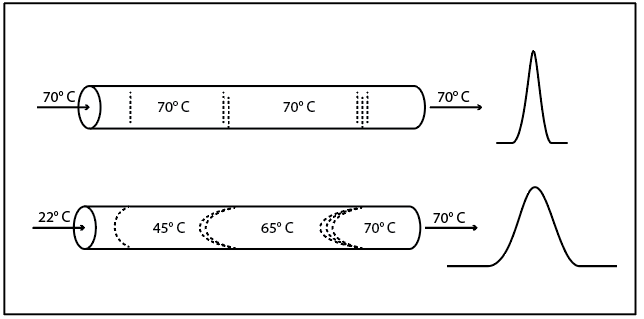
Temperature gradients can cause peak distortion. When the mobile phase entering the column is cooler than the column itself, uneven heating may occur and can contribute to broadened or tailing peaks.
As discussed by John Dolan in The Importance of Temperature, using an HPLC solvent preheater such as the HX-038-EXP inline heat exchanger helps bring the mobile phase closer to the column temperature before it enters the bed. This improves thermal equilibrium and helps preserve symmetrical, Gaussian peak shapes.
Why Temperature Control Matters
Maintaining a stable column temperature minimizes run-to-run variability and improves reproducibility. Even when elevated temperature is not required for a particular separation, consistent temperature control can improve method ruggedness and retention-time precision.
Temperature variation is a common cause of inconsistent chromatographic results. Ambient changes from HVAC cycling, seasonal shifts, or instrument location can influence column temperature if the column is not actively controlled.
Chrom Tech recommends using a column sleeve to maintain the column temperature approximately 5°C above ambient. For higher-temperature methods, preheating the mobile phase helps eliminate temperature gradients and preserve peak integrity.
- Lower mobile phase viscosity helps reduce system pressure.
- Faster analyte migration shortens run time and can improve productivity.
- Temperature adjustments can fine-tune selectivity for specific separations.
Pairing a heated HPLC column with a solvent heat exchanger or a column compartment oven helps maintain more stable operating conditions and more consistent chromatographic performance.

|

|
Quick Reference: HPLC Column Temperature Effects
| Effect | Lower Temperature | Higher Temperature |
|---|---|---|
| Retention Time | Longer (slower elution) | Shorter (faster elution) |
| Selectivity | May improve for certain analytes | May improve for complex mixtures |
| Peak Shape | Sharper with stable equilibration | Can distort if a temperature gradient exists |
| System Pressure | Higher (increased viscosity) | Lower (reduced viscosity) |