High-Performance Liquid Chromatography (HPLC) is widely used to separate complex mixtures into individual components for identification and quantitation. While HPLC delivers accurate, reproducible analytical results, it also generates solvent waste that may be flammable or hazardous. Safe waste collection and disposal are essential for protecting personnel, reducing exposure, and maintaining a compliant laboratory environment.
Understanding the Flow Path of an HPLC System
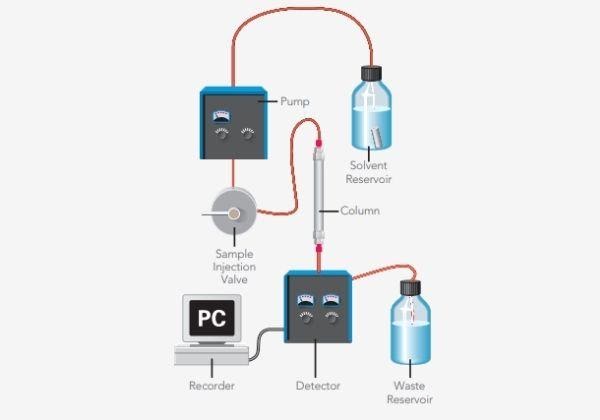
An HPLC pump delivers solvent from the reservoir bottle through the instrument. This solvent, or mobile phase, moves through the injector, column, and detector before reaching the waste reservoir. After the analysis is complete, the combined solvent and sample stream exits the detector and enters the waste collection system.
Many labs still use repurposed solvent bottles for this final collection step, sometimes with parafilm or incomplete sealing and without secondary containment. These practices can allow vapor release, increase spill risk, and create safety and compliance concerns.
A Safer Solution for HPLC Solvent Waste Collection
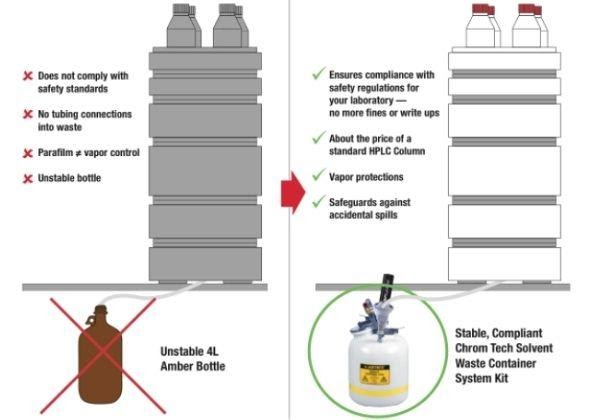
A purpose-built waste can helps create a closed, safer collection path for hazardous solvent waste. The Justrite HPLC Safety Disposal Can is designed as a compliant waste collection solution that helps reduce exposure and fire risk while keeping the waste system closed except when waste is actively being added or removed.
Key components of this setup include:
- Quick-connect fittings with one intake and one vent port
- 6-port manifold to allow multiple HPLC systems to feed into one waste container
- Activated carbon vapor filter on the vent to capture harmful vapors before they enter the lab environment
- Safety container design with a translucent polyethylene body for fluid-level checks, a stainless-steel flame arrester, and a spring-loaded lid that vents to prevent pressure buildup
This closed-system design helps contain solvent vapors while maintaining pressure balance inside the waste can.
Why Vapor Control and Secondary Containment Matter
Solvent vapors can create both exposure and fire concerns in the lab, so controlling vapor release is an important part of compliant HPLC waste handling. The activated carbon vapor filter helps trap volatile vapors before they escape. In most labs, filters are typically replaced every 3 to 6 months, depending on solvent load and usage.
Even with a closed primary container, secondary containment is still recommended to catch accidental overflow or leakage. If a Justrite can overflows, solvent exits through the vapor filter instead of backflowing into the HPLC system, which helps protect the instrument. A spill tray or bin provides an added layer of protection for the surrounding lab space.
How to Handle and Transfer HPLC Waste Safely
When the HPLC waste container is full, it can be disconnected using the push-button quick-connect. Once detached, the container seals automatically to help prevent leaks or spills during handling.
To move waste into an approved collection drum, use proper transfer precautions:
- Use antistatic wires to reduce static discharge risk during transfer
- Bond the waste container to the receiving drum
- Ground the receiving drum to a verified earth point
- Wear appropriate PPE, including chemical-resistant gloves and safety goggles
These steps help support safer transfer of flammable or hazardous solvent waste from the lab bench to the final disposal container.
Managing Waste from Multiple HPLC Systems
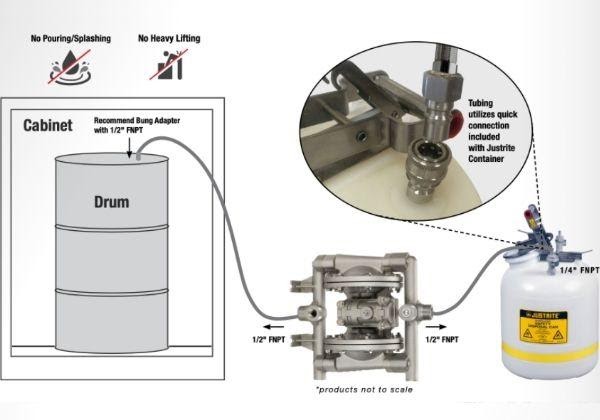
For higher-throughput or multi-instrument labs, waste transfer can be streamlined using the All-Flo air-operated diaphragm pump. Because it operates without electricity, it reduces spark hazards during solvent transfer and supports hands-free waste movement.
In this setup, static-conductive tubing connects the pump inlet to the Justrite Safety Container through quick-connect fittings, and the outlet tubing is plumbed directly to the collection drum with a ½” FMNT bung adapter.
Tech Tip: When the waste container is not connected to the pump, remove the solvent pickup adapter to maintain a sealed system. Leaving it attached can leave the system open to the environment, which is not consistent with good EHS practice.
Conclusion
Safe HPLC waste disposal depends on more than simply collecting spent solvent. A closed waste can, vapor filter, proper transfer method, and secondary containment all work together to reduce exposure, limit spill risk, and support safer waste handling procedures. Replacing improvised bottle-based collection with a dedicated waste containment system is a practical step toward better compliance and better protection for both personnel and equipment.
Chrom Tech offers a complete range of HPLC solvent waste containment solutions to help labs improve waste handling and simplify hazardous solvent collection. Reach out to the Chrom Tech team to discuss HPLC Safety Waste Systems that fit your workflow.