
By Chrom Tech – Your Chromatography Consumables Partner Since 1983
How to Choose the Right Syringe Filter for HPLC Sample Preparation
Sample preparation is a critical step in High-Performance Liquid Chromatography (HPLC). One of the most effective ways to improve sample cleanliness and protect the analytical system is syringe filtration. Proper filtration removes particulates that can clog injectors, damage columns, or interfere with chromatographic peak quality.
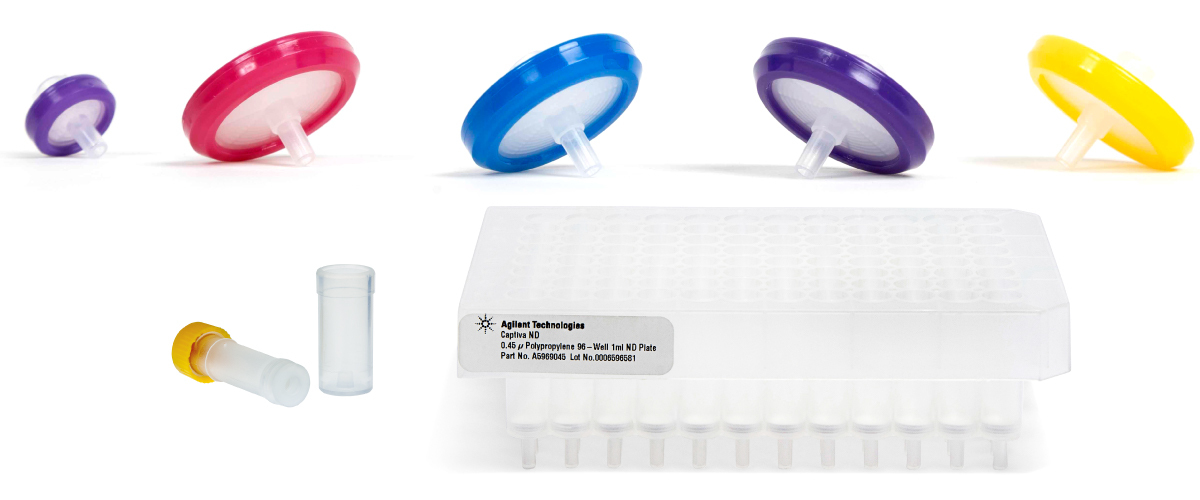
Choosing the right syringe filter involves matching the filter to the sample and solvent. The three main selection variables are disc diameter, pore size, and membrane material. If any of these are mismatched, filtration can become slower, less consistent, or less compatible with the sample.
Key Factors in Choosing a Syringe Filter
1. Filter Disc Diameter
Disc diameter affects how much sample can be filtered efficiently. Chrom Tech syringe filters are available in two common sizes:
- 13 mm – for smaller sample volumes up to approximately 10 mL
- 30 mm – for larger sample volumes up to approximately 200 mL
For small analytical volumes, a 13 mm filter is often sufficient. For larger volumes, a 30 mm format can improve throughput and reduce the strain placed on the membrane.
2. Filter Pore Size
Pore size determines the level of particulate removal and also affects how easily the sample flows through the membrane. Smaller pores retain finer particles, but they may clog more quickly if the sample is dirty. The correct pore size is part of balancing cleanliness and filtration speed.
3. Membrane Material
Membrane selection is often the most important part of choosing a syringe filter because each material has different solvent compatibility and protein-binding behavior.
- Nylon – compatible with aqueous and organic solvents; not recommended for protein work
- PTFE – hydrophobic and highly chemical resistant; ideal for organic solvents and not suited to aqueous samples
- PVDF – low-protein binding and compatible with both aqueous and organic solvents; well suited to biological samples
- PES – durable, low-protein binding, and useful for aqueous and mixed-solvent applications including ion chromatography
- CA (Cellulose Acetate) – extremely low protein binding and best suited to aqueous samples
- PP (Polypropylene) – hydrophilic, broadly compatible, and chemically stable for general use
- Glass Fiber – a high-capacity prefilter option for samples with visible particulates
When to Use Glass Fiber Syringe Filters
Glass fiber filters are useful when the sample contains visible particulates or is otherwise more difficult to filter. These filters are designed as high-capacity prefilter options and can be especially helpful when sample cleanliness is poor or when standard membranes are likely to clog too quickly.
Syringe Filter Quick Selection Guide
| Membrane | Pore Sizes (µm) | 13 mm Part Numbers | 30 mm Part Numbers |
|---|---|---|---|
| Nylon | 0.2, 0.45 | F13-NY020, F13-NY045 | F30-NY020, F30-NY045 |
| PTFE | 0.2, 0.45 | F13-PT020, F13-PT045 | F30-PT020, F30-PT045 |
| PVDF | 0.2, 0.45 | F13-PV020, F13-PV045 | F30-PV020, F30-PV045 |
| PES | 0.2, 0.45 | F13-PS020, F13-PS045 | F30-PS020, F30-PS045 |
| CA | 0.2, 0.45 | F13-CA020, F13-CA045 | F30-CA020, F30-CA045 |
| PP | 0.2, 0.45 | F13-PP020, F13-PP045 | F30-PP020, F30-PP045 |
| Glass Fiber | 0.7, 1.2 | F13-GF070, F13-GF120 | F30-GF070, F30-GF120 |
Why Use Syringe Filters for HPLC?
Syringe filtration is a straightforward and economical way to support reliable, reproducible chromatography. Removing particulates before injection helps protect the injector and column from blockages, unwanted backpressure, and noise-related performance issues. Chrom Tech stocks a full range of HPLC syringe filters to help laboratories maintain uptime and consistent data quality.