Ion Exclusion

Hamilton PRP-X300 Columns — Ion Exclusion

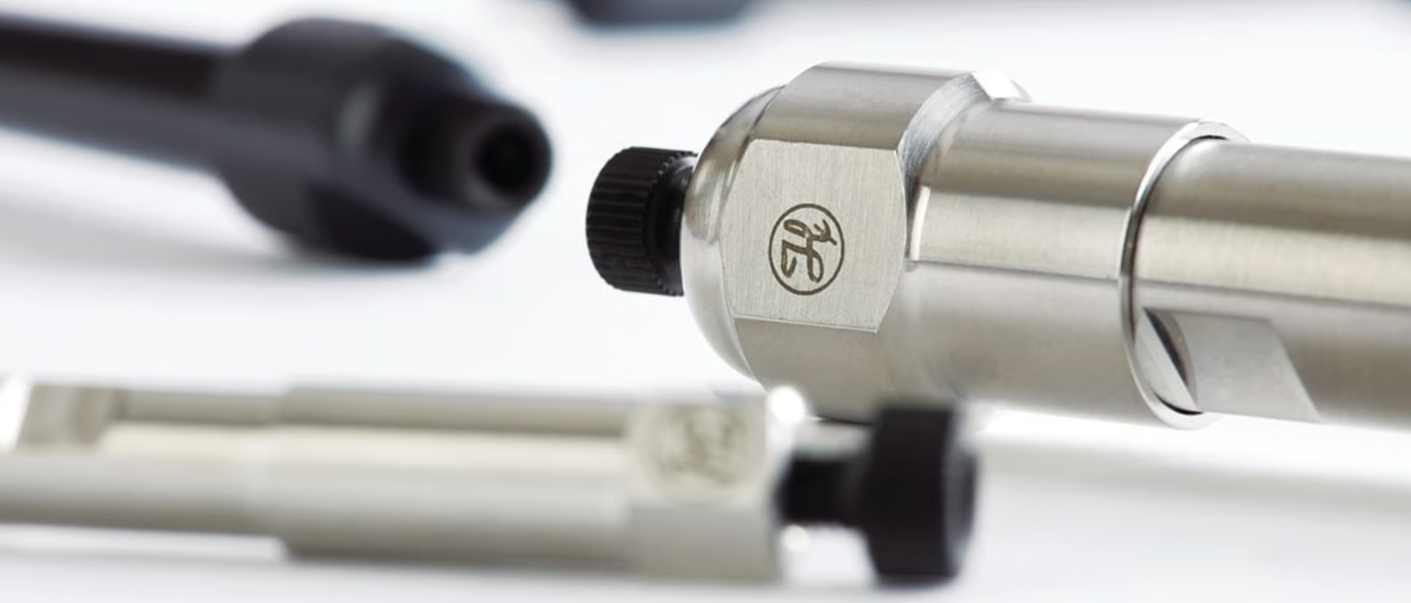
Hamilton PRP-X300 columns provide a fast, efficient solution for separating closely related organic acids and alcohols. Built on a sulfonated poly(styrene-divinylbenzene) (PSDVB) support, PRP-X300 delivers mixed-mode selectivity that enhances resolution for challenging polar compounds.

Separation on PRP-X300 is achieved through a combination of three complementary mechanisms:

  • Hydrogen Bonding — Retention driven by interactions between analytes and the negatively charged sulfonate groups on the polymer surface.
  • Reversed-Phase — Additional retention from interactions with the non-polar polymeric backbone.
  • Ion Exclusion — Strongly ionized species are excluded from the pores and elute first, while weakly ionized and non-ionic compounds penetrate the pores and elute later.

This mixed-mode behavior enables reliable separations without complex mobile phase requirements, making PRP-X300 well suited for routine analytical workflows.

Typical Analytes

Acetic acid, acrylamide, citric acid, oxaloacetic acid, ethanol, propanol.

Applications

Separation and analysis of organic acids and alcohols using ion exclusion and mixed-mode chromatography.

Size (mm) 7 µm
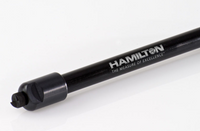
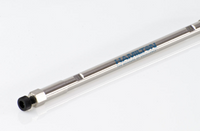
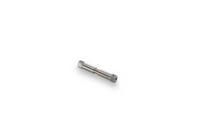
4.6 x 150 PEEK79475
4.1 x 150 SS79464
4.1 x 250 SS79465
Guard Columns & Accessories
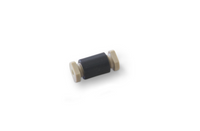
Analytical Guard Column79289
Analytical Guard Cartridge Holder SS32908
Analytical Guard Cartridge Holder PEEK79477
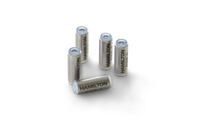
Analytical Repl Cartridges SS (5/pk)79453
Analytical Repl Cartridges PEEK (5/pk)79374
Analytical Starter Kit¹ SS79460
Analytical Starter Kit¹ PEEK79373
Prep/Semiprep Guard Column79915
Prep/Semiprep Guard Cartridge Holder SS5095-01
Prep/Semiprep Repl Cartridges SS (2/pk)79130
Prep/Semiprep Starter Kit² SS79129
1) Analytical Starter Kit includes 1 holder, 2 cartridges
2) Prep/Semiprep Starter Kit includes 1 holder, 1 cartridge

Key Definitions
Ion Exclusion Chromatography
A separation technique in which fully ionized compounds are repelled from the charged stationary phase and elute quickly, while weakly ionized and neutral species diffuse into the polymer pores and elute later. Particularly effective for weak acid mixtures.
Degree of Ionization
The proportion of molecules in a sample that exist in an ionized form. In ion exclusion, fully ionized species are excluded from pores, whereas partially ionized species show varying retention depending on their ionization state.
Weak Acids
Organic acids that do not fully dissociate in solution. Their partial ionization leads to distinctive retention behaviors in ion exclusion chromatography, making the technique ideal for analyzing complex mixtures in foods and beverages.
Polymeric Stationary Phase
A chemically stable support material used in Hamilton ion exclusion columns. Polymeric substrates offer excellent resistance to aggressive mobile phases and provide consistent pore structures for predictable retention behavior.
Pore Exclusion
The mechanism by which fully ionized analytes are prevented from entering the pores of the stationary phase due to electrostatic repulsion, resulting in fast elution and distinct separation from weakly ionized species.
Frequently Asked Questions

When should ion exclusion chromatography be used instead of ion exchange chromatography?

Ion exclusion is ideal for mixtures of weak acids and partially ionized compounds—especially in food, beverage, fermentation, and dairy samples—where traditional ion exchange or reversed-phase methods often provide insufficient resolution.

Why do fully ionized compounds elute first in ion exclusion chromatography?

Fully ionized species are repelled by the charged stationary phase and excluded from the pores. With minimal interaction and no pore diffusion, they elute rapidly compared to weakly ionized or neutral molecules.

How many ion exclusion packing materials does Hamilton offer?

Hamilton offers one specialized polymeric packing material engineered specifically for predictable ion exclusion behavior and high chemical durability.