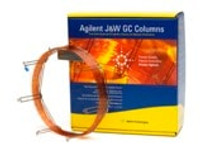
HP-5

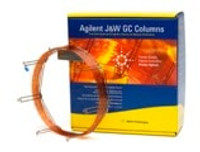
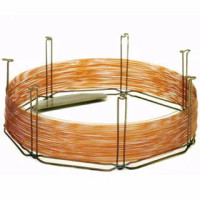
HP-5 Column

Standard Polysiloxane GC Columns

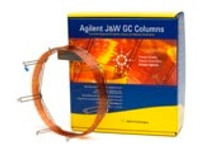
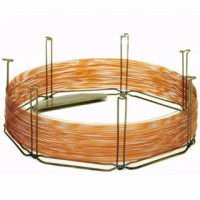
Agilent J&W HP-5 is a highly trusted (5%-phenyl)-methylpolysiloxane GC column designed to deliver reliable, predictable performance across an exceptionally broad range of analytical applications. As one of the most widely used nonpolar GC phases, HP-5 provides balanced selectivity for hydrocarbons, semi-volatiles, aromatic compounds, pesticides, flavor and fragrance components, solvents, and general organic mixtures. Its robust performance makes it a true workhorse for environmental, industrial, petrochemical, and routine laboratory workflows.

HP-5 features a bonded and crosslinked stationary phase, giving it excellent thermal stability and long-term durability under aggressive GC temperature programs. The column is fully solvent rinsable, allowing laboratories to remove high-boiling contaminants and extend operational lifetime—an important benefit for high-throughput environments or methods involving complex matrices. Its low-bleed characteristics ensure clean baselines, strong inertness, and high mass spectral fidelity for GC/MS applications.

Equivalent to USP phase G27, HP-5 can be confidently used in compendial and regulated methods that require this selectivity. Agilent’s rigorous quality-control standards ensure that every HP-5 column meets strict specifications for bleed, efficiency, inertness, reproducibility, and retention behavior—providing consistent results across instruments, laboratories, and long running sequences.

Key Definitions â–¸
(5%-Phenyl)-Methylpolysiloxane Phase
A low-polarity stationary phase containing 5% phenyl substitution, providing enhanced selectivity for aromatic compounds and semi-volatiles. This chemistry is widely used for environmental, industrial, and general-purpose analyses.
USP Phase G27
A United States Pharmacopeia–defined stationary phase classification used in validated and regulatory GC methods. HP-5 matches USP G27 selectivity, allowing use in compendial workflows that require this phase designation.
Low Bleed
A column characteristic indicating minimal phase loss at elevated temperatures. Low bleed is critical for GC/MS applications, enabling cleaner mass spectra, reduced noise, and improved sensitivity for trace-level analytes.
Bonded and Crosslinked
A manufacturing process in which the stationary phase is chemically bonded to the column interior and reinforced through crosslinking. This increases thermal stability, prevents phase stripping, and allows solvent rinsing for extended column lifetime.
Thermal Stability
The ability of the column to withstand high oven temperatures without degradation of the stationary phase. HP-5’s strong bonded and crosslinked structure supports aggressive temperature programs and demanding analytical workflows.
Frequently Asked Questions â–¸
What applications are best suited for HP-5 columns?
HP-5 is widely used for analyzing hydrocarbons, semi-volatile organics, aromatic compounds, pesticides, petrochemical samples, solvents, and complex mixtures. Its balanced (5%-phenyl)-methylpolysiloxane phase makes it a strong all-purpose option for routine GC and GC/MS methods across environmental, industrial, and QA/QC laboratories.
Is HP-5 a good choice for GC/MS applications?
Yes. HP-5 offers low bleed, strong inertness, and excellent mass spectral integrity, making it one of the most commonly used phases for GC/MS. Analysts benefit from clean baselines, stable ion ratios, and dependable sensitivity for trace-level analytes.
Is HP-5 equivalent to USP phase G27?
Yes. HP-5 matches USP G27 selectivity, making it suitable for regulated and compendial GC methods that specify this phase designation. This ensures compatibility with validated workflows in pharmaceutical and industrial testing.
What are the benefits of bonded and crosslinked construction?
Bonding and crosslinking improve thermal stability, prevent stationary phase stripping, and allow solvent rinsing. These features extend column lifetime and ensure consistent performance in high-temperature and high-throughput GC methods.
Can HP-5 handle high-temperature GC analysis?
Yes. HP-5 columns support high maximum oven temperatures, making them well suited for methods involving semi-volatiles, elevated-temperature ramping, or thermally demanding separations. The column’s rugged construction ensures reliable performance across a wide range of operating conditions.