GC

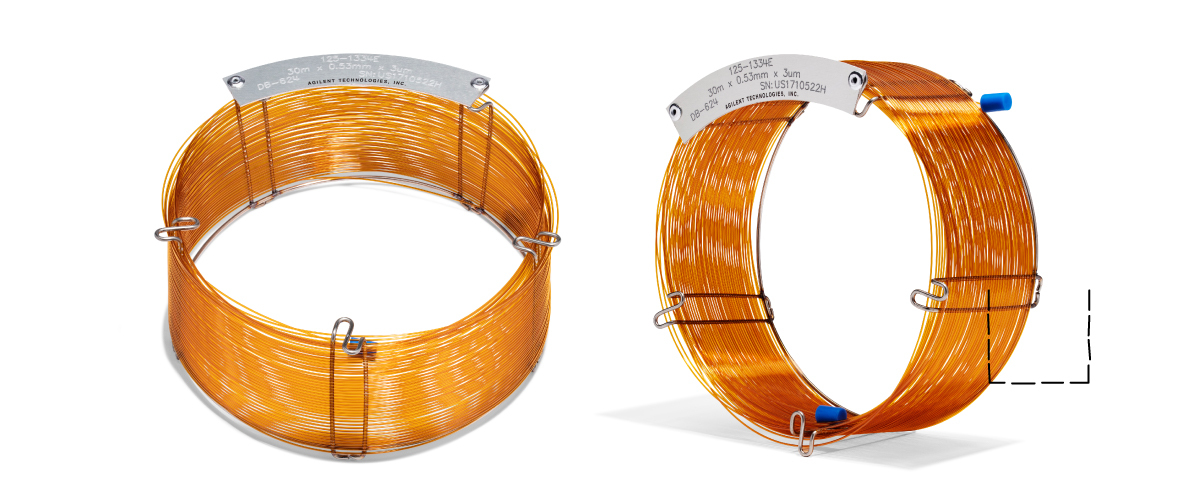
Chrom Tech offers a complete range of GC consumables and accessories designed to deliver reliable, reproducible gas chromatography results. We stock Agilent and Restek GC columns, precision fittings, ferrules, and replacement parts engineered for performance and long-term durability.

Whether you’re optimizing separations, replacing worn components, or expanding system capability, Chrom Tech provides high-quality GC supplies to help maintain instrument uptime and accuracy across applications.

Our team of product specialists is ready to assist you in selecting the ideal GC columns and accessories for your specific method or instrument. Experience fast delivery, competitive pricing, and exceptional support with every Chrom Tech order.

For guidance on column selection or consumable compatibility, contact our technical experts at Chrom Tech.

Gas Chromatography Categories

Explore popular gas chromatography columns and supplies from Chrom Tech

Key Definitions
Gas Chromatography (GC)
An analytical technique that separates volatile and semi-volatile compounds using an inert carrier gas to move analytes through a temperature-controlled column.
Capillary Column
A fused-silica (or metal) tube with an internal stationary phase coating. Capillary columns provide high efficiency and are the most common GC column format.
Stationary Phase
The column coating that interacts with analytes and drives separation. Phase chemistry (polarity/selectivity) strongly affects retention and resolution.
Column Polarity
A measure of how strongly the stationary phase interacts with polar compounds. Matching polarity to your analytes improves selectivity and peak shape.
Column Length
The total column length (commonly 10–60 m). Longer columns can increase resolution but add analysis time and backpressure.
Internal Diameter (ID)
The inside width of the column (commonly 0.10–0.53 mm). Smaller IDs increase efficiency and sensitivity but require tighter flow control and can reduce sample capacity.
Film Thickness (df)
The thickness of the stationary phase coating (commonly 0.10–3.00 µm). Thicker films improve retention of very volatile analytes and increase sample capacity, but may broaden peaks and extend run time.
Bleed
Background signal caused by stationary phase volatilization, typically at higher oven temperatures. Low-bleed columns improve sensitivity, especially for GC/MS.
Inertness
How resistant the column is to adsorbing or reacting with analytes. High inertness improves peak shape and recovery for active compounds (acids, bases, sulfur compounds, pesticides, etc.).
Maximum Operating Temperature
The highest recommended oven temperature for a column phase. Staying within limits helps prevent excessive bleed and extends column lifetime.
Carrier Gas
An inert gas (commonly helium, hydrogen, or nitrogen) that transports analytes through the column. Carrier gas choice affects efficiency, speed, and instrument method conditions.
Split vs. Splitless Injection
Split injection vents a controlled portion of sample for higher-concentration samples; splitless injection directs most of the sample onto the column for trace-level analysis.
GC/MS-Compatible Columns
Columns engineered for very low bleed and high inertness to support sensitive mass spectrometry detection and cleaner baselines at elevated temperatures.
PLOT Column
Porous Layer Open Tubular column format designed for permanent gases and very light volatiles. A porous adsorbent layer provides retention where typical liquid phases may be insufficient.
Guard Column
A short protective section (or retention gap) installed before the analytical column to reduce contamination and extend column life by capturing non-volatile residues.
Frequently Asked Questions
How does Chrom Tech help me choose the right GC column?
Chrom Tech provides consultative guidance based on analyte chemistry, required selectivity, polarity, temperature limits, and detector type (FID or MS). As an authorized distributor of Agilent and Restek GC columns, we help labs match phase chemistry, dimensions, and film thickness to application needs—reducing method risk and improving reproducibility.
Why source GC columns through Chrom Tech instead of directly from a manufacturer?
Chrom Tech integrates multi-brand expertise with application knowledge and supply chain planning. Rather than simply reselling products, we help laboratories compare equivalent phases, plan backup options, and consolidate purchasing across vendors—improving continuity and reducing stockout risk.
What is the advantage of low-bleed GC columns for GC/MS?
Low-bleed columns minimize stationary phase degradation at elevated temperatures, resulting in cleaner baselines and improved sensitivity for trace-level analysis. Chrom Tech supplies ultra-inert, low-bleed solutions from leading manufacturers to support demanding GC/MS workflows.
How can Chrom Tech help reduce GC downtime?
Chrom Tech supports proactive planning through column equivalency guidance, accessory optimization, and gas management recommendations. By aligning column selection, guard columns, purification systems, and replacement parts with your workflow, we help reduce unplanned maintenance and emergency validations.
Does Chrom Tech offer guidance on carrier gas and gas purification?
Yes. Chrom Tech provides guidance on helium, hydrogen, and nitrogen selection based on speed, efficiency, and safety considerations. We also supply gas purification systems and accessories to protect columns and extend system life.
How does Chrom Tech support long-term GC column continuity?
Through lifecycle planning and multi-vendor sourcing strategies, Chrom Tech helps laboratories prepare for discontinued phases, specification changes, or supply chain fluctuations. Identifying equivalent replacements in advance protects method stability and regulatory confidence.