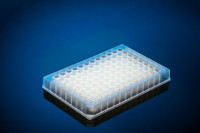
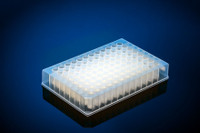
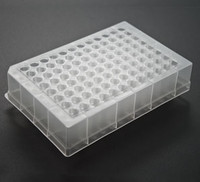
Filter Plates
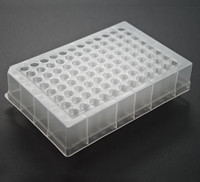
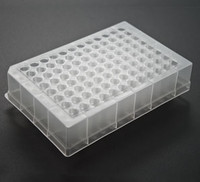
High Throughput 96-Well Filter Plates
Chrom Tech supplies high-performance 96-well filter plates designed for rapid, parallel sample preparation in analytical and life science workflows. These plates support customizable membrane chemistries and pore sizes, allowing laboratories to optimize flow rates, retention, and recovery based on their specific application requirements.
Engineered for sensitive techniques such as LC-MS and semi-automated high-throughput assays, Chrom Tech filter plates utilize low-extractable, low-binding membranes to ensure clean sample preparation and reliable quantification. Broad chemical compatibility enables use across aqueous, organic, and mixed solvent systems.
Key Features
- Selectable filter membrane materials for application-specific performance
- Multiple pore size options for optimized flow and particulate retention
- Available in several plate formats
- Automation-friendly design for seamless robotic integration
- Supports sample volumes up to 1 mL per well
- Standard SBS footprint for compatibility with automated workstations and microplate systems
- Skirted edges provide stable robotic handling equivalent to conventional microtitration plates
Molecular Weight Cut-Off (MWCO) 96-Well Filter Plates
MWCO filter plates are designed for molecular separation and concentration workflows where precise size-based filtration is required. Common applications include:
- Separating large molecules from small molecules
- Removing unincorporated labels after protein modification reactions
- Concentrating protein peaks following gel-permeation chromatography
- Protein enrichment from tissue culture media, antisera, or antibody solutions
- Desalting and buffer exchange after ion-exchange or affinity chromatography
For laboratories not currently using 96-well plate formats, Chrom Tech also offers alternative filtration solutions including syringe filters and filter vials.
Chrom Tech filter plates and tubes are manufactured from DNase/RNase- and protease-free certified plastics. Products are non-sterile by default, but may be autoclaved when required. Recommended autoclave conditions are 121°C (250°F) at 15 psi for 15 minutes.
| PART NO |
MEMBRANE
|
PORE SIZE
|
VOL/WELL |
|---|---|---|---|
| 96 WELL FILTER PLATES | |||
| 96F-NY020 | Nylon | 0.2 µm | 1 mL |
| ★ CT-9645 | Nylon | 0.45 µm | 300 µL |
| 96F-NY045 | Nylon | 0.45 µm | 1 mL |
| 96F-PT020 | PTFE (polytetrafluoroethylene) | 0.2 µm | 1 mL |
| ★ OC-9279020 | PTFE (polytetrafluoroethylene) | 0.2 µm | 2 mL |
| 96F-PT045 | PTFE (polytetrafluoroethylene) | 0.45 µm | 1 mL |
| 96F-PV020 | PVDF (polyvinylidene difluoride) | 0.2 µm | 1 mL |
| 96F-PV045 | PVDF (polyvinylidene difluoride) | 0.45 µm | 1 mL |
| 96F-PS020 | PES (polyethersulfone) | 0.2 µm | 1 mL |
| 96F-PS045 | PES (polyethersulfone) | 0.45 µm | 1 mL |
| 96F-PS045-2 | PES (polyethersulfone) | 0.45 µm | 2 mL |
| 96F-CA020 | CA (cellulose acetate) | 0.2 µm | 1 mL |
| 96F-CA045 | CA (cellulose acetate) | 0.45 µm | 1 mL |
| 96F-PP020 | PP (polypropylene) | 0.2 µm | 1 mL |
| 96F-PP045 | PP (polypropylene) | 0.45 µm | 1 mL |
| 96F-PP045-2 | PP (polypropylene) | 0.45 µm | 2 mL |
| A5960002 | Captiva PP (polypropylene) | 0.2 µm | 1 mL |
| A5960045 | Captiva PP (polypropylene) | 0.45 µm | 1 mL |
| A596002000 | Captiva PP (polypropylene) | 20 µm | 1 mL |
| 96F-RC020 | RC (regenerated cellulose) | 0.2 µm | 1 mL |
| 96F-RC045 | RC (regenerated cellulose) | 0.45 µm | 1 mL |
| 96F-NC020 | NC (nitrocellulose) | 0.2 µm | 1 mL |
| PART NO | MEMBRANE | MWCO | VOL/WELL |
|---|---|---|---|
| MOLECULAR WEIGHT CUT-OFF 96 WELL FILTER PLATES | |||
| 201013-100 | PES (polyethersulfone) | 10K | 0.4 mL |
| 201015-100 | PES (polyethersulfone) | 30K | 0.4 mL |
| 201596-100 | PES (polyethersulfone) | 100K | 0.4 mL |
| 201598-100 | PES (polyethersulfone) | 300K | 0.4 mL |