DB-5ms Low-Bleed

DB-5ms Low-Bleed

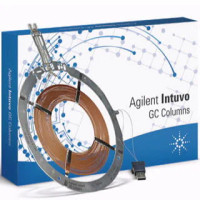
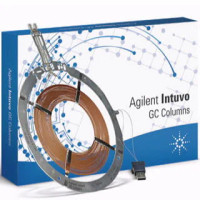
DB-5ms Low Bleed GC/MS Columns

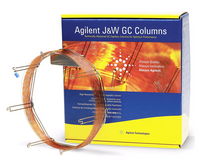
Agilent J&W DB-5ms is a non-polar phenyl arylene polymer GC column engineered for high-performance GC and GC/MS applications. Chemically similar to a (5%-phenyl)-methylpolysiloxane phase, DB-5ms offers predictable selectivity, strong thermal stability, and robust chromatographic performance across a wide range of analytes. Its exceptionally low bleed delivers cleaner baselines and an outstanding signal-to-noise ratio, enabling high sensitivity and accurate mass spectral identification—even for demanding, trace-level analyses.

This column provides excellent inertness with active, adsorptive, or reactive compounds, maintaining sharp peak shapes and reliable quantitation in complex matrices. DB-5ms is also a close equivalent to USP phase G27, making it a versatile choice for regulated methods and validated workflows.

With its extremely low bleed characteristics and consistent reproducibility, DB-5ms is widely used in environmental, forensic, pharmaceutical, industrial, and petrochemical laboratories—any setting where GC/MS data integrity, sensitivity, and long-term column stability are essential.


Key Definitions â–¸
(5%-Phenyl)-Methylpolysiloxane
A commonly used non-polar GC stationary phase consisting of methylpolysiloxane with 5% phenyl substitution. This chemistry provides stable retention patterns and broad applicability across volatile, semi-volatile, and mid-boiling analytes.
Low-Bleed Column
A GC column engineered to minimize stationary-phase volatilization at high temperatures. Lower bleed produces cleaner baselines, enhances mass spectral clarity, and improves sensitivity—critical for GC/MS workflows and trace-level detection.
Phenyl Arylene Polymer
A stationary-phase backbone structure that increases thermal stability and oxidative resistance. This polymer architecture contributes to robust performance across high-temperature GC and GC/MS applications.
USP Phase G27
A United States Pharmacopeia–defined stationary phase category that aligns with 5% phenyl methylpolysiloxane selectivity. DB-5ms is considered a close equivalent, supporting method compliance in regulated analytical environments.
Mass Spectral Integrity
A measure of how cleanly and accurately the mass spectrometer detects analytes without interference from column bleed or chemical noise. Low-bleed phases like DB-5ms preserve spectral purity and support confident compound identification.
Frequently Asked Questions â–¸
What makes DB-5ms a good choice for GC/MS applications?
DB-5ms columns are engineered for extremely low bleed, which reduces background noise and improves mass spectral clarity. Their non-polar (5%-phenyl) methylpolysiloxane chemistry provides stable, predictable retention behavior ideal for GC/MS workflows.
How does DB-5ms compare to USP Phase G27?
DB-5ms is considered a close equivalent to USP Phase G27. This makes it suitable for regulated or validated methods requiring a 5% phenyl methylpolysiloxane stationary phase, while also offering improved low-bleed performance for GC/MS.
What types of analyses typically use DB-5ms columns?
DB-5ms is widely used in environmental testing, forensic toxicology, pharmaceutical impurities analysis, food and flavor studies, petrochemical profiling, and general semi-volatiles methods requiring high sensitivity and data integrity.
Why is low bleed important when running GC/MS?
Low bleed prevents stationary-phase components from entering the MS detector, reducing chemical noise and baseline interference. This improves signal-to-noise ratios, supports lower detection limits, and enhances mass spectral reproducibility.
Can DB-5ms columns handle active or adsorptive analytes?
Yes. DB-5ms provides excellent inertness and peak symmetry for active compounds, including amines, phenols, and other chemically reactive analytes. This minimizes adsorption and degradation, improving accuracy and reproducibility.