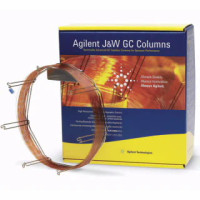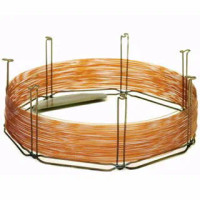
CP-Wax 52 CB

WAX GC Columns

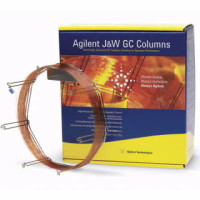
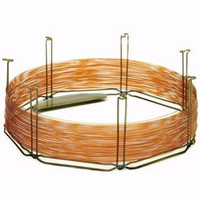
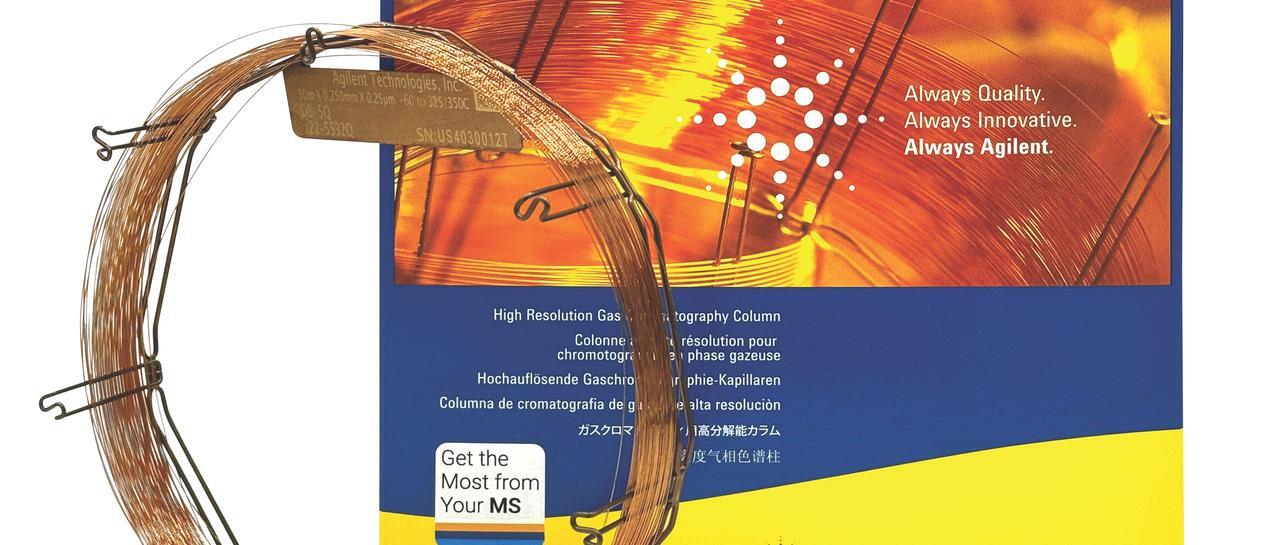
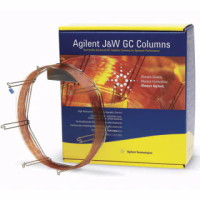
Agilent J&W CP-Wax 52 CB is a high-polarity polyethylene glycol (PEG) GC column specifically engineered for superior separation of alcohols, esters, organic acids, and other oxygenated compounds. Its bonded and extensively crosslinked PEG phase delivers a broader usable temperature range than traditional nonbonded WAX columns, offering improved retention stability and higher resolution—particularly for low-boiling analytes commonly encountered in food, environmental, and industrial applications.

CP-Wax 52 CB is designed for reproducibility and robustness. Its strong thermal stability ensures consistent retention indices and selectivity even under repeated heating cycles, making it an ideal choice for EPA and ASTM regulatory methods that require PEG-type selectivity. The column maintains excellent peak symmetry and dependable theoretical plate counts across a wide range of operating temperatures.

The latest generation of Agilent J&W CP-Wax 52 CB columns incorporates the same advanced inert surface treatment technologies used in Agilent’s DB-WAX Ultra Inert manufacturing processes. This innovation extends inertness lifetime, supports cleaner baselines, and protects against active compound adsorption—even after repeated exposure to upper-limit temperatures. Critical performance characteristics such as selectivity, efficiency, and retention remain stable, ensuring long-term method reliability and consistent data quality.
Key Definitions â–¸
Bonded and Crosslinked PEG
A chemically stabilized PEG stationary phase that is permanently bonded and crosslinked to the capillary surface. This enhances thermal stability, allows solvent rinsing, and delivers better retention-time reproducibility compared to unbonded WAX columns.
High Polarity Phase
A stationary phase with strong polar interactions, ideal for separating alcohols, acids, esters, glycols, flavor compounds, and other oxygenated species. High-polarity phases provide increased selectivity for compounds that exhibit strong hydrogen-bonding behavior.
Extended Temperature Range
The ability of CP-Wax 52 CB to operate at higher maximum temperatures than traditional nonbonded PEG columns. This supports faster elution of late-boiling analytes, improved productivity, and more effective bake-out between runs.
Ultra Inert Surface Technology
A specialized deactivation process used by Agilent to reduce active sites on the column surface. This enhances peak shapes for active and reactive analytes, improves detection limits, and extends inertness lifetime—especially during repeated high-temperature cycling.
Column-to-Column Reproducibility
A measure of manufacturing uniformity ensuring that retention indices, selectivity, and performance parameters remain consistent from one column to another—critical for validated methods and regulated workflows.
Frequently Asked Questions â–¸
What types of analytes are best separated with CP-Wax 52 CB?
CP-Wax 52 CB is ideal for analyzing highly polar compounds such as alcohols, organic acids, esters, ketones, glycols, and flavor or fragrance volatiles. Its polyethylene glycol (PEG) phase provides strong hydrogen-bonding interactions that improve separation of oxygenated and polar species.
How does CP-Wax 52 CB differ from traditional nonbonded WAX columns?
Unlike nonbonded PEG phases, CP-Wax 52 CB is fully bonded and extensively crosslinked. This gives it higher thermal stability, a wider usable temperature range, reduced bleed, and excellent retention-time reproducibility—even during repeated high-temperature cycling.
Is CP-Wax 52 CB compatible with EPA and ASTM methods?
Yes. CP-Wax 52 CB meets the selectivity and performance requirements for many EPA and ASTM standard methods involving polar analytes. Its high reproducibility and stable retention indices make it suitable for regulated and compendial workflows.
Can CP-Wax 52 CB be used for GC/MS applications?
Yes. Because it is bonded and crosslinked, CP-Wax 52 CB exhibits significantly reduced stationary-phase bleed compared to conventional PEG columns. This enhances signal-to-noise ratios and supports lower detection limits in GC/MS workflows.
How does the Ultra Inert manufacturing process improve column performance?
The column uses advanced deactivation chemistry similar to Agilent's DB-WAX Ultra Inert series. This reduces active sites, improves peak symmetry for reactive analytes, extends inertness lifetime, and ensures selectivity and retention indices remain consistent even after repeated thermal cycling.