
Bio SEC-5
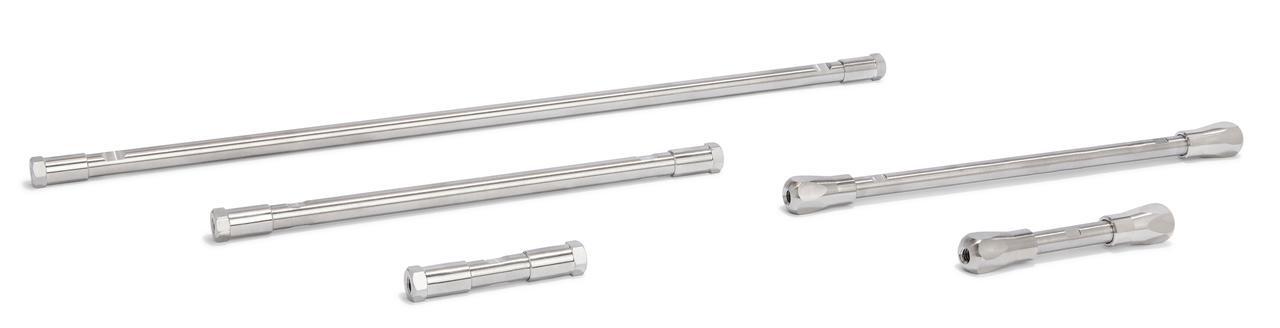
Agilent Bio SEC-5
Agilent Bio SEC-5 HPLC columns are engineered for high-resolution size exclusion chromatography of large biomolecules, complex mixtures, and high–molecular weight species. With tightly controlled pore structures and a proprietary neutral hydrophilic surface, Bio SEC-5 columns minimize secondary interactions to deliver exceptional accuracy across a wide range of sample types.
Designed for rugged, reproducible performance, Bio SEC-5 columns provide outstanding stability under high-pH, high-salt, and low-salt conditions—making them ideal for method development, QC workflows, and advanced biopharmaceutical characterization. The enhanced pore volume increases peak capacity and resolution, enabling clear separation of aggregates, fragments, and intact biomolecules with confidence.
- Exceptional resolution for large proteins, vaccines, and high-MW biomolecules
- Proprietary hydrophilic surface minimizes nonspecific interactions
- Rugged silica construction delivers excellent column lifetime and batch-to-batch reproducibility
- Stable under high-pH and high-salt mobile phases for flexible method optimization
- Pore sizes up to 2000 Å support analysis of very large complexes
Chrom Tech offers the full Bio SEC-5 portfolio in multiple pore sizes and formats to support vaccines, monoclonal antibody characterization, and other high-molecular-weight applications. For help selecting the optimal pore size or column dimension for your workflow, our technical support team is here to assist.
Agilent Bio SEC-5 columns are robust size exclusion chromatography (SEC) columns packed with 5 µm silica particles and a hydrophilic diol-bonded surface. They are engineered for reliable, reproducible separation of proteins, monoclonal antibodies (mAbs), aggregates, and fragments under aqueous conditions.
- You require rugged, routine SEC analysis
- You need lower backpressure on standard HPLC systems
- You analyze proteins, mAbs, aggregates, or biosimilars
- You prioritize robustness and column lifetime over maximum efficiency
Compared to Bio SEC-3 (3 µm), Bio SEC-5 (5 µm) offers reduced system backpressure and increased durability, making it ideal for routine QC workflows. While resolution may be slightly lower than 3 µm formats, it provides dependable aggregate quantitation and sizing performance.
| Separation Mode | Size Exclusion Chromatography (SEC) |
| Particle Size | 5 µm |
| Surface Chemistry | Hydrophilic diol-bonded silica |
| Pore Sizes Available | Optimized for peptides, proteins, and monoclonal antibodies (varies by molecular weight range) |
| Mobile Phase | Aqueous buffers (phosphate, saline, or compatible systems) |
| Primary Applications | Aggregate analysis, fragment profiling, biosimilar comparison, protein purity testing |
Practical note: Maintain appropriate buffer ionic strength to suppress ionic interactions and ensure accurate size-based separation.
Product List
| SKU | Name | LC Column Phase | Particle Size | Inner Diameter (ID) | Length |
|---|---|---|---|---|---|
SKU
5190-6866
|
Name
5190-6866 - Agilent SEC-5,500A,21.2x300mm
|
LC Column Phase
SEC
|
Particle Size
5 um
|
Inner Diameter (ID)
21.2 mm
|
Length
300 mm
|
SKU
5190-6865
|
Name
5190-6865 - Agilent SEC-5,300A,21.2x300mm
|
LC Column Phase
SEC
|
Particle Size
5 um
|
Inner Diameter (ID)
21.2 mm
|
Length
300 mm
|
SKU
5190-6864
|
Name
5190-6864 - Agilent SEC-5,150A,21.2x300mm
|
LC Column Phase
SEC
|
Particle Size
5 um
|
Inner Diameter (ID)
21.2 mm
|
Length
300 mm
|
SKU
5190-6863
|
Name
5190-6863 - Agilent SEC-5,100A,21.2x300mm
|
LC Column Phase
SEC
|
Particle Size
5 um
|
Inner Diameter (ID)
21.2 mm
|
Length
300 mm
|
SKU
5190-6862
|
Name
5190-6862 - Agient Bio SEC-5 2000A, 4.6x50mm guard
|
LC Column Phase
SEC
|
Particle Size
5 um
|
Inner Diameter (ID)
4.6 mm
|
Length
50 mm
|
SKU
5190-6861
|
Name
5190-6861 - Agilent Bio SEC-5 1000A, 4.6x50mm guard
|
LC Column Phase
SEC
|
Particle Size
5 um
|
Inner Diameter (ID)
4.6 mm
|
Length
50 mm
|
SKU
5190-6860
|
Name
5190-6860 - Agilent Bio SEC-5 500A, 4.6x50mm guard
|
LC Column Phase
SEC
|
Particle Size
5 um
|
Inner Diameter (ID)
4.6 mm
|
Length
50 mm
|
SKU
5190-6859
|
Name
5190-6859 - Agilent Bio SEC-5 300A, 4.6x50mm, guard
|
LC Column Phase
SEC
|
Particle Size
5 um
|
Inner Diameter (ID)
4.6 mm
|
Length
50 mm
|
SKU
5190-6858
|
Name
5190-6858 - Agilent Bio SEC-5 150A, 4.6x50mm, guard
|
LC Column Phase
SEC
|
Particle Size
5 um
|
Inner Diameter (ID)
4.6 mm
|
Length
50 mm
|
SKU
5190-6857
|
Name
5190-6857 - Agilent Bio SEC-5 100A, 4.6x50mm, guard
|
LC Column Phase
SEC
|
Particle Size
5 um
|
Inner Diameter (ID)
4.6 mm
|
Length
50 mm
|
SKU
5190-2545
|
Name
5190-2545 - Bio SEC-5, 2000A 7.8x50mm, 5um Guard
|
LC Column Phase
SEC
|
Particle Size
5 um
|
Inner Diameter (ID)
7.8 mm
|
Length
50 mm
|
SKU
5190-2544
|
Name
5190-2544 - Agilent SEC-5, 2000A, 4.6x150mm
|
LC Column Phase
SEC
|
Particle Size
5 um
|
Inner Diameter (ID)
4.6 mm
|
Length
150 mm
|