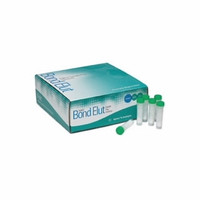
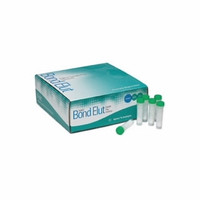
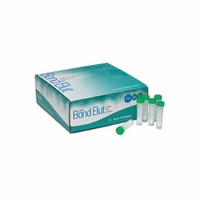
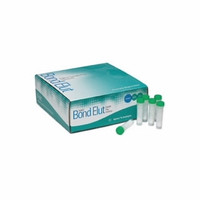
QuEChERS Supplies
Agilent QuEChERS Dispersive Kits & Extraction Tubes
Streamlined QuEChERS sample preparation for multiresidue pesticide and contaminant analysis across food, feed, and environmental matrices.
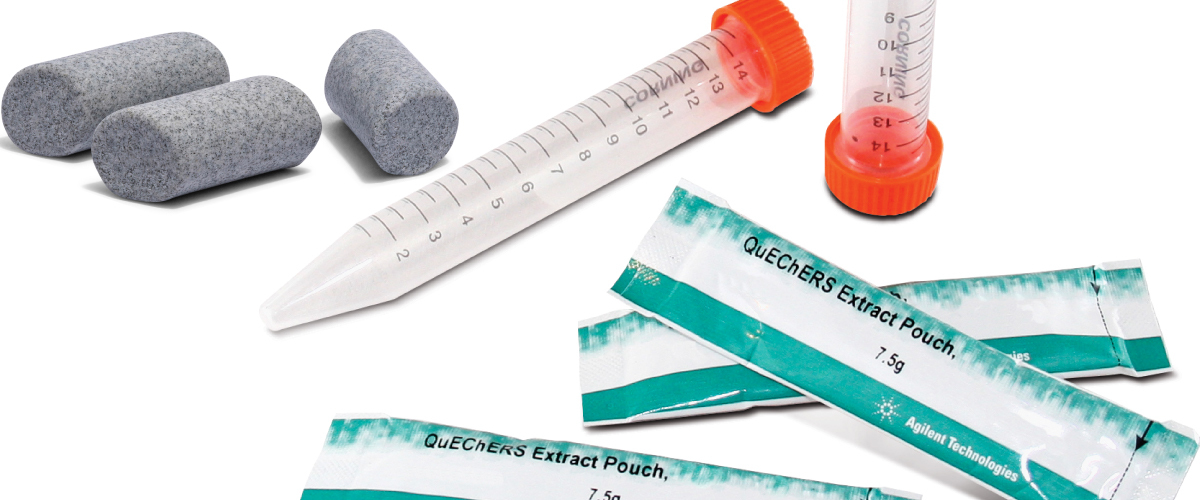
Agilent QuEChERS products deliver streamlined, reproducible sample preparation for multiresidue pesticide and contaminant analysis across food, feed, and environmental matrices. Designed to support high-throughput laboratories, Agilent’s QuEChERS workflow combines efficient extraction salts with optimized dispersive SPE (dSPE) cleanup to produce reliable recoveries and reduced matrix effects for LC/MS and GC/MS analysis.
Chrom Tech supplies a complete range of Agilent QuEChERS extraction tubes and QuEChERS dispersive kits, engineered to meet AOAC and EN methodologies while maintaining lot-to-lot consistency and performance validation.
QuEChERS Extraction Tubes
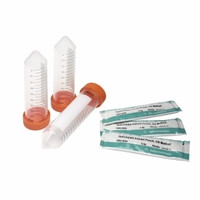
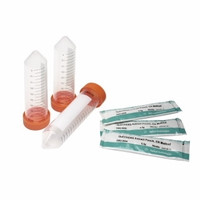
Agilent QuEChERS extraction tubes contain precisely measured buffering salts and partitioning agents to ensure effective analyte extraction from complex matrices. Available in original, AOAC, and EN formulations, these tubes promote rapid phase separation and consistent analyte recovery.
- Pre-weighed salt formulations for method compliance (AOAC / EN)
- Optimized buffering systems to maintain analyte stability
- Validated performance for pesticide, veterinary drug, and contaminant screening
QuEChERS Dispersive SPE (dSPE) Kits
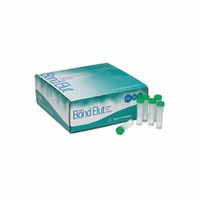
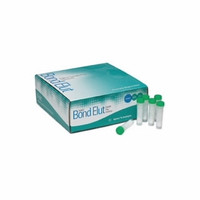
Following extraction, Agilent QuEChERS dispersive kits provide targeted matrix cleanup using combinations of PSA, C18, GCB, Z-Sep, and other sorbents. These dSPE formats minimize co-extractive interferences, reduce ion suppression, and improve chromatographic performance in LC/MS and GC/MS workflows.
- Matrix-specific sorbent blends for fruits, vegetables, grains, and fatty samples
- Reduced pigment, lipid, and organic acid interference
- Compatible with high-throughput food safety and regulatory laboratories
Designed for Modern Multiresidue Workflows
Agilent QuEChERS solutions are developed to integrate seamlessly with LC/MS/MS and GC/MS/MS systems, supporting sensitive detection limits and regulatory compliance requirements worldwide. Controlled manufacturing and quality testing ensure reproducibility across batches, helping laboratories maintain method validation and accreditation standards.
As an authorized Agilent distributor, Chrom Tech provides expert guidance in selecting the correct extraction and cleanup configuration based on matrix type, regulatory method, and instrument platform.
Step 1: Extraction:
Part # |
Product
|
Method
|
Buffered
|
Tube / Pack
|
Contents
|
Notes
|
|---|---|---|---|---|---|---|
| QuEChERS Extraction Tubes | ||||||
| 5982-5755CH | Extraction Tube | AOAC 2007.01 | Yes | 50 mL / 50-pk | 6 g MgSO4; 1.5 g NaAcetate | CH = ceramic homogenizers |
| 5982-5550CH | Extraction Tube | Original (10 g samples) | No | 50 mL / 50-pk | 4 g MgSO4; 1 g NaCl | CH = ceramic homogenizers |
| 5982-5555CH | Extraction Tube | Original (15 g samples) | No | 50 mL / 50-pk | 6 g MgSO4; 1.5 g NaCl | CH = ceramic homogenizers |
| 5982-5650CH | Extraction Tube | EN 15662 | Yes | 50 mL / 50-pk | 4 g MgSO4; 1 g NaCl; 1 g NaCitrate; 0.5 g disodium citrate sesquihydrate | CH = ceramic homogenizers |
| Ceramic Homogenizers | ||||||
| 5982-9313 | Ceramic Homogenizers | — | — | 50 mL / 100-pk | — | For 50 mL tubes |
| 5982-9311 | Ceramic Homogenizers | — | — | 2 mL / 100-pk | — | For 2 mL tubes |
Step 2: Dispersive SPE Cleanup
Part # |
Kit / Application
|
Method
|
Size
|
Unit
|
Kit Contents
|
Notes
|
|---|---|---|---|---|---|---|
| EMR Lipid Cleanup | ||||||
| 5982-1010 | EMR—Lipid dSPE | — | 15 mL | — | 1 g EMR material | — |
| 5982-0102 | EMR—Lipid Polish Pouch | — | 15 mL | 50/pk | Anhydrous MgSO4 | — |
| General Fruits & Vegetables (removes polar organic acids, some sugars and lipids) | ||||||
| 5982-5022 | General fruits & vegetables | AOAC 2007.01 | 2 mL | 100/pk | 50 mg PSA; 150 mg MgSO4 | — |
| 5982-5022CH | General fruits & vegetables | AOAC 2007.01 | 2 mL | 100/pk | 50 mg PSA; 150 mg MgSO4 | CH = ceramic homogenizers |
| 5982-5021 | General fruits & vegetables | EN 15662 | 2 mL | 100/pk | 25 mg PSA; 150 mg MgSO4 | — |
| 5982-5021CH | General fruits & vegetables | EN 15662 | 2 mL | 100/pk | 25 mg PSA; 150 mg MgSO4 | CH = ceramic homogenizers |
| 5982-5058 | General fruits & vegetables | AOAC 2007.01 | 15 mL | 50/pk | 400 mg PSA; 1200 mg MgSO4 | — |
| 5982-5058CH | General fruits & vegetables | AOAC 2007.01 | 15 mL | 50/pk | 400 mg PSA; 1200 mg MgSO4 | CH = ceramic homogenizers |
| 5982-5056 | General fruits & vegetables | EN 15662 | 15 mL | 50/pk | 150 mg PSA; 900 mg MgSO4 | — |
| 5982-5056CH | General fruits & vegetables | EN 15662 | 15 mL | 50/pk | 150 mg PSA; 900 mg MgSO4 | CH = ceramic homogenizers |
| Fruits & Vegetables with Fats & Waxes (removes polar organic acids, some sugars, more lipids and sterols) | ||||||
| 5982-5122 | Fruits & veg with fats & waxes | AOAC 2007.01 | 2 mL | 100/pk | 50 mg PSA; 50 mg C18EC; 150 mg MgSO4 | — |
| 5982-5122CH | Fruits & veg with fats & waxes | AOAC 2007.01 | 2 mL | 100/pk | 50 mg PSA; 50 mg C18EC; 150 mg MgSO4 | CH = ceramic homogenizers |
| 5982-5121 | Fruits & veg with fats & waxes | EN 15662 | 2 mL | 100/pk | 25 mg PSA; 25 mg C18EC; 150 mg MgSO4 | — |
| 5982-5121CH | Fruits & veg with fats & waxes | EN 15662 | 2 mL | 100/pk | 25 mg PSA; 25 mg C18EC; 150 mg MgSO4 | CH = ceramic homogenizers |
| 5982-5158 | Fruits & veg with fats & waxes | AOAC 2007.01 | 15 mL | 50/pk | 400 mg PSA; 400 mg C18EC; 1200 mg MgSO4 | — |
| 5982-5158CH | Fruits & veg with fats & waxes | AOAC 2007.01 | 15 mL | 50/pk | 400 mg PSA; 400 mg C18EC; 1200 mg MgSO4 | CH = ceramic homogenizers |
| 5982-5156 | Fruits & veg with fats & waxes | EN 15662 | 15 mL | 50/pk | 150 mg PSA; 150 mg C18EC; 900 mg MgSO4 | — |
| 5982-5156CH | Fruits & veg with fats & waxes | EN 15662 | 15 mL | 50/pk | 150 mg PSA; 150 mg C18EC; 900 mg MgSO4 | CH = ceramic homogenizers |
| Pigmented Fruits & Vegetables (removes pigments; not for planar pesticides) | ||||||
| 5982-5222 | Pigmented fruits & vegetables | AOAC 2007.01 | 2 mL | 100/pk | 50 mg PSA; 50 mg GCB; 150 mg MgSO4 | — |
| 5982-5222CH | Pigmented fruits & vegetables | AOAC 2007.01 | 2 mL | 100/pk | 50 mg PSA; 50 mg GCB; 150 mg MgSO4 | CH = ceramic homogenizers |
| 5982-5221 | Pigmented fruits & vegetables | EN 15662 | 2 mL | 100/pk | 25 mg PSA; 25 mg GCB; 150 mg MgSO4 | — |
| 5982-5221CH | Pigmented fruits & vegetables | EN 15662 | 2 mL | 100/pk | 25 mg PSA; 25 mg GCB; 150 mg MgSO4 | CH = ceramic homogenizers |
| 5982-5258 | Pigmented fruits & vegetables | AOAC 2007.01 | 15 mL | 50/pk | 400 mg PSA; 400 mg GCB; 1200 mg MgSO4 | — |
| 5982-5258CH | Pigmented fruits & vegetables | AOAC 2007.01 | 15 mL | 50/pk | 400 mg PSA; 400 mg GCB; 1200 mg MgSO4 | CH = ceramic homogenizers |
| 5982-5256 | Pigmented fruits & vegetables | EN 15662 | 15 mL | 50/pk | 150 mg PSA; 150 mg GCB; 885 mg MgSO4 | — |
| 5982-5256CH | Pigmented fruits & vegetables | EN 15662 | 15 mL | 50/pk | 150 mg PSA; 150 mg GCB; 885 mg MgSO4 | CH = ceramic homogenizers |