
Ion Exchange Silica SPE

Agilent Bond Elut Ion Exchange Silica SPE

Silica-based ion exchange SPE sorbents for selective retention of acidic, basic, and charged analytes.
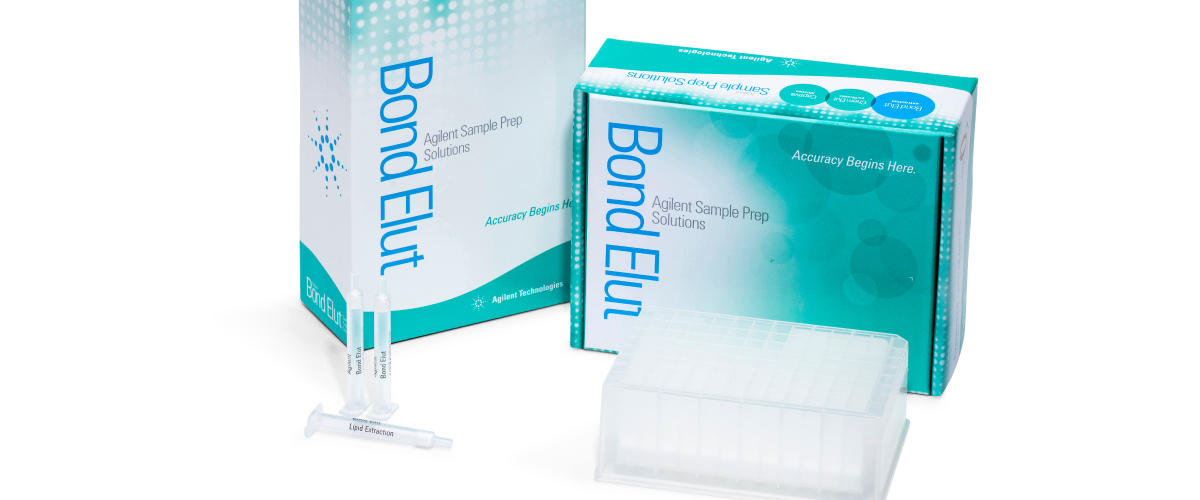
Agilent Bond Elut

Agilent Bond Elut Ion Exchange Silica SPE products are designed for solid phase extraction methods that selectively retain charged analytes from complex sample matrices. Chrom Tech supplies these silica-based ion exchange sorbents for laboratories performing cleanup, isolation, and concentration of acidic, basic, and amphoteric compounds prior to HPLC, LC/MS, GC, and related analytical workflows.

The Bond Elut family has long been recognized for dependable SPE performance, automated manufacturing consistency, and broad method applicability. Within that portfolio, ion exchange silica phases give laboratories more selective control than general reversed-phase cleanup by using charged functional groups to target analytes based on ionic interactions as well as, in some cases, additional nonpolar character.

Selective Retention for Charged Compounds

Ion exchange silica SPE is commonly used when sample preparation requires selective extraction of compounds based on charge. These sorbents are useful for workflows involving acidic, basic, or amphoteric analytes where standard nonpolar retention alone may not provide enough selectivity or cleanup efficiency.

Strong Cation Exchange for Basic Analytes

Agilent positions Bond Elut SCX as a strong cation exchanger with a very low pKa and increased potential for nonpolar interactions due to its aromatic functional group. This chemistry is well suited for retention of weak basic compounds from aqueous samples, biological fluids, and buffered organic matrices.

Strong and Weak Anion Exchange Options

For acidic analytes, the Bond Elut family includes both strong anion exchange and weak anion exchange choices. Agilent identifies Bond Elut SAX as a strong anion exchange sorbent well suited for compounds such as carboxylic acids, while Bond Elut NH2 and Bond Elut DEA provide weaker anion exchange behavior for methods requiring alternative selectivity and retention control.

Flexible Chemistry for Method Development

Bond Elut ion exchange silica sorbents help laboratories fine-tune extraction methods based on analyte charge strength, sample matrix composition, and retention goals. NH2 can be a practical choice for retention of very strong anions, while DEA offers weak anion exchange with moderately nonpolar character that may support more nuanced selectivity in certain methods.

Formats Designed for Routine SPE Workflows

As with other Bond Elut silica SPE products, ion exchange phases are available in multiple cartridge configurations to support a range of sample preparation needs. This allows laboratories to align sorbent chemistry and cartridge format with sample volume, throughput requirements, and routine method workflows.

Chrom Tech supplies Agilent Bond Elut Ion Exchange Silica SPE products for laboratories that need more selective cleanup of charged analytes. Whether your application calls for strong cation exchange, strong anion exchange, or weaker anion exchange behavior, Chrom Tech can help match the right Bond Elut ion exchange silica sorbent to your method and sample matrix.

Key Definitions
Ion Exchange SPE
A solid phase extraction technique that uses charged sorbent groups to selectively retain oppositely charged analytes from a sample matrix.
Strong Cation Exchange (SCX)
A positively selective SPE chemistry used to retain basic analytes through ionic interaction with a strongly acidic sorbent functionality.
Strong Anion Exchange (SAX)
A negatively selective SPE chemistry designed to retain acidic analytes, including compounds such as carboxylic acids, through strong ionic interactions.
Weak Anion Exchange
An ion exchange mechanism that provides gentler retention of acidic analytes and can offer different selectivity than strong anion exchange sorbents.
Bond Elut NH2
A weaker anion exchange silica sorbent that Agilent positions for retention of very strong anions when alternative selectivity is needed.
Bond Elut DEA
A weak anion exchange silica sorbent with moderately nonpolar character, used when methods require both ionic selectivity and some hydrophobic interaction.
Charged Analyte
A compound that carries a positive or negative charge under the extraction conditions, allowing it to be selectively retained by ion exchange SPE.
Amphoteric Compound
A compound that can behave as either an acid or a base depending on pH, which can make ion exchange method selection and pH control especially important.
Selective Cleanup
A sample preparation approach that targets specific analytes or interferences based on charge and interaction strength rather than relying only on nonpolar retention.
Frequently Asked Questions
What is Agilent Bond Elut Ion Exchange Silica SPE used for?
Agilent Bond Elut Ion Exchange Silica SPE is used for selective extraction, cleanup, and concentration of charged analytes from complex sample matrices before chromatographic analysis.
When should ion exchange silica SPE be used instead of reversed-phase SPE?
Ion exchange silica SPE is usually chosen when analytes are charged and the method needs charge-based selectivity. It can provide better discrimination for acidic, basic, or amphoteric compounds than a nonpolar reversed-phase mechanism alone.
What is the difference between SCX and SAX sorbents?
SCX is a strong cation exchange sorbent used for retaining basic analytes, while SAX is a strong anion exchange sorbent used for retaining acidic analytes such as carboxylic acids. :contentReference[oaicite:1]{index=1}
What are Bond Elut NH2 and Bond Elut DEA used for?
Bond Elut NH2 and Bond Elut DEA are weaker anion exchange silica phases used when a method needs different retention behavior than SAX. Agilent notes NH2 can be useful for very strong anions, while DEA provides weak anion exchange with moderately nonpolar character. :contentReference[oaicite:2]{index=2}
Can Bond Elut ion exchange silica sorbents be used for acidic and basic compounds?
Yes. The Bond Elut ion exchange silica family includes chemistries for both acidic and basic analytes, allowing laboratories to choose strong or weak ion exchange behavior based on compound charge and method goals.
Why is pH important in ion exchange SPE?
pH affects whether an analyte carries the charge needed for ionic retention. In ion exchange SPE, controlling pH is critical because it influences analyte charge state, binding strength, cleanup efficiency, and elution behavior. :contentReference[oaicite:3]{index=3}
What sample types can benefit from ion exchange silica SPE?
Ion exchange silica SPE can be useful for aqueous samples, biological fluids, buffered matrices, and other complex workflows where target compounds are ionic and selective cleanup is needed.
Does Chrom Tech help with Bond Elut ion exchange silica SPE selection?
Yes. Chrom Tech can help match the right Bond Elut ion exchange silica sorbent to your workflow based on analyte charge, sample matrix, pH behavior, and the level of selectivity your method requires.