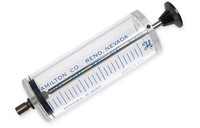
Super Syringe
Hamilton Super Syringes
Large-volume Gastight syringes for air sampling, gas standards, reservoir calibration, and pneumograph applications
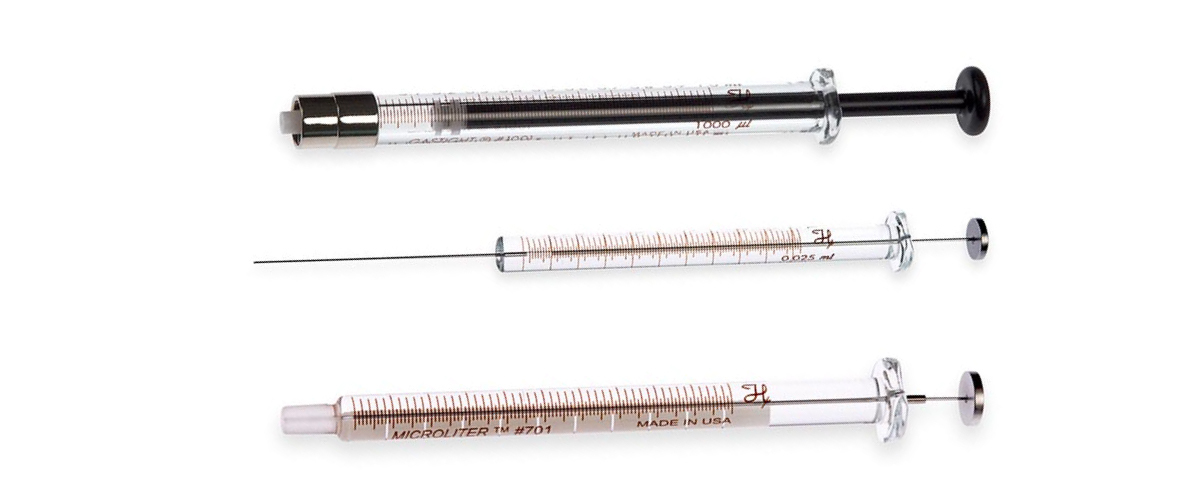
Hamilton Super Syringes are large-volume Gastight syringes designed primarily for air sampling, preparing gas standards, calibrating reservoirs, and pneumograph-related workflows. Unlike Hamilton’s smaller glass-barrel syringe families, the Super Syringe is built for substantially larger transfer volumes and is commonly selected when laboratories need controlled gas sampling or dispensing at higher capacities. Chrom Tech supplies Hamilton syringes as an authorized distributor, helping laboratories identify the correct Super Syringe configuration for gas handling, sampling, and specialized laboratory applications.
The Super Syringe is the only Hamilton syringe family made with an acrylic barrel rather than a glass barrel. This construction supports the large-volume format of the syringe, but it also means the Super Syringe is somewhat less chemically resistant than Hamilton glass-barrel syringe platforms. For that reason, the Super Syringe is generally best suited for gas sampling and gas transfer applications rather than broad chemical compatibility needs. Hamilton Super Syringes are available in large-volume sizes from 500 mL to 2 L and can be configured with Luer Lock or Tracheal terminations depending on the application.
Why Hamilton Super Syringes Are Used
In laboratory environments where large-volume gas handling is required, syringe selection must balance capacity, sealing performance, and practical connection options. The Hamilton Super Syringe is used because it provides Gastight performance in a much larger format than conventional analytical syringes. This makes it useful for workflows such as air sampling, preparation of gas standards, and calibration tasks where accurate, repeatable gas transfer is important. The syringe is also used in reservoir and pneumograph applications that benefit from a controlled large-volume gas syringe design.
Because the Super Syringe is intended primarily for gas-related use, its design priorities differ somewhat from low-volume chromatography syringes. The large acrylic barrel and PTFE plunger assembly support controlled movement and reliable large-volume handling, while available termination styles help match the syringe to tubing or compatible fittings. This combination makes the Super Syringe a specialized option for laboratories and technical users that need precise gas sampling or transfer at larger scales.
Large-Volume Gastight Performance for Gas Applications
The defining advantage of the Super Syringe is its ability to deliver Gastight performance at large volumes. Available in capacities from 500 mL to 2 L, this syringe family supports applications that go well beyond the range of standard microliter- and milliliter-scale syringe platforms. For air sampling and gas standard preparation, that added volume capacity can simplify workflows and improve consistency when larger gas volumes must be drawn, held, or dispensed accurately.
This large-volume format also makes the Super Syringe useful in calibration-related tasks where repeatable gas movement is required. In these settings, a purpose-built large-volume syringe can provide better control than improvised transfer methods, especially when application consistency matters. The Super Syringe fills that role as a dedicated Gastight platform for gas-focused laboratory work.
Acrylic Barrel Construction and Application Fit
The Super Syringe is unique within the Hamilton syringe lineup because it uses an acrylic barrel instead of glass. This design supports the physical requirements of the large-volume syringe format, but it also affects chemical resistance. Compared with Hamilton glass-barrel syringes, Super Syringes are somewhat less chemically resistant, which is why they are typically recommended for gas sampling or gas transfer rather than more chemically demanding liquid applications.
Depending on the model, Super Syringes are available with Luer Lock or Tracheal terminations. This gives laboratories flexibility in how the syringe is connected within the workflow, whether the need is attachment to compatible fittings or use with flexible tubing. For applications centered on large-volume air or gas handling, the Hamilton Super Syringe remains a practical and specialized solution.