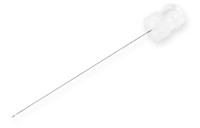
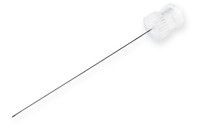
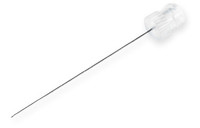
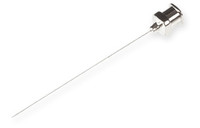
Replacement Needles
Hamilton Replacement Needles for Manual Syringes
Compatible removable needle options for restoring syringe performance, maintaining accuracy, and matching application needs
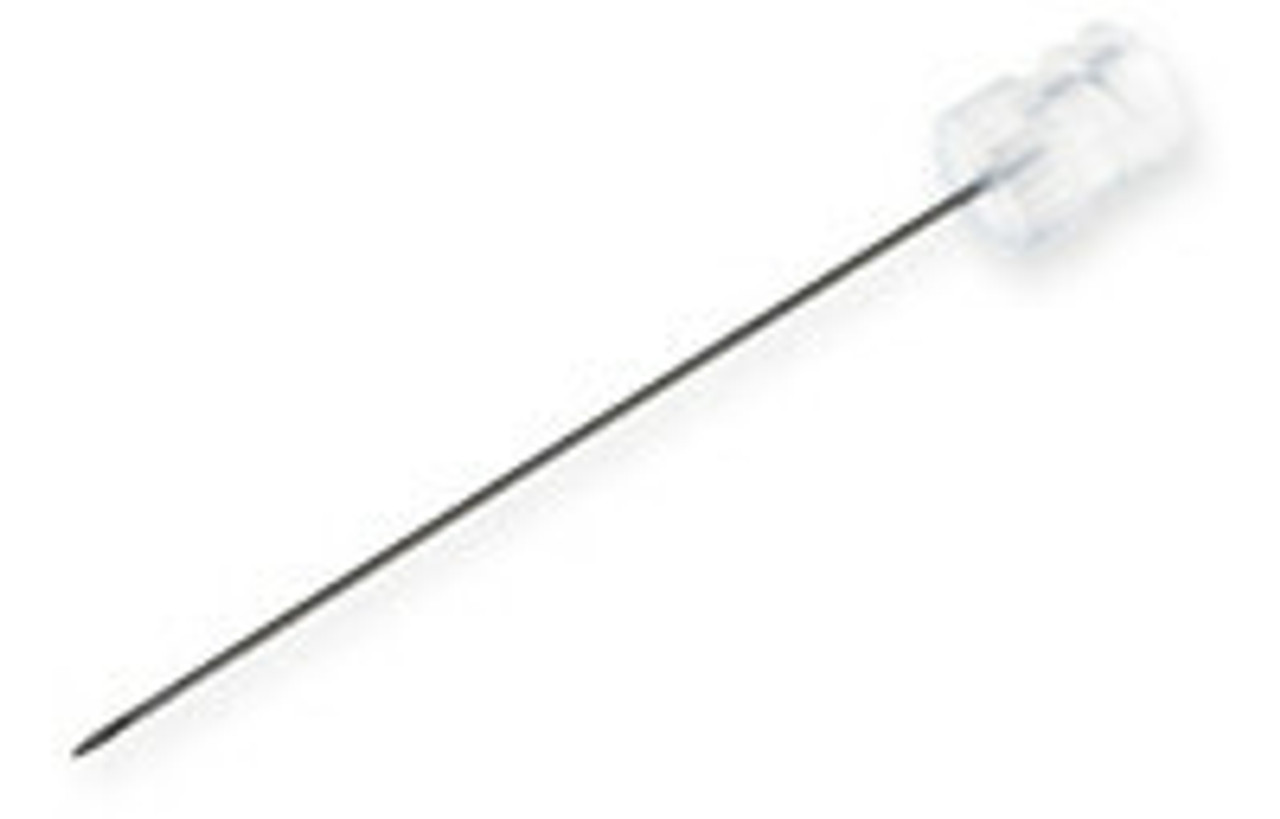
Hamilton replacement needles for manual syringes are designed to restore performance, extend syringe life, and give laboratories more flexibility across changing sampling and injection needs. These replacement needles are used with Hamilton removable needle manual syringe configurations, allowing users to replace a bent, clogged, or damaged needle without replacing the full syringe. Chrom Tech supplies Hamilton syringes and related accessories as an authorized distributor, helping laboratories match replacement needles to the correct manual syringe series, hub size, gauge, length, and point style.
For many analytical and laboratory workflows, removable needle designs offer a practical advantage because the same syringe can be adapted for different applications simply by changing the needle configuration. Hamilton replacement needles are commonly selected when users need to maintain injection accuracy, reduce downtime, or tailor the syringe setup for different sample types, vial access conditions, or instrument connections. Available options include small hub and large hub removable needles, with compatibility based on syringe volume and configuration.
Why Hamilton Replacement Needles for Manual Syringes Are Used
In routine laboratory use, syringe needles can become bent, clogged, worn, or no longer suited to the application. Hamilton replacement needles allow laboratories to keep a compatible manual syringe in service while changing only the needle assembly. This can reduce replacement cost, improve workflow efficiency, and make it easier to adapt the syringe for different sampling or injection requirements. For laboratories that rely on removable needle syringe formats, replacement needles are an important part of maintaining consistent performance.
Hamilton removable needle designs are built so the hub aligns at the syringe barrel zero line, which helps minimize dead volume and supports repeatable injections. This is especially important in analytical workflows where accuracy, precision, and sample recovery matter. By selecting the correct replacement needle, laboratories can preserve the intended fluid path geometry while matching the syringe more closely to the method.
Flexible Needle Selection for Different Applications
Hamilton replacement needles for manual syringes are available in a broad range of gauges, lengths, and point styles. This allows users to configure a syringe for different sample viscosities, penetration requirements, septum conditions, or access depths. Rather than maintaining multiple complete syringes for every variation, laboratories can often use one compatible removable needle syringe body with different replacement needle options as needed.
Hamilton also offers different removable needle hub sizes based on syringe capacity. Small hub removable needles are typically used with removable needle syringes 100 µL and smaller, while large hub removable needles are used with removable needle syringes 250 µL and larger, including certain Gastight and SampleLock configurations. Selecting the correct hub style is essential for proper fit and performance.
Supports Syringe Life, Accuracy, and Routine Maintenance
One of the main advantages of Hamilton replacement needles is that they help extend the usable life of a manual syringe. If the needle is damaged but the syringe body remains in good condition, replacing only the needle can be a cost-effective way to return the syringe to service. This is especially useful in busy laboratories where manual syringes are used frequently for injections, sample preparation, standards work, or controlled liquid and gas handling.
Replacement needles also support better day-to-day maintenance. A clean, properly matched needle helps reduce flow restriction, preserve injection consistency, and maintain the intended low dead volume performance of the removable needle design. For laboratories using Hamilton manual syringes, choosing the correct replacement needle helps support dependable analytical results and more efficient syringe management.