Metal Columns

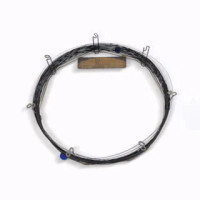
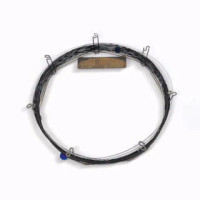
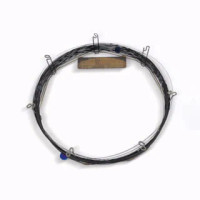
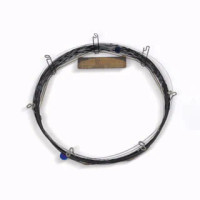
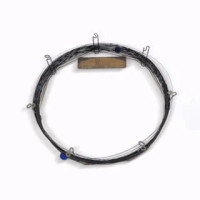
Agilent Metal GC Columns
Agilent Metal GC Columns provide exceptional robustness, durability, and performance for demanding
applications where conventional fused-silica capillary columns may be limited. Constructed from
high-strength, corrosion-resistant stainless steel or metal-clad tubing, these columns deliver enhanced
mechanical stability, tight tolerance control, and reliable inertness across a wide range of analytical
conditions—including high-pressure, high-temperature, and rugged process environments.
Designed for both laboratory and industrial settings, Agilent metal columns are available in a broad range of selectivities and formats, including Simulated Distillation phases for boiling-point distribution analysis, Standard Phases & PEG chemistries for general-purpose separations, PLOT (Porous Layer Open Tubular) configurations for permanent gases and light hydrocarbons, and Application Specific solutions tailored to petrochemical, environmental, refining, and specialty chemical workflows. Their metal construction provides improved resistance to breakage, easier installation in challenging GC systems, and compatibility with process GC configurations and high-throughput routine analysis.
Whether used to extend column lifetime in harsh environments, increase method reliability, or support critical applications such as simulated distillation and trace-level hydrocarbon monitoring, Agilent metal columns offer stable performance, excellent repeatability, and the ruggedness required to maintain consistent, high-quality chromatographic results across a wide range of operating conditions.
Designed for both laboratory and industrial settings, Agilent metal columns are available in a broad range of selectivities and formats, including Simulated Distillation phases for boiling-point distribution analysis, Standard Phases & PEG chemistries for general-purpose separations, PLOT (Porous Layer Open Tubular) configurations for permanent gases and light hydrocarbons, and Application Specific solutions tailored to petrochemical, environmental, refining, and specialty chemical workflows. Their metal construction provides improved resistance to breakage, easier installation in challenging GC systems, and compatibility with process GC configurations and high-throughput routine analysis.
Whether used to extend column lifetime in harsh environments, increase method reliability, or support critical applications such as simulated distillation and trace-level hydrocarbon monitoring, Agilent metal columns offer stable performance, excellent repeatability, and the ruggedness required to maintain consistent, high-quality chromatographic results across a wide range of operating conditions.