Liner O-Rings

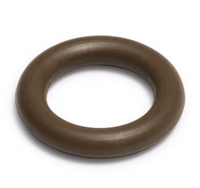
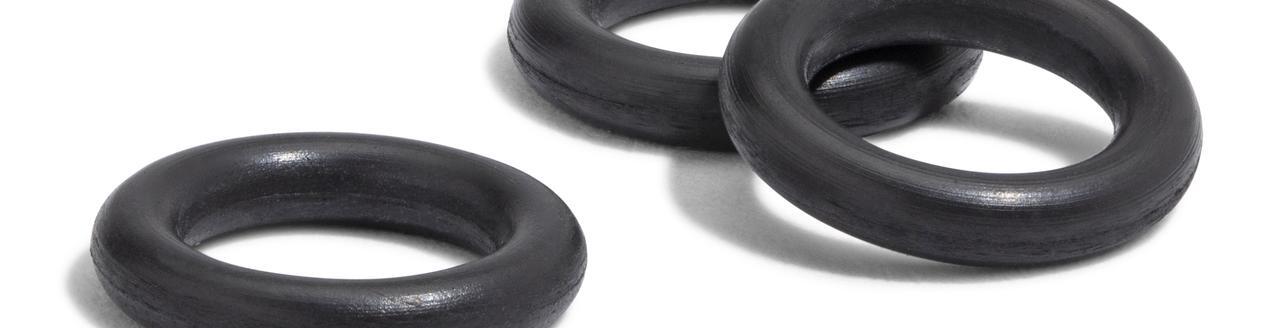
Agilent inlet liner O-rings are essential sealing components that create a tight, stable interface between the inlet liner and the inlet weldment. By maintaining this seal, the O-ring keeps carrier and split flows properly isolated from other instrument flow paths—supporting stable inlet pressure, preventing leaks, and ensuring accurate sample vaporization.

Each O-ring is engineered to withstand repeated heating cycles without sticking, tearing, or deforming. Agilent’s proprietary plasma-coating process forms a protective barrier on the elastomer surface, greatly reducing adhesion to metal components and minimizing contamination. This promotes a cleaner flow path, more consistent chromatography, and extended inlet uptime.

Chrom Tech supplies the full portfolio of genuine Agilent GC inlet O-rings for all inlet configurations. As an authorized Agilent distributor, we provide verified part numbers, fast shipping, and expert support—ensuring you receive reliable, OEM-quality components for peak GC performance.

Agilent Liner O-Rings

Description Qty Part No
Certified non-stick fluorocarbon O-ring 10/pk 5188-5365
Certified non-stick fluorocarbon O-ring 100/pk 5190-2269
Graphite O-ring for splitless liner 10/pk 5180-4173
Graphite O-ring for split liner 10/pk 5180-4168
Non-stick fluorocarbon liner O-ring for Flip Top 10/pk 5188-5366
Non-stick fluorocarbon liner O-ring for Flip Top 100/pk 5190-2268
High-temperature PTV inlet liner fluorocarbon O-ring 10/pk 5188-5311

Key Definitions â–¸
Inlet Liner O-Ring
A heat-resistant elastomer seal that fits around the inlet liner, creating a leak-tight barrier between the liner and inlet weldment. This prevents flow path mixing and ensures stable carrier and split flows.
Flow Path Isolation
The separation of carrier gas, split flow, and auxiliary flows within the inlet assembly— essential for reproducible vaporization, accurate sample introduction, and preventing leaks.
Plasma-Coated Elastomer
An Agilent surface-treatment process that deposits an inert barrier layer onto the O-ring, reducing sticking, improving chemical resistance, and preventing adhesion to metal inlet parts.
Thermal Cycling
The repeated heating and cooling of GC inlet components. O-rings must withstand dozens of cycles per day without cracking, deforming, or leaking.
Inlet Weldment
The main GC inlet body that houses the inlet liner, seal, and hardware. Proper sealing around the weldment ensures stable inlet pressure and prevents analyte loss.
Frequently Asked Questions â–¸
How often should Agilent inlet liner O-rings be replaced?
O-rings should be replaced whenever the inlet liner is changed, or sooner if exposed to high temperatures, contamination, or chemical attack. Routine replacement prevents leaks and ensures consistent inlet pressure and stable chromatography.
What makes Agilent’s plasma-coated O-rings different?
Agilent’s patented plasma coating creates a thin inert barrier that reduces sticking, minimizes chemical interaction with analytes, and protects the base elastomer material from heat and solvent exposure—improving lifetime and flow-path cleanliness.
Can I reuse inlet O-rings after removing the liner?
Reuse is not recommended. Once an O-ring is compressed or exposed to heat, it may no longer provide a reliable seal. Installing a new O-ring ensures leak-free operation and protects the inlet weldment from contamination.
Are these O-rings compatible with all Agilent inlet types?
Yes—Agilent inlet liner O-rings are engineered to fit standard Agilent S/SL, MMI, PTV, and other common inlet configurations. Proper sizing ensures secure installation and stable chromatographic performance.