
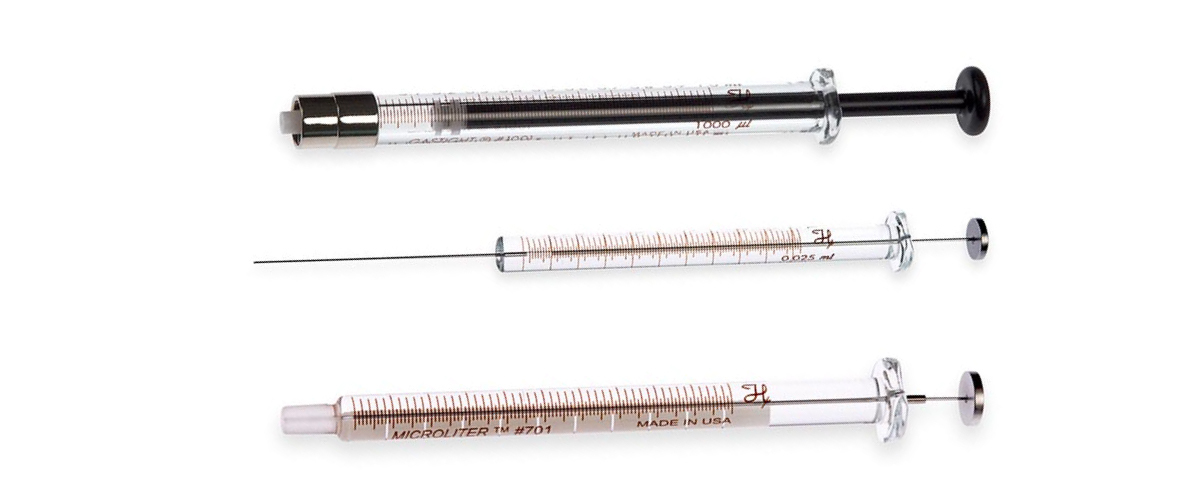
Syringe performance depends heavily on proper cleaning, careful handling, and consistent daily use practices. In GC, HPLC, and general laboratory applications, even small issues such as trapped air, residue buildup, bent needles, or improper plunger handling can reduce accuracy and precision. A well-maintained syringe lasts longer, performs more reliably, and supports more reproducible analytical results.
Chrom Tech supplies precision syringes for chromatography and laboratory workflows, including trusted options from Hamilton. For laboratories using manual syringes for sample preparation, injection, or fluid measurement, the most reliable results come from a repeatable care routine that includes inspection, priming, proper dispensing technique, cleaning, and protected storage.
Daily Syringe Use Best Practices
A simple daily-use protocol can improve both accuracy and syringe life. Before each use, inspect the syringe for visible damage such as cracks in the barrel, dried residue, or a damaged needle tip. Handle the syringe by the flange when possible to reduce measurement changes caused by body heat. Fully prime the syringe by aspirating and dispensing sample until trapped air is removed, then overfill slightly and slowly dispense down to the exact required volume.
After the final dispense, rinse the syringe with an appropriate cleaning solvent, follow with deionized water, and finish with acetone before drying and storage. Storing the syringe in its original protective case helps reduce the risk of breakage.
Inspection, Priming, and Dispensing Technique
Before use, inspect the syringe barrel for cracks and inspect the needle for burrs or surface damage. Burrs can damage GC septa, contribute to sample loss, and negatively affect injection quality. Syringes should also be used at a consistent temperature, with grip focused on the flange and plunger rather than warming the barrel unnecessarily.
To eliminate trapped air, immerse the needle point 2 to 3 mm into the sample and repeatedly draw and dispense until bubbles are no longer visible. This helps improve syringe accuracy because trapped air is compressible. To reduce sample carryover, flush the syringe 5 to 10 times with solvent and discard the first 2 to 3 washes.
For accurate dispensing, overfill the syringe slightly and dispense the excess until the desired volume is reached. Confirm that the syringe scale and the sample meniscus are aligned correctly, then clean the exterior of the needle with a lint-free tissue without touching the opening, which could wick away sample.
Cleaning and Chemical Compatibility
The life of a syringe is closely tied to cleanliness and chemical compatibility. In general, use solvents that are known to dissolve the sample effectively. Common routine cleaning solvents include methanol, acetonitrile, and acetone, and solvents should be high-purity grade to help avoid residue that can cause plungers to seize or stick.
Preferred cleaning agents are non-alkaline, non-phosphate, and non-detergent based. After cleaning, rinse the syringe with deionized water and then acetone. Wipe the exterior of the barrel and needle with a lint-free tissue and make sure no cleaning agent remains before use or storage.
Do not soak or fully submerge the entire syringe in cleaning solution, because prolonged exposure can damage bonded parts. Halogenated hydrocarbons, including methylene chloride, should be used with caution because they can attack certain glued syringe joints. For applications using those solvents, removable-needle syringes are often a better choice because no adhesive is present in the fluid path.
Cleaning Clogged Needles and Avoiding Damage
If a needle is only partially clogged, flush it with a solvent that will dissolve the blockage. For a completely clogged needle, do not force liquid or compressed air through the syringe, because excessive pressure can split the glass barrel. Instead, use an appropriate needle-cleaning wire and cleaning solution to loosen and remove the residue, then rinse thoroughly with deionized water and dry the syringe before reuse.
A clean syringe should not be lubricated. Grease should not be used because it can introduce cross-contamination and may cause the plunger to seize in the barrel.
Plunger Care and Handling
Never force the plunger. Excess force can bend it permanently or crack the glass barrel. Microliter syringes use hand-fitted plungers that form a liquid-tight seal and generally are not interchangeable if damaged. Gastight syringes use PTFE-tipped plungers that are replaceable and provide a tight seal for both liquids and gases.
Dry pumping should be avoided with Microliter syringes. Always wet the barrel interior with liquid before repeated plunger movement. Touching the plunger with bare fingers should also be avoided because scratches, abrasion, and oils from handling can interfere with proper operation.
If a plunger is accidentally removed, wipe it with a lint-free tissue and reinsert it carefully. For Gastight syringes, the PTFE plunger tip should be re-wet with solvent before reinsertion. If the plunger feels rough or binding, do not force it. Clean the syringe and plunger first, then test again.
Needle Care and Sample Considerations
Needles should be handled carefully to avoid bending, contamination, or injury. Minor burrs or roughness at the needle opening can be reduced by gently polishing with fine emery cloth or fine carborundum paper, followed by thorough rinsing and drying.
To reduce bending risk, use the largest needle outside diameter that fits the application. Bent needles generally cannot be restored reliably for analytical work. Samples with higher viscosity may need dilution or a larger inner-diameter needle for better handling and flow.
Needle dead volume should also be considered in low-volume work. After dispensing, a small residual volume remains in the needle, and the amount depends on needle inner diameter and termination style.
Sterilizing, Disinfecting, and Storage
Some syringe series can be sterilized or autoclaved, but this depends on construction. Rapid temperature changes should be avoided because they can crack the glass barrel. Ethylene oxide is an accepted sterilizing option for compatible syringes. Certain series may be autoclaved up to 115 °C, but repeated autoclaving shortens syringe life. Cemented needle syringes generally should not be autoclaved because glass and metal expand at different rates and can weaken the bonded connection.
If disinfection rather than sterilization is required, appropriate disinfectants may be used depending on the application. After normal use, flush the syringe with a solvent that dissolves the sample, then with other miscible solvents as needed, followed by deionized water and acetone. Air dry the syringe and store it in its original box or protective packaging.
Chrom Tech Support for Syringe Care and Selection
Good syringe care protects accuracy, improves reproducibility, and helps reduce replacement frequency in demanding laboratory workflows. Chrom Tech supports chromatography laboratories with manual syringes, syringe accessories, and technical guidance for GC, HPLC, and laboratory applications.
For help selecting replacement syringes, compatible syringe styles, or accessories for cleaning and maintenance, contact Chrom Tech technical support or browse Hamilton manual syringes from Chrom Tech.