
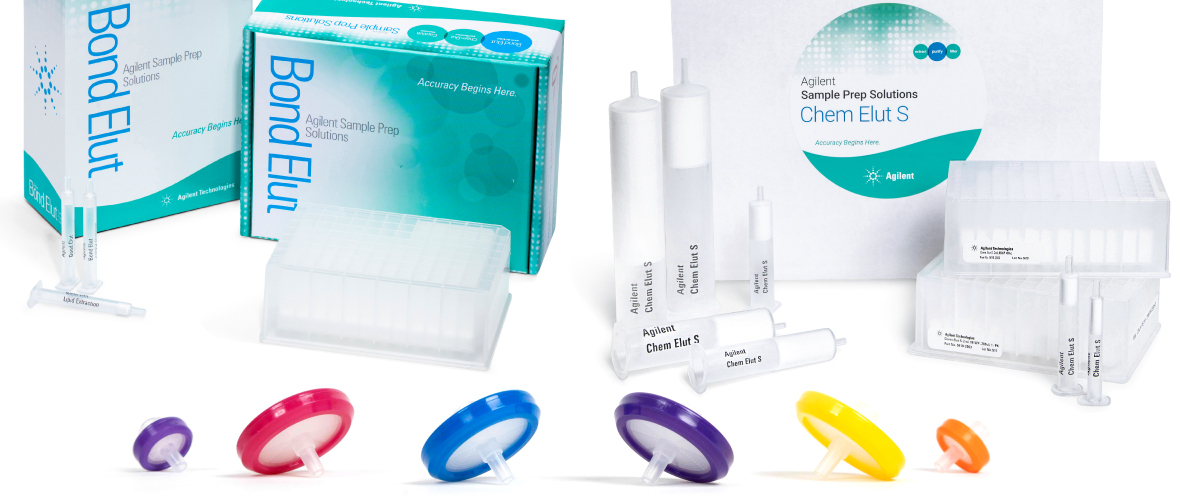
Efficient and consistent sample preparation is one of the most important requirements for high-quality chromatographic analysis. The goal is to produce a representative, reproducible, and homogeneous sample that is suitable for accurate quantitation and identification. A well-designed sample prep workflow also helps protect the analytical system, reduce variability, and support more dependable results.
As described in Agilent’s Sample Preparation Fundamentals for Chromatography, sample preparation should provide an aliquot that is relatively free of interferences, will not damage the column or instrument, and is compatible with the intended analytical method. In practice, that means streamlining the workflow in a way that improves both efficiency and reproducibility.
“The aim of sample preparation is to provide a sample aliquot that (a) is relatively free of interferences, (b) will not damage the column or instrument, and (c) is compatible with the intended analytical method. In chromatography, the sample solvent should dissolve in the HPLC mobile phase or be injectable into a GC column without affecting sample retention, resolution, or detection. It is further desirable to concentrate analytes and/or derivatize them for improved detection or better separation.”
Streamlining your sample preparation workflow helps reduce manual variability, improve data integrity, and support faster processing. For laboratories handling routine or high-throughput workflows, better sample prep design can improve consistency from extraction through final concentration.
Solid Phase Extraction as a Foundation for Streamlined Sample Prep
Solid Phase Extraction (SPE) remains one of the most reliable and reproducible techniques for sample cleanup and preconcentration. A standard SPE workflow typically includes four core steps:
- Conditioning the cartridge or plate
- Loading the sample
- Washing impurities to waste
- Eluting the target analytes with an appropriate solvent
These steps are commonly performed using either a vacuum manifold or a positive pressure manifold. Traditional vacuum manifolds can introduce variability because wells may dry at different rates, creating inconsistent flow conditions across the plate or rack. That inconsistency can reduce reproducibility and affect analyte recovery.
Why Positive Pressure Manifolds Improve Reproducibility
Chrom Tech’s Positive Pressure Manifolds are designed to provide more uniform flow control during sample processing. Unlike vacuum-based systems, positive pressure manifolds maintain consistent pressure across all wells, even when some positions are dry or empty.
This more uniform processing environment helps laboratories improve SPE reproducibility while reducing the flow variability that can occur with vacuum methods.
- Superior flow control: Restricted-flow gas ports maintain constant pressure even if only one well remains active.
- Strong performance with viscous samples: Operates at pressures up to 75 PSI for smooth, immediate flow response.
- Improved reproducibility: Helps eliminate inconsistencies caused by vacuum fluctuations.
Whether a laboratory is working in a 48-position or 96-position format, positive pressure manifolds can make SPE workflows more consistent and more efficient.
Reduce Transfers During Elution and Concentration
Another effective way to streamline sample prep is to minimize unnecessary handling steps between extraction and concentration. Chrom Tech supports this approach by pairing positive pressure manifolds with compatible evaporation systems.
For workflows using autosampler vials, samples can be directly eluted from the manifold into vials using the matching collection rack. That same rack can then be transferred into the Cerex Concentrator/Evaporator, saving time and helping reduce contamination risk associated with extra transfer steps.
For high-throughput workflows based on 96-well plates, Chrom Tech also offers Porvair Concentrators/Evaporators that support efficient evaporation in microplate formats. This setup is well suited to automated or semi-automated batch processing.
Flexible Rack Configurations for Laboratory Workflows
Chrom Tech’s 48 Position Positive Pressure Manifold and associated evaporators are available with different rack configurations to support multiple vial and plate formats. Many liquid handling systems can also be customized to integrate with Chrom Tech racks, helping laboratories automate more of the sample preparation workflow and reduce manual intervention.
For laboratories with specific application or format requirements, Chrom Tech can help determine which rack and manifold configuration best fits the workflow.

A More Efficient Sample Preparation Workflow
Streamlining your sample preparation workflow can improve reproducibility, reduce manual errors, and support more consistent analytical results. For SPE applications, pairing Chrom Tech’s Positive Pressure Manifolds with Cerex Concentrator/Evaporators or Porvair Concentrators/Evaporators creates a more cohesive workflow for processing samples efficiently and reliably.
For help selecting SPE instrumentation, vial handling options, or evaporation systems for your application, contact Chrom Tech’s technical team.