
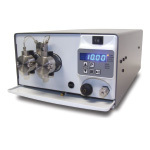
Selecting the right high-pressure pump is important for reliable solvent delivery in a wide range of applications. Although these pumps are commonly associated with HPLC systems, they are also used in oil and gas, chemical engineering, process development, and pharmaceutical manufacturing where accurate, consistent high-pressure flow is required.
Chrom Tech’s high-pressure solvent delivery pumps are designed to maintain precise flow rates even under significant system backpressure. As part of Chrom Tech’s HPLC instrumentation offering, these pumps are available with stainless steel or biocompatible PEEK flow paths, along with additional material options for more demanding chemistries. Selecting the right configuration means evaluating several practical factors before purchase.
1. Define the Required Flow Rate Range
The first step in pump selection is determining the flow range your application needs. Choosing a pump head that matches the intended flow range helps the system operate within its designed performance window and supports better long-term stability.
- Analytical pumps: can deliver accurate flow rates as low as 0.1 mL/min.
- Preparative pumps: can handle flow rates up to 300 mL/min with precision.
Matching the pump head to the intended application scale helps maintain accurate solvent delivery and reduces the risk of operating outside the pump’s optimal performance range.
2. Evaluate Solvent Compatibility
Different solvent systems require different fluid path materials to maintain chemical resistance and prevent corrosion or degradation. Chrom Tech pumps are available with stainless steel or PEEK biocompatible heads as standard options. For more aggressive or specialized chemistries, custom configurations are available with Hastelloy C or titanium heads.
Other wetted materials include synthetic ruby, sapphire, UHMWPE, and PTFE, supporting broad compatibility across many solvent systems. When compatibility is uncertain, Chrom Tech recommends contacting the technical support team for application guidance.
3. Understand System Back Pressure Requirements
Chrom Tech’s positive-displacement piston pumps use advanced cam designs to help maintain low-pulsation flow, even when system pressure changes. Most models include built-in check valves for dependable solvent delivery, but maintaining a minimum back pressure of 200 psi helps support proper check valve performance and more consistent flow.
If the system operates below that threshold, restrictive HPLC tubing can be used to introduce the needed back pressure, with the correct length depending on solvent viscosity and flow rate. For very demanding applications, Chrom Tech also offers pumps rated up to 18,000 psi.
4. Decide Whether Solvent Blending Is Needed
Applications that require solvent mixing or gradient formation may need more than a standard single-solvent delivery pump. For these workflows, the Chrom Tech Binary Pump is designed to support high-pressure gradient blending using two single-head piston pumps in one housing.
Key capabilities described in the source material include:
- Autonomous gradient control using an integrated Gradient Board without requiring a continuous PC connection
- Low pulsation through belt-drive cam design and an electronic fast refill system
- Programmable timed events, solvent selection valves, and leak detection
- Serial control options for direct command input and real-time monitoring
This makes the binary system a strong choice for two-solvent applications and more complex analytical workflows.
5. Consider Solvent Viscosity and Inlet Head Pressure
Viscous solvents can make solvent delivery more difficult if inlet head pressure is too low. To help prevent cavitation and maintain stable flow, solvent reservoirs should be positioned above the pump. For highly viscous solvents, helium sparging can also help improve degassing and support more stable inlet conditions.
6. Review Additional Performance and Integration Factors
Chrom Tech HPLC pumps are designed for continuous operation and are described as capable of running 24 hours a day, 7 days a week, 365 days a year. The source material also notes a 3-year warranty and several practical built-in features:
- Real-time pressure monitoring with automatic shutdown if limits are exceeded
- Prime and purge valves for faster solvent switching
- Customizable configurations for OEM or modular system integration
These details can matter when selecting a pump for standalone use or for incorporation into a larger process system.
Choosing the Right High-Pressure Solvent Delivery Pump
Selecting a pump for high-pressure solvent applications requires balancing flow range, solvent compatibility, back pressure, solvent blending needs, and system design requirements. The best pump is the one that matches both the chemistry and the operating demands of the application.
Chrom Tech’s portfolio of solvent delivery pumps is built to support analytical, preparative, and industrial workflows with a focus on precision, durability, and system integration. For help choosing the right configuration, contact Chrom Tech’s technical experts.