
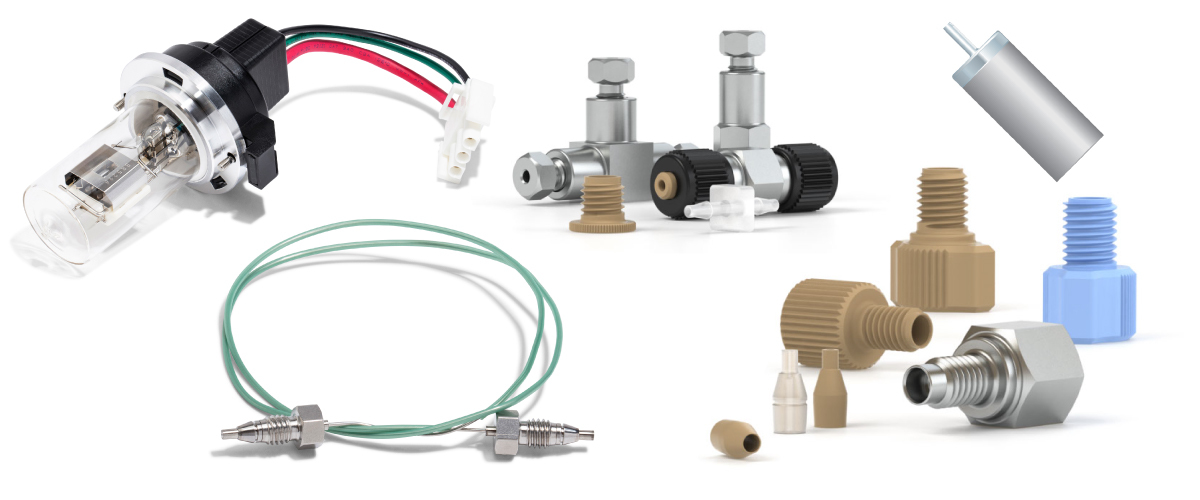
Dead volume refers to the extra space in an HPLC system where the mobile phase can stagnate instead of moving smoothly through the intended flow path. In chromatography, this unused internal space can create several undesirable effects, including analysis delays, broadened peaks, poor resolution, sample carry-over, and split peaks.
A practical way to reduce dead volume is to match the tubing internal diameter as closely as possible to the diameter of the thru-holes in connected system components. This helps the fluid pass cleanly through each internal passageway instead of entering a wider void where turbulence or pooling can occur. Diameter matching also helps reduce flow disruption at the connection, supporting better chromatographic performance.
Understanding how dead volume affects chromatographic resolution is essential when optimizing an LC system. Tubing, fittings, connectors, and installation quality all play an important role. Careful selection and proper installation of these components help minimize dead volume and improve chromatography efficiency.
What Is Dead Volume in Chromatography?
In chromatography, dead volume refers to internal areas where the mobile phase can pool, slow down, or stagnate rather than contributing efficiently to the separation process. These spaces do not directly support chromatographic separation, but they can still influence how analytes travel through the system.
When dead volume is present, it often causes sample bands to spread out before or after they pass through the column. This lowers separation quality and makes it more difficult to resolve closely eluting compounds accurately.
Common sources of dead volume include:
- Gaps or voids in fittings and connections
- Excessive tubing length or incorrect tubing diameter
- Misalignment or improper installation of components
Because dead volume can reduce separation quality and introduce variability, identifying and minimizing it is an important part of LC system optimization.
How Dead Volume Impacts Chromatographic Resolution and Efficiency
Dead volume has a direct negative effect on chromatographic resolution. One of the most common consequences is peak broadening, which makes it harder to distinguish closely eluting analytes. As peaks become wider and less defined, the accuracy of the separation declines.
High-performance chromatography depends on sharp, distinct peaks. When dead volume increases, flow becomes less controlled and the sample band disperses more than intended. This can compromise the accuracy of the analysis, particularly in methods where high resolution is required.
Dead volume also reduces efficiency by disrupting flow dynamics within the LC system. Instead of moving through a smooth, continuous path, the mobile phase encounters areas where mixing, turbulence, or delay can occur. This can lead to inconsistent results and reduced reproducibility between runs.
Important factors that influence dead volume include:
- Choosing suitable tubing diameters and lengths
- Ensuring proper installation of fittings and connectors
- Selecting materials that are compatible with the solvents and samples used
Optimizing these variables helps maintain a cleaner flow path and supports more reliable chromatography performance.
The Role of HPLC Tubing in Minimizing Dead Volume
HPLC tubing plays a major role in minimizing dead volume. Both the internal diameter and the length of the tubing affect how efficiently fluid moves through the system. Proper tubing selection is essential for maintaining the intended flow rate and reducing excess internal volume.
Tubing material also matters. The correct material must be compatible with the sample and solvent system while maintaining reliable mechanical performance. Different tubing materials offer different levels of chemical resistance and durability.
Key tubing considerations include:
- Using an appropriate tubing internal diameter for the application
- Choosing tubing material based on solvent and sample compatibility
- Selecting tubing lengths that avoid unnecessary internal volume
Following these guidelines helps reduce the effects of dead volume and supports sharper peaks, improved resolution, and more reliable liquid chromatography results.
How Fittings, Unions, and Adapters Affect LC Performance
Fittings, unions, and adapters also have a strong influence on LC system performance. When these components are installed incorrectly or do not align properly, they can create gaps that increase dead volume and reduce resolution.
The best fitting and connector choices are those that minimize internal void space while still providing strong, leak-free connections. Material quality is also important because fittings must remain chemically compatible and mechanically stable under operating conditions.
Important fitting selection factors include:
- Precision of fit and alignment
- Material compatibility with solvents
- Ability to withstand pressure without deformation
Regular inspection of these components is essential. Worn, damaged, or poorly seated fittings should be addressed quickly to prevent performance problems and maintain reliable separations.
Best Practices for Selecting and Installing HPLC Accessories
Selecting the right HPLC accessories is important for controlling dead volume and maintaining system accuracy. The first step is understanding the pressure requirements, solvent compatibility, and dimensional needs of your system so that tubing, fittings, and connectors all work together properly.
Installation quality is equally important. Accessories should be properly aligned and securely installed to avoid leaks, internal gaps, or unnecessary void spaces. Poor installation can compromise even high-quality components.
Best practices include:
- Ensuring compatibility with the solvent and sample
- Using recommended tools during installation
- Regularly calibrating and testing accessory performance
Proper handling and installation practices help improve reliability, reduce troubleshooting issues, and support long-term LC system performance.
Troubleshooting and Maintenance Tips to Reduce Dead Volume
Routine troubleshooting and preventive maintenance are important for keeping dead volume under control. A good maintenance process starts with regular inspection of the flow path to identify obstructions, misaligned connections, damaged tubing, or worn fittings.
Leaks should be addressed immediately, as they often indicate installation problems or damaged connection points. Replacing worn components before they fail can prevent unnecessary dead volume from developing.
A practical maintenance routine may include:
- Visual inspections of tubing and fittings
- Replacing damaged or aging parts
- Checking and tightening all connections
These steps help maintain stronger chromatographic performance and improve the reliability of the LC system over time.
Advances in Low-Dead-Volume Technology for HPLC Systems
Recent advances in HPLC hardware have focused on reducing dead volume through improved component design. Newer tubing, fittings, and connectors are engineered with tighter tolerances, smaller internal volumes, and smoother flow paths to support higher resolution applications.
Examples of low-dead-volume innovations include:
- Enhanced compact connectors
- Ultra-low-volume fittings
- Precision-engineered flow paths
Integrating low-dead-volume technologies into an LC system can improve data quality, support more consistent results, and make high-performance separations easier to achieve.
Conclusion
Understanding dead volume in HPLC is essential for improving chromatographic resolution and overall system efficiency. Tubing, fittings, unions, and connectors all influence how smoothly the mobile phase moves through the LC system.
Careful selection of tubing dimensions, proper installation of accessories, and regular maintenance can all help reduce dead volume and improve reproducibility. Combined with newer low-dead-volume technologies, these practices support stronger chromatography performance and more reliable analytical results.