
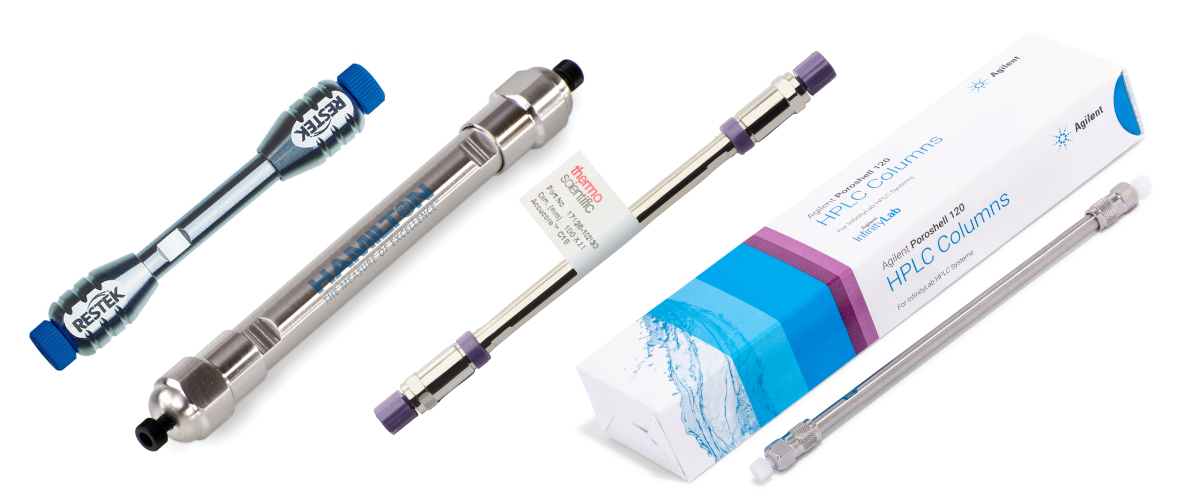
How many injections an HPLC column can last depends on several important factors. The most common variables include:
- Whether you are injecting dirty or clean samples
- Whether you follow the manufacturer’s recommended operating conditions
- Whether you use HPLC accessories such as guard columns or inline filters to protect the analytical column
Each of these factors has a direct effect on how many injections the column can tolerate before backpressure rises, peak shape changes, or selectivity declines.
What Are You Injecting Onto Your HPLC Column?
Sample cleanliness is one of the biggest influences on HPLC column life. Chromatographers working with relatively clean matrices—such as standards or pharmaceutical formulations—can often achieve thousands of injections per column.
Clinical, environmental, and bioanalytical laboratories often work with more complex or “dirty” samples containing proteins, lipids, salts, or biological residues. Even after sample preparation, these materials can shorten column life, increase backpressure, and cause fouling at the inlet frit or on the stationary phase.
Are You Following the Column Manufacturer’s Recommended Conditions?
Every HPLC column is designed to operate within a defined range of pH, temperature, and pressure. Running outside those limits can shorten column life and reduce the number of successful injections you can obtain.
- Low pH: Can promote hydrolysis and detachment of bonded phases from the silica surface
- High pH: Can dissolve silica and damage stationary phase integrity
- High temperature or pressure: Extended exposure near the maximum operating limit can accelerate column deterioration
Following manufacturer recommendations helps preserve stationary phase stability and maintain more consistent chromatographic performance over time.
Which HPLC Column Phase Are You Using?
Some stationary phases are more rugged than others. Over time, the bonded phase backbone may degrade, which can create packing voids and lead to peak splitting, peak broadening, and lower resolution.
Choosing a column phase that is appropriate for the sample matrix, pH conditions, and solvent system can help improve durability and maintain sensitivity across a higher number of injections.
Are You Protecting Your HPLC Column?
Using HPLC accessories such as guard columns and inline filters is one of the most effective ways to extend analytical column life.
Inline filters are relatively inexpensive and trap particulates before they reach the column. Guard columns, which typically use the same stationary phase as the analytical column, capture strongly retained contaminants before they can foul the main column bed. Replacing a guard column is significantly less expensive than replacing the analytical HPLC column.
How to Use Injection Count as a Troubleshooting Tool
Because sample type, solvent quality, and maintenance practices vary, there is no universal answer for how many injections an HPLC column should last. However, your system’s injection counter can be a useful diagnostic tool.
If a method that normally delivers around 2,000 injections suddenly drops to 500 before the column performance declines, it is time to troubleshoot the workflow rather than simply blaming the column.
Common issues to check include:
- Incorrectly prepared or contaminated mobile phase
- Changes in solvent lot or mobile phase pH
- Modified sample preparation or filtration steps
- Microbial growth in solvent bottles or tubing
Monitoring injection history, system pressure, and chromatographic performance together provides a more useful picture of column condition than injection count alone.