
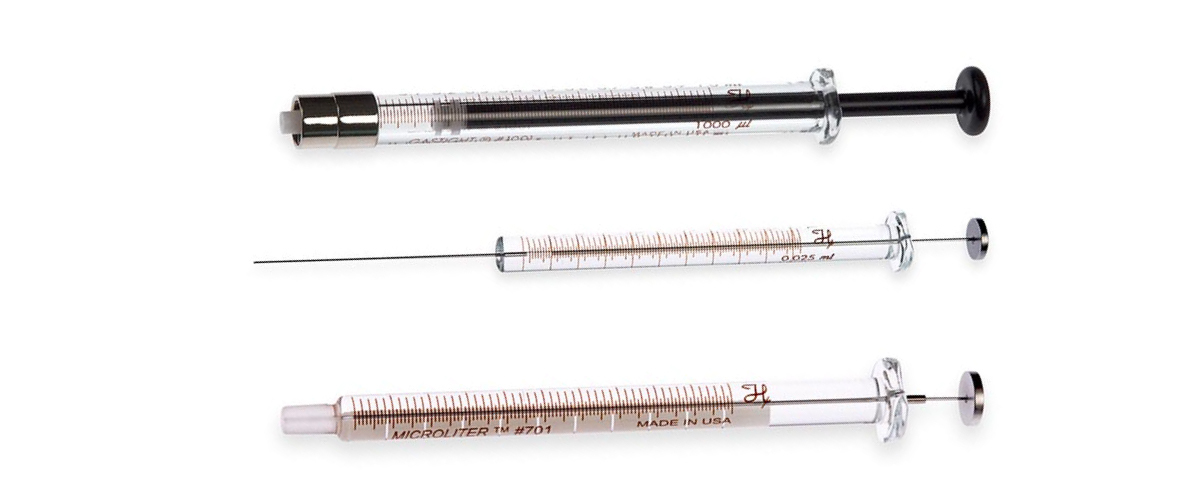
Syringes are essential tools in both HPLC and GC workflows because they introduce the sample into the analytical flow path. Accurate syringe selection helps support consistent injections, better reproducibility, and proper compatibility with the application. Chrom Tech offers HPLC and GC syringes from trusted brands including Hamilton, Agilent, and Trajan SGE.
When choosing a manual syringe for GC, HPLC, or laboratory use, start with four core selection factors: syringe type, needle point style, needle gauge, and termination. Together, these define how the syringe handles the sample, interacts with septa or ports, and fits the intended instrument or workflow.
1. Choose the Right Syringe Type
The two main syringe categories are microliter syringes and gastight syringes.
- Microliter syringes are used for precision liquid injections and are commonly selected for HPLC work.
- Gastight syringes use a PTFE plunger tip to help prevent leaks and are well suited to GC, HPLC, and applications involving gaseous or volatile samples.
Starting with the correct syringe type helps narrow the rest of the selection process and ensures the syringe is appropriate for the sample state and injection method.
2. Match the Needle Point Style to the Application
Needle point style affects how the syringe penetrates septa, resists clogging, and delivers the sample. The blog identifies four common syringe needle designs used in chromatography:
- Beveled – best for GC septum piercing
- Blunt – ideal for HPLC injections and general liquid handling
- Conical with side port – helps reduce clogging in headspace and viscous samples
- Conical non-coring – durable design for autosamplers and pre-pierced septa
Point Style Reference Table
| Point Style | Image | Description | Common Application |
|---|---|---|---|
| 2 | 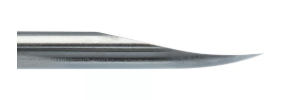 |
10–12° beveled, curved tip | Gas chromatography, septum piercing |
| 3 | 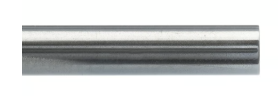 |
Blunt, electro-polished tip | HPLC injection, TLC, liquid handling |
| 5 | 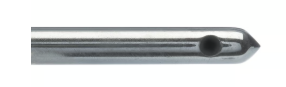 |
Conical with side port | Headspace GC, clog-prone samples |
| AS | 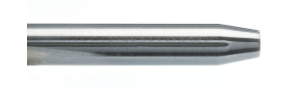 |
Conical, non-coring, durable design | Autosampler use, pre-pierced septa |
3. Understand Needle Gauge
Needle gauge refers to the outer diameter of the syringe needle. A higher gauge number means a smaller needle diameter. The suffix s, such as in 26s, indicates a reinforced wall that improves rigidity and durability.
Common Chromatography Needle Gauges
| Gauge | OD (mm) | ID (mm) | Wall Thickness (mm) |
|---|---|---|---|
| 26s | 0.474 | 0.127 | 0.178 |
| 26 | 0.464 | 0.26 | 0.102 |
| 25s | 0.515 | 0.26 | 0.127 |
| 24 | 0.566 | 0.311 | 0.127 |
| 23s | 0.642 | 0.116 | 0.267 |
| 23 | 0.642 | 0.337 | 0.152 |
| 22s | 0.718 | 0.168 | 0.279 |
| 22 | 0.718 | 0.413 | 0.152 |
Most chromatography syringes commonly fall in the 23–26 gauge range, with the specific gauge chosen based on durability, sample type, and application fit.
4. Select the Correct Syringe Termination
Syringe termination defines how the needle or fitting connects to the syringe barrel. The right termination depends on volume, injection style, and system compatibility.
- Cemented Needle: permanent needle attachment for low-volume manual syringes
- Removable Luer Tip: flexible option for mid-volume use and multiple needle types
- Knurled Hub: adds grip on modified microliter syringes for manual handling
- Fixed Needle: commonly used for CTC autosamplers and robotic injection systems
- PTFE Luer Lock, SampleLock, Bubble-Free: specialty options that improve sealing and reproducibility
Choosing a Manual Syringe with More Confidence
Manual syringe selection becomes much easier when the choice is broken into syringe type, point style, gauge, and termination. For HPLC, this often means selecting a microliter syringe with a blunt-style point and the correct gauge for liquid handling. For GC and volatile samples, gastight syringes and beveled or specialty conical point styles may be the better fit.
For help choosing a syringe that matches your instrument and workflow, contact Chrom Tech at sales@chromtech.com.