
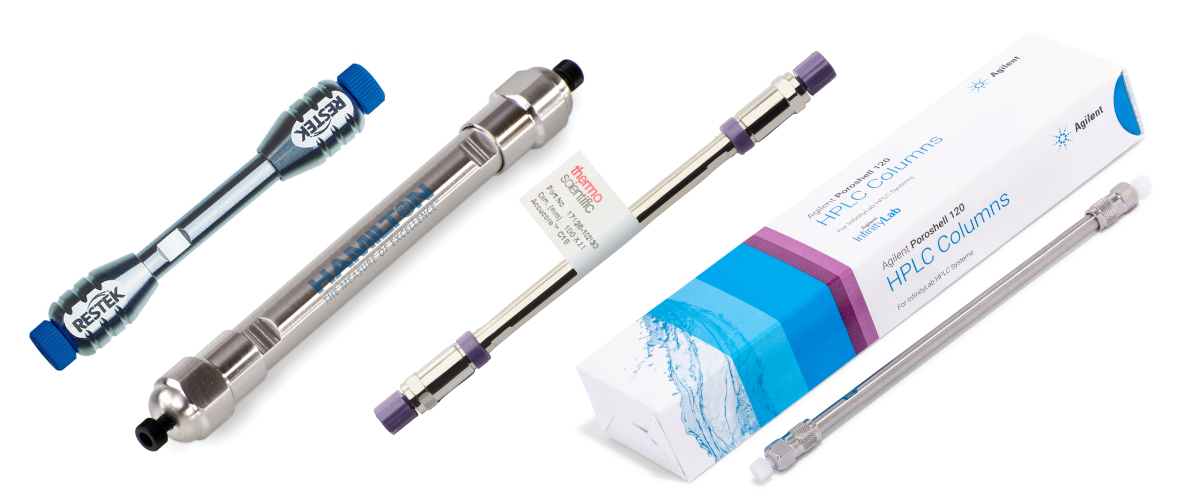
In any liquid chromatography system, the HPLC column is the core of the separation process. It is where analytes are resolved for qualitative and quantitative analysis. Although HPLC columns eventually require replacement, there are practical and cost-effective ways to extend their useful life without compromising reproducibility or chromatographic accuracy. One of the most effective tools is the guard column.
“Guard columns are a simple, cost-effective way to maximize the life of your LC column.”
What Is a Guard Column?
A guard column is a short, replaceable cartridge—typically one to two inches long—installed between the injector and the analytical column. It connects using standard HPLC fittings and acts as a protective barrier that traps contaminants before they reach the analytical column.
For best results, the guard column should use a stationary phase that is identical or very similar to the analytical column. Its internal diameter should also closely match the analytical column to avoid introducing unnecessary dead volume or excess backpressure. Keeping the guard cartridge as short as possible helps preserve system efficiency while still providing protection.
Why Use a Guard Column?
Over time, impurities such as salts, fatty acids, proteins, and other strongly retained materials can accumulate in the front of the analytical column. This buildup may lead to higher system pressure, increased baseline noise, poorer peak shape, and shorter column lifetime.
Guard columns help intercept these contaminants before they reach the main column bed. Because guards are much less expensive than full analytical columns, replacing them regularly is a practical way to reduce operating cost and minimize instrument downtime.
Protecting the analytical column also helps preserve:
- Peak symmetry
- Baseline stability
- Run-to-run reproducibility
- Analytical column lifetime
When Should a Guard Column Be Replaced?
The replacement interval for a guard column depends on factors such as sample cleanliness, mobile phase composition, and how often the method is used. A gradual increase in system pressure is often one of the clearest signs that the guard has become loaded with retained material.
Replacing the guard promptly helps prevent contaminant breakthrough into the analytical column. Because guard replacement is relatively quick and inexpensive, it is one of the easiest maintenance steps for preserving chromatography performance.
Guard columns work even better when combined with good sample preparation practices. For example, using Chrom Tech syringe filters to remove particulates before injection can further reduce contamination and extend both guard and analytical column life.
Why Guard Columns Improve Long-Term HPLC Performance
Guard columns are a simple but effective way to improve method reliability and reduce replacement costs. By trapping contaminants before they reach the analytical column, they help maintain cleaner flow paths and more consistent chromatographic performance over time.
For laboratories running complex or dirty sample matrices, guard columns are often one of the most valuable preventive maintenance tools available. Matching the correct guard chemistry and dimensions to the analytical method helps ensure protection without sacrificing separation quality.