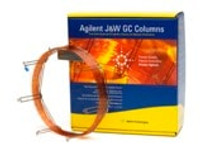
HP-PONA

HP-PONA Column

Application-Specific GC Columns

Agilent J&W HP-PONA GC columns are engineered for high-resolution separation of complex petroleum-range hydrocarbons, supporting detailed characterization of paraffins, isoparaffins, naphthenes, aromatics, and olefins (PIANO). These columns provide the selectivity and efficiency required for refinery product certification, blending optimization, feedstock profiling, and other detailed hydrocarbon analysis workflows.

Featuring a nonpolar 100 percent dimethylpolysiloxane stationary phase, HP-PONA columns deliver exceptionally sharp, well-resolved peaks across the gasoline boiling range. Their bonded and crosslinked chemistry ensures low bleed, high thermal stability, and reliable retention time reproducibility—essential for long-term DHA and PONA performance in high-throughput petroleum labs.

Every HP-PONA column is rigorously factory-tested to ensure resolution of critical isomer pairs, including m-xylene versus p-xylene and cyclopentane versus 2,3-dimethylbutane. This guarantees accurate, repeatable quantitation of structurally similar species and supports analyzer-grade performance for ASTM and industry-defined hydrocarbon characterization methods.
Key Definitions â–¸
PIANO Analysis
A detailed hydrocarbon analysis technique that classifies petroleum-range components into paraffins, isoparaffins, aromatics, naphthenes, and olefins. HP-PONA columns are specifically engineered to resolve these groups, enabling accurate compositional evaluation of gasoline and reformate samples.
100 Percent Dimethylpolysiloxane Phase
A nonpolar stationary phase widely used for petroleum and hydrocarbon analysis. This chemistry supports sharp peak shapes and reliable retention behavior for the complex mixture of C5–C12 hydrocarbons encountered in PONA and DHA workflows.
Critical Pair Resolution
The separation of closely related isomeric hydrocarbons that serve as performance benchmarks for PONA columns, such as m-xylene versus p-xylene and cyclopentane versus 2,3-dimethylbutane. Successful resolution of these pairs indicates proper selectivity and column efficiency.
Detailed Hydrocarbon Analysis (DHA)
An advanced GC technique that identifies and quantifies individual hydrocarbons in gasoline and naphtha. HP-PONA columns provide the necessary peak capacity, inertness, and stability to support ASTM-conforming DHA results.
Retention Index Stability
The ability of a GC column to maintain consistent retention times across multiple injections and long-term use. HP-PONA columns are engineered for superior retention index stability, ensuring reliable component identification in complex petroleum samples.
Frequently Asked Questions â–¸
What applications are HP-PONA columns best suited for?
HP-PONA columns are optimized for detailed hydrocarbon analysis of petroleum samples, including gasoline, reformate, naphtha, and other refinery streams. They are ideal for separating paraffins, isoparaffins, naphthenes, aromatics, and olefins (PIANO) with the high resolution required for regulatory and refinery-quality control workflows.
How does HP-PONA differ from CP-Sil PONA CB?
Both columns are designed for PONA/DHA work, but HP-PONA uses a 100 percent dimethylpolysiloxane stationary phase, while CP-Sil PONA CB offers a slightly different selectivity profile. HP-PONA is often selected for analyzers requiring strict isomer resolution benchmarks and is widely used in high-throughput refinery DHA systems.
What critical pairs must HP-PONA columns be able to resolve?
HP-PONA columns are factory-tested to ensure resolution of industry-standard critical isomer pairs, including m-xylene versus p-xylene and cyclopentane versus 2,3-dimethylbutane. Resolution of these pairs confirms proper selectivity and efficiency for ASTM-aligned DHA workflows.
How durable are HP-PONA columns for routine, daily refinery testing?
HP-PONA columns are bonded, crosslinked, and solvent rinsable, providing long lifetimes even in continuous DHA workflows. Their exceptional retention index stability ensures consistent performance over extended operating cycles and heavy sample loads.
Are HP-PONA columns compatible with PONA/DHA analyzer systems and valve-switching setups?
Yes. HP-PONA columns are widely used in dedicated PONA and DHA analyzer configurations, including systems with valve switching and multiple detector setups. Their high reproducibility makes them suitable for integrated refinery lab workflows and automated high-throughput systems.