
HP-35

HP-35 Column

Standard Polysiloxane GC Columns

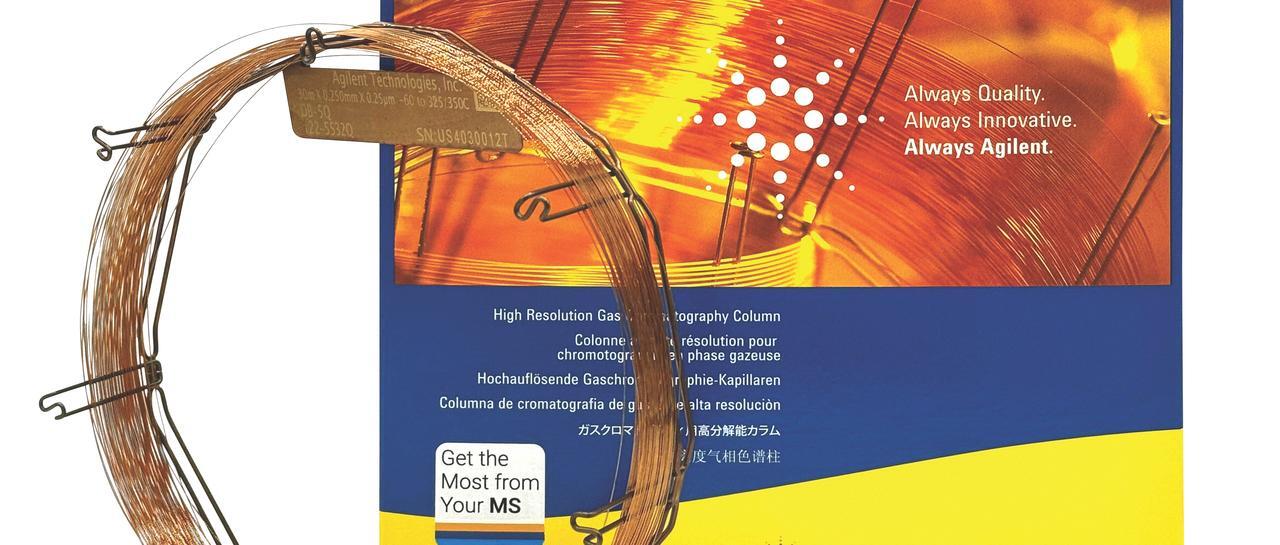
Agilent J&W HP-35 is a mid-polarity GC column engineered with a (35%-phenyl)-methylpolysiloxane stationary phase, offering significantly enhanced selectivity compared to nonpolar phases like HP-5 or HP-1. The high phenyl content provides stronger aromatic and dipole interactions, enabling improved resolution of structurally similar compounds and more refined chromatographic behavior for challenging separations.

HP-35 is specifically listed in **EPA Method 8081** and matches **USP phase G42**, making it an excellent choice for regulated or compendial workflows that require this stationary phase selectivity. Its intermediate polarity makes it ideal for pesticides, herbicides, pharmaceuticals, amines, aromatic compounds, environmental contaminants, and other analytes where additional separation power is needed beyond what a low-polarity phase provides.

Bonded and crosslinked for maximum thermal stability, HP-35 delivers strong inertness toward active solutes, sharp peak shapes, and low bleed performance suitable for GC/MS applications. Its rugged construction supports aggressive temperature programs, solvent rinsing, and long-term reliability in high-throughput laboratories. The combination of mid-polarity selectivity and stringent Agilent QC standards ensures consistent retention behavior, reproducible chromatographic performance, and dependable results across instruments and batches.

Key Definitions â–¸
(35%-Phenyl)-Methylpolysiloxane Phase
A mid-polarity stationary phase containing 35% phenyl substitution, offering significantly stronger aromatic and dipole interactions than low-phenyl phases. This chemistry enhances resolution for isomers, pesticides, pharmaceuticals, and complex organic mixtures.
EPA Method 8081
A widely used U.S. EPA method for organochlorine pesticide analysis. HP-35 is explicitly listed for this method, making it an excellent choice for environmental laboratories that require regulatory compliance and consistent retention behavior.
USP Phase G42
A United States Pharmacopeia–designated stationary phase classification required for some pharmaceutical and regulated GC applications. HP-35 matches USP G42, ensuring compliance with compendial method requirements.
Mid-Polarity Selectivity
A chromatographic selectivity class between low-polarity and high-polarity phases. Mid-polar behavior improves separation of moderately polar or structurally similar analytes, including pesticides, aromatics, amines, and drug-related compounds.
Bonded and Crosslinked
A manufacturing approach in which the stationary phase is chemically attached to the column interior (bonded) and further reinforced through crosslinking. This provides excellent thermal stability, low bleed, and the ability to solvent-rinse the column without damaging the stationary phase.
Frequently Asked Questions â–¸
What applications are HP-35 columns best suited for?
HP-35 is ideal for pesticide and herbicide analysis, pharmaceutical compounds, amines, aromatic species, and other moderately polar analytes. Its mid-polarity (35%-phenyl) phase provides stronger interactions than nonpolar columns, improving resolution for challenging or structurally similar compounds.
Why is HP-35 commonly used in EPA Method 8081 workflows?
HP-35 is explicitly specified in EPA Method 8081 for organochlorine pesticide analysis. Its enhanced phenyl content provides the necessary selectivity and resolution required to meet method performance criteria and regulatory expectations.
Is HP-35 equivalent to USP phase G42?
Yes. HP-35 matches USP G42 selectivity, enabling its use in compendial and pharmaceutical methods that require this stationary phase classification. This equivalence helps ensure regulatory compliance and consistent chromatographic performance.
Can HP-35 be used for GC/MS applications?
Absolutely. HP-35 offers low bleed, strong inertness, and excellent thermal stability, making it well suited for GC/MS analysis of mid-polarity compounds. It delivers clean baselines and high mass spectral fidelity, especially for aromatic or moderately polar analytes.
What are the advantages of bonded and crosslinked construction in HP-35?
Bonding and crosslinking improve the stationary phase’s thermal durability, reduce phase bleed, and allow solvent rinsing without damaging the column. This construction supports aggressive temperature programs and ensures long-term reliability in demanding GC workflows.