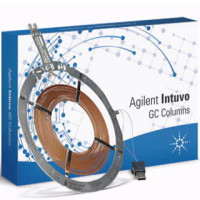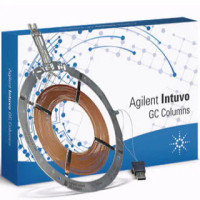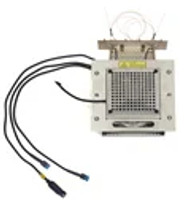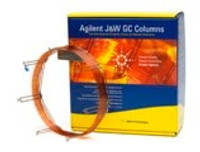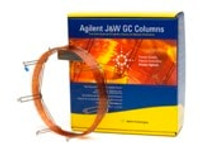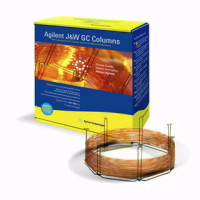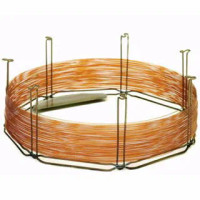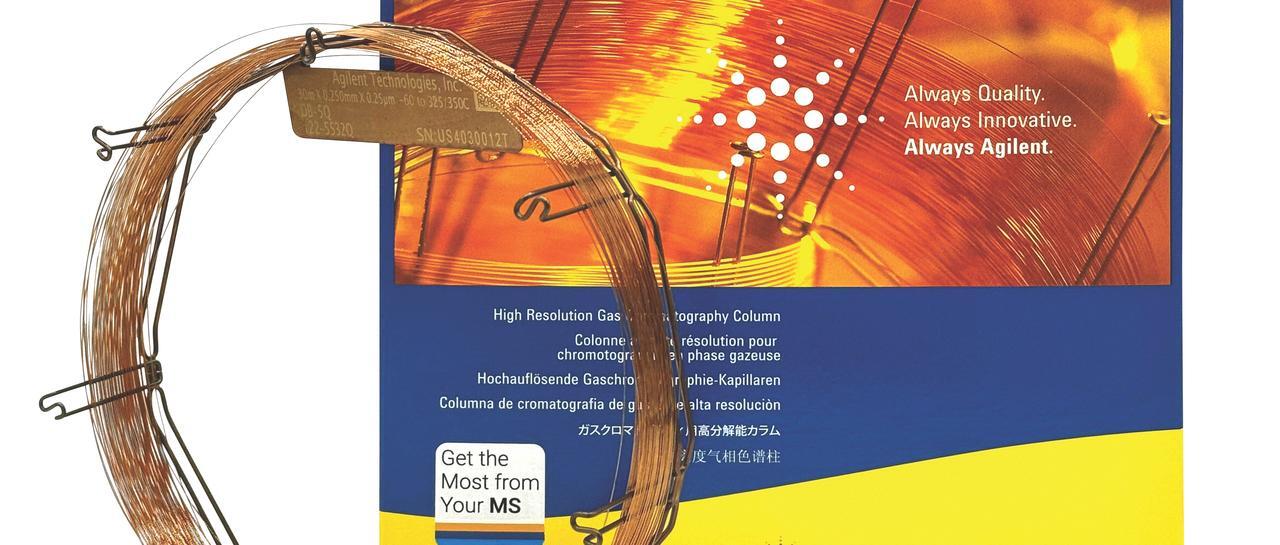
HP-1ms Low-Bleed

HP-1ms Low-Bleed

Agilent HP-1ms Low-Bleed GC Columns

  • 100% dimethylpolysiloxane stationary phase for predictable, non-polar selectivity
  • Matches the selectivity of Agilent HP-1 for easy method transfer and workflow continuity
  • Non-polar column ideal for a broad range of analytes in GC and GC/MS
  • Low-bleed design improves baseline stability in high-temperature applications
  • Reliable general-purpose column for environmental, forensic, petrochemical, and industrial analyses
  • Enhanced signal-to-noise ratio for improved sensitivity and cleaner mass spectral data
  • Fully bonded and cross-linked for durability, thermal stability, and long operational life
  • Solvent-rinsable construction enables cleanup and extended usability when handling dirty matrices

Agilent HP-1ms Low-Bleed GC columns provide rugged, reliable performance for laboratories requiring high-quality, non-polar separations with minimal bleed—especially in GC/MS workflows where spectral clarity and detection limits are critical. The 100% PDMS stationary phase offers predictable retention behavior and excellent peak shapes across a wide analyte range, from volatile compounds to mid-boiling semi-volatiles.

Designed for robustness and method compatibility, HP-1ms columns deliver improved signal-to-noise ratios, high inertness, stable baselines, and consistent reproducibility. They serve as dependable columns for routine testing as well as demanding trace-level applications where low bleed and reliable mass spectral integrity are essential.

Similar Phases: Rtx-1ms, Rxi-1ms, MDN-1, AT-1, ZB-1ms, Equity-1


Key Definitions â–¸
Dimethylpolysiloxane (PDMS)
A non-polar silicone-based stationary phase widely used for general-purpose GC separations. Its predictable retention behavior, thermal stability, and inertness make PDMS ideal for routine and high-sensitivity GC/MS applications.
Low-Bleed Column
A GC capillary column engineered to minimize stationary-phase bleed at elevated temperatures. Low bleed improves baseline stability, signal-to-noise performance, and mass-spectral integrity—especially important in GC/MS workflows.
Bonded and Cross-Linked
A manufacturing process where the stationary phase is chemically anchored to the column walls and cross-linked to enhance durability. This enables high-temperature use, resistance to breakdown, and solvent rinsing for extended column life.
Solvent-Rinsable
Indicates that the column can be cleaned using compatible solvents to remove non-volatile residue or contamination. Solvent rinsing helps restore performance and prolong column lifetime, especially when analyzing dirty or complex matrices.
Selectivity
A measure of how a GC column separates chemically similar compounds. HP-1ms columns have identical selectivity to HP-1, ensuring seamless method transfer and consistent retention behavior across laboratories and instruments.
Frequently Asked Questions â–¸
What is the difference between HP-1 and HP-1ms columns?
Both columns share identical non-polar selectivity, but HP-1ms columns are manufactured for significantly lower bleed, making them better suited for GC/MS applications where spectral clarity, background noise, and sensitivity are critical.
What applications are HP-1ms columns typically used for?
HP-1ms columns are used widely in environmental testing, forensic toxicology, petrochemical profiling, industrial QC, and general-purpose analyses that require non-polar selectivity and low-bleed performance for GC/MS detection.
Why is low bleed important in GC/MS?
Low bleed reduces background interference and improves signal-to-noise ratios, allowing more accurate identification and quantitation of analytes—particularly at low concentrations or in complex matrices.
Can HP-1ms columns be solvent-rinsed?
Yes. Because HP-1ms columns are bonded and cross-linked, they support solvent rinsing to remove contaminants, restore chromatographic performance, and extend column lifetime—especially when working with dirty or heavy matrices.
Are HP-1ms columns suitable for high-temperature methods?
Yes. The bonded and cross-linked phase supports higher temperature limits and provides stable performance during extended elevated-temperature operation, which is beneficial for mid- to high-boiling compounds.