HP-1

HP-1 Column

Standard Polysiloxane GC Columns

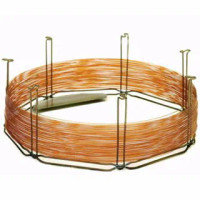
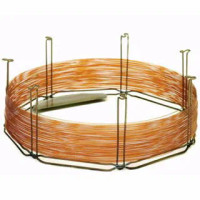
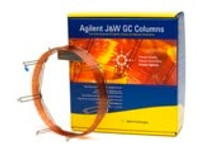
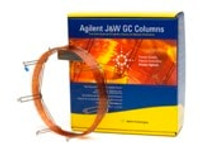
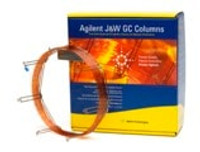
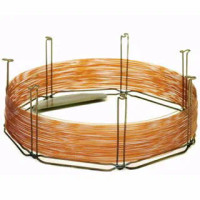
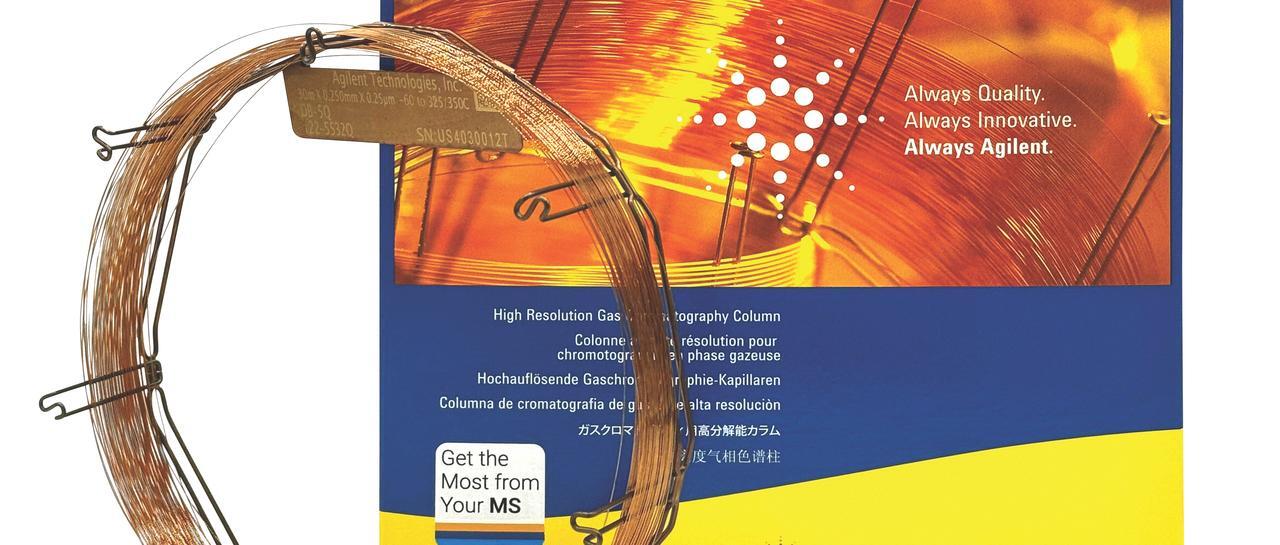
Agilent J&W HP-1 is a widely recognized 100% dimethylpolysiloxane GC column designed for broad-spectrum, general-purpose analyses. Long considered an “industry standard,” HP-1 delivers predictable nonpolar selectivity, excellent thermal stability, and consistently low bleed—making it a versatile and dependable choice for routine and high-performance GC applications across many industries.

With its fully nonpolar stationary phase, HP-1 excels at separating hydrocarbons, alkanes, low molecular weight alcohols, sulfur compounds, polychlorinated biphenyls (PCBs), pesticides, and a wide range of volatile and semi-volatile organic compounds. This makes it especially valuable for environmental testing, petrochemical profiling, industrial chemical QC, food and fragrance analysis, and general method development in both GC and GC/MS workflows.

HP-1’s bonded, cross-linked phase delivers rugged performance under elevated temperatures and is fully solvent-rinsable, supporting longer column life and improved reproducibility when working with heavy matrices or complex samples. Its stable baselines and reproducible retention behavior enable highly reliable quantitation and strong mass spectral integrity, making HP-1 an excellent foundational column for routine GC methods and analytical laboratories seeking proven performance.


Key Definitions
100% Dimethylpolysiloxane Phase
A fully nonpolar stationary phase widely used in GC and GC/MS for its predictable elution order and broad applicability. HP-1’s dimethylpolysiloxane chemistry provides excellent thermal stability and is suitable for volatiles, semivolatiles, hydrocarbons, and many industrial organics.
Nonpolar Selectivity
A selectivity type dominated by dispersion forces rather than polar interactions. Nonpolar columns like HP-1 yield predictable retention patterns, making them ideal for hydrocarbons, pesticides, alcohols, sulfur compounds, and PCBs.
Bonded and Cross-Linked
A manufacturing technique in which the stationary phase is chemically bonded to the column wall and further stabilized through cross-linking. This enhances ruggedness, increases temperature tolerance, and allows solvent rinsing to remove nonvolatile residues.
Low Bleed
A key chromatographic performance indicator reflecting minimal stationary-phase loss at elevated temperatures. Low bleed improves baseline stability, enhances mass spectral integrity, and supports sensitive GC/MS analysis.
Industry Standard Column
A column widely adopted and validated across many laboratories and workflows due to its reproducibility, robustness, and broad application range. HP-1 is considered an industry standard for general-purpose GC and GC/MS method development.
Frequently Asked Questions
What types of applications are best suited for HP-1 columns?
HP-1 is ideal for hydrocarbons, alkanes, pesticides, low molecular weight alcohols, sulfur compounds, and PCBs. Its broad nonpolar selectivity makes it effective for environmental testing, petrochemical analysis, chemical QC, and general-purpose method development in GC and GC/MS workflows.
Is HP-1 suitable for GC/MS applications?
Yes. With its low bleed characteristics and stable stationary phase, HP-1 supports strong signal-to-noise ratios and high mass spectral fidelity. This makes it well suited for routine and trace-level GC/MS applications involving nonpolar and semi-volatile analytes.
How does HP-1 differ from DB-1?
HP-1 and DB-1 share the same 100% dimethylpolysiloxane chemistry and nonpolar selectivity. The differences are primarily in manufacturing origin and slight variations in optimization, but both deliver comparable performance and are considered industry-standard general-purpose columns.
Can HP-1 withstand high oven temperatures?
Yes. HP-1 is bonded and cross-linked, allowing it to operate at high maximum temperatures typical of petrochemical and industrial workflows. This ensures consistent retention and stable baselines under aggressive temperature programs.
Is HP-1 solvent rinsable for maintenance?
Yes. The bonded and cross-linked phase allows HP-1 columns to be solvent rinsed to remove heavy residues or nonvolatile matrix components. This can extend column life and maintain stable performance during extended sequences or repeated injections of complex samples.