High Temperature

High Temperature column

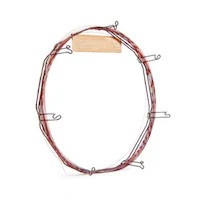
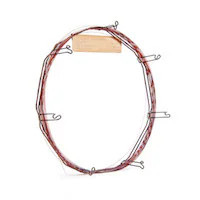
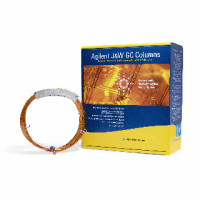
Agilent High-Temperature GC Columns

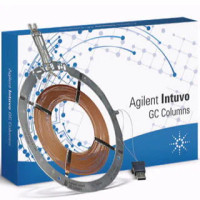
Agilent J&W high-temperature GC columns are purpose-built for applications requiring extreme thermal stability, delivering reliable operation and excellent chromatographic performance at final oven temperatures of 360 to 450 °C. These columns are engineered with specially stabilized polysiloxane chemistries that provide outstanding resistance to thermal degradation, ensuring long column lifetimes, improved peak shapes, and consistent retention behavior under the most demanding high-temperature GC conditions.

The Agilent high-temperature family includes three distinct selectivity options to support a wide range of chemical applications:

  • DB-1ht – A nonpolar 100 percent dimethylpolysiloxane phase ideal for boiling-point-dependent separations, high-temperature hydrocarbon analysis, petroleum and petrochemical testing, and applications requiring maximum thermal robustness.
  • DB-5ht – A low-polarity (5 percent phenyl)-methylpolysiloxane phase offering enhanced selectivity for aromatic compounds, positional isomers, and complex hydrocarbon matrices while maintaining very high thermal limits.
  • DB-17ht – A mid-polarity (50 percent phenyl)-methylpolysiloxane phase designed for applications requiring greater discrimination among structurally similar analytes, including pollutants, semivolatiles, specialty chemicals, and thermally stable pharmaceuticals.

All Agilent high-temperature columns are bonded, crosslinked, and manufactured under the industry's most rigorous quality standards. Their ability to withstand extended high-temperature operation reduces bleeding, maintains sensitivity for GC/MS workflows, and ensures consistent retention indices even under repeated thermal cycling. These columns are the preferred choice for laboratories that require maximum durability and stability in elevated-temperature separations.

Key Definitions
High-Temperature GC Columns
Specialized GC columns engineered to withstand oven temperatures from 360 °C to 450 °C, providing exceptional thermal stability, reduced bleed, and extended column lifetime in demanding analytical workflows.
DB-1ht Phase
A nonpolar 100 percent dimethylpolysiloxane stationary phase designed for boiling-point– dependent separations and high-temperature hydrocarbon, petrochemical, and extended-range volatility analyses.
DB-5ht Phase
A low-polarity stationary phase containing 5 percent phenyl groups, offering improved selectivity for aromatic hydrocarbons, complex petrochemical mixtures, and thermally stable semivolatiles at very high temperatures.
DB-17ht Phase
A mid-polarity 50 percent phenyl stationary phase engineered for greater selectivity among structurally similar compounds, including pollutants, specialty chemicals, pharmaceuticals, and semivolatile analytes requiring elevated-temperature operation.
Thermal Stability
The ability of a GC stationary phase to maintain structural integrity, retain analytes consistently, and minimize bleeding when operated at high oven temperatures for extended periods.
High-Temperature Bleed Control
Proprietary stabilization technologies that reduce stationary-phase bleed at elevated temperatures, improving GC/MS sensitivity, maintaining cleaner baselines, and preserving column performance across repeated thermal cycles.
Frequently Asked Questions
What applications require high-temperature GC columns?
High-temperature GC columns are used for analyses requiring final oven temperatures above conventional limits, including petrochemical characterization, extended-range hydrocarbon analysis, high-boiling semivolatiles, specialty chemicals, and thermally stable pollutants. These columns prevent degradation and maintain performance when methods require oven ramps up to 360–450 °C.
How do DB-1ht, DB-5ht, and DB-17ht differ from one another?
DB-1ht is nonpolar and ideal for boiling-point–driven separations and hydrocarbon matrices. DB-5ht adds slight polarity for improved resolution of aromatics and complex petrochemical mixtures. DB-17ht provides mid-polarity selectivity for structurally similar compounds, including pollutants, semivolatiles, and specialty chemical analytes. All three phases are engineered for extreme thermal stability.
Can high-temperature GC columns be used for GC/MS?
Yes. DB-1ht, DB-5ht, and DB-17ht are all suitable for GC/MS. Their thermally stabilized stationary phases minimize bleed at extreme temperatures, producing cleaner baselines and better sensitivity for late-eluting compounds analyzed by mass spectrometry.
Do high-temperature GC columns have shorter lifetimes than standard columns?
No. High-temperature columns are specifically engineered for extended durability at elevated oven temperatures. Their crosslinked and stabilized polysiloxane chemistries resist thermal breakdown, often resulting in equal or longer lifetimes compared to conventional phases in high-heating applications.
When should I choose DB-1ht vs. DB-5ht vs. DB-17ht?
Choose DB-1ht for purely boiling-point separations or nonpolar hydrocarbon matrices. Choose DB-5ht when additional selectivity for aromatics or moderately polar compounds is needed. Choose DB-17ht for applications requiring mid-polarity discrimination among similar structures, such as pollutants, semivolatiles, and specialty chemicals. Selectivity increases in the order: DB-1ht < DB-5ht < DB-17ht.