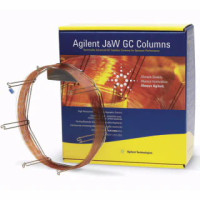
DB-XLB Low-Bleed

DB-XLB Low-Bleed

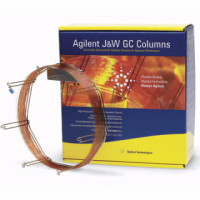
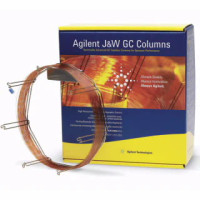
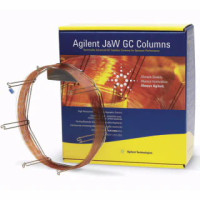
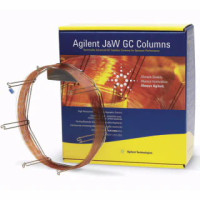
DB-XLB Low Bleed GC/MS Columns

Agilent J&W DB-XLB is a specialized low-polarity GC/MS column engineered for exceptionally low bleed, making it ideal for high-sensitivity, trace-level analyses. Its unique stationary phase chemistry is optimized to deliver excellent selectivity and stable retention for a wide range of environmentally relevant contaminants, including pesticides, herbicides, polychlorinated biphenyls (PCBs), organochlorine compounds, and polycyclic aromatic hydrocarbons (PAHs).

With its extremely low bleed profile, DB-XLB enhances signal-to-noise ratios and preserves mass spectral integrity—critical for confident identification and quantitation of semi-volatiles and other challenging analytes. The column’s rugged bonded-phase construction delivers excellent inertness, minimizing adsorption and reducing analyte degradation across a broad range of matrices.

DB-XLB is widely used in EPA and environmental compliance laboratories as both a primary analytical column and a high-performance confirmation column. It provides complementary selectivity to more standard 5-phase columns, making it particularly valuable for dual-column confirmation of semivolatile organic compounds (SVOCs), pesticide residues, and persistent organic pollutants (POPs).

Its combination of low bleed, low polarity, thermal stability, and environmental application coverage makes DB-XLB a dependable choice for GC/MS workflows requiring maximum sensitivity, reproducibility, and method robustness.
Key Definitions â–¸
Low-Purity / Low-Polarity Phase (DB-XLB)
A specialized stationary phase designed for low-polarity separations and ultra-low bleed. The DB-XLB phase provides enhanced selectivity for environmental contaminants, particularly semivolatiles, organochlorines, and persistent organic pollutants.
Ultra Low Bleed
A performance characteristic describing minimal release of stationary-phase material at elevated temperatures. Ultra low bleed reduces background noise, improves mass spectral clarity, and supports lower detection limits in GC/MS.
PAHs (Polycyclic Aromatic Hydrocarbons)
A class of environmentally significant compounds composed of multiple fused aromatic rings. DB-XLB columns offer strong selectivity and excellent sensitivity for PAH analysis in soil, water, and air samples.
PCBs (Polychlorinated Biphenyls)
A group of persistent organic pollutants commonly measured in environmental laboratories. DB-XLB’s selectivity and thermal stability support accurate PCB profiling and confirmation analysis in GC/MS workflows.
Confirmation Column
A GC column used in tandem with a primary analytical column to verify compound identity, retention time, and selectivity. DB-XLB is widely used as a confirmation column in EPA semivolatile and pesticide methods due to its complementary selectivity and ultra low bleed.
Frequently Asked Questions â–¸
What makes DB-XLB suitable for environmental GC/MS analysis?
DB-XLB offers extremely low bleed, low polarity, and excellent selectivity for common environmental contaminants such as pesticides, PCBs, PAHs, and SVOCs. These characteristics support cleaner mass spectra, high sensitivity, and better quantitative performance in regulated environmental workflows.
Why is DB-XLB often used as a confirmation column?
DB-XLB provides complementary selectivity to standard 5% phenyl columns, making it ideal for confirming analyte identity and retention times in EPA and environmental methods. Its ultra low bleed ensures reliable confirmation in GC/MS without increasing background noise.
What types of analytes show improved performance on DB-XLB columns?
DB-XLB is optimized for pesticides, herbicides, PAHs, PCBs, organochlorine compounds, and other persistent pollutants. Its low polarity and high inertness reduce adsorption and improve peak shape for these environmentally significant analytes.
Is DB-XLB compatible with high-temperature GC/MS methods?
Yes. DB-XLB’s bonded and cross-linked design provides strong thermal stability and allows solvent rinsing when necessary. This durability supports high-temperature programs used in environmental and industrial methods analyzing semi-volatiles.
How does DB-XLB compare to traditional 5% phenyl columns?
Unlike standard 5% phenyl columns, DB-XLB features different selectivity that enhances separation of certain target contaminants, especially SVOCs and halogenated compounds. This makes it highly valuable as a primary or secondary column in multi-column environmental methods.