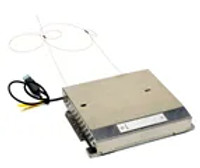
DB-VRX
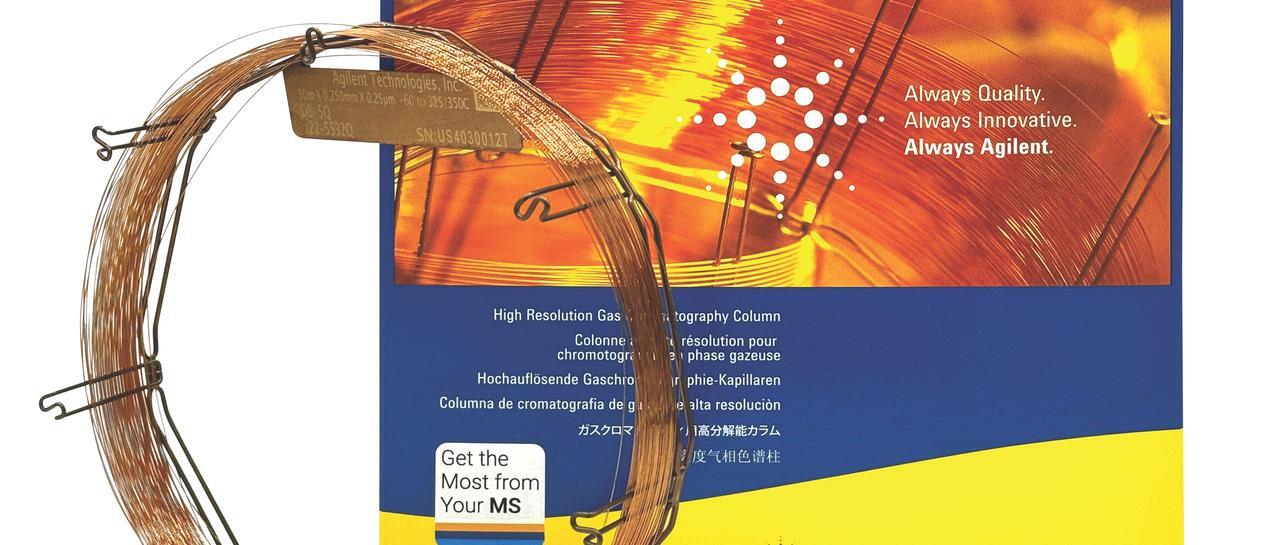
Agilent DB-VRX GC Columns
Agilent J&W DB-VRX GC columns are engineered to deliver exceptional sensitivity, low bleed, and highly specialized selectivity for the analysis of volatile organic compounds (VOCs) in environmental and regulatory testing workflows. Designed specifically for optimum resolution of volatile compounds—including the challenging “six gases”—DB-VRX provides superior separation efficiency without the need for subambient cooling, making it an ideal solution for high-throughput laboratories.
These low-polarity columns offer outstanding peak shapes for a wide range of volatiles, including alcohols, gases, halogenated solvents, and other regulated compounds commonly analyzed in water, soil, and industrial matrices. DB-VRX columns are fully compliant with U.S. EPA Methods 502.2, 524.2, and 8260, ensuring consistent, reproducible performance in compliance-driven VOC workflows.
Built with a bonded and crosslinked stationary phase for maximum durability, DB-VRX provides reliable performance across an operating temperature range of –20 °C to 260 °C. Its robust construction and finely tuned selectivity support high-sensitivity GC/MS detection, improved signal-to-noise ratios, and enhanced trace-level VOC quantitation.
As an authorized distributor of Agilent GC columns, Chrom Tech offers DB-VRX as a best-in-class choice for laboratories requiring superior sensitivity, regulatory compliance, and high-resolution VOC separations.
These low-polarity columns offer outstanding peak shapes for a wide range of volatiles, including alcohols, gases, halogenated solvents, and other regulated compounds commonly analyzed in water, soil, and industrial matrices. DB-VRX columns are fully compliant with U.S. EPA Methods 502.2, 524.2, and 8260, ensuring consistent, reproducible performance in compliance-driven VOC workflows.
Built with a bonded and crosslinked stationary phase for maximum durability, DB-VRX provides reliable performance across an operating temperature range of –20 °C to 260 °C. Its robust construction and finely tuned selectivity support high-sensitivity GC/MS detection, improved signal-to-noise ratios, and enhanced trace-level VOC quantitation.
As an authorized distributor of Agilent GC columns, Chrom Tech offers DB-VRX as a best-in-class choice for laboratories requiring superior sensitivity, regulatory compliance, and high-resolution VOC separations.