

DB-Petro

Application-Specific GC Columns

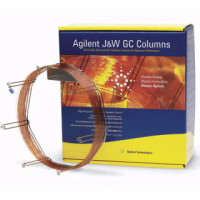
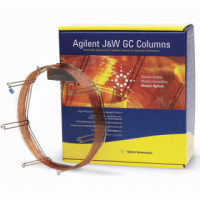
Agilent J&W DB-Petro GC columns are high-resolution, nonpolar columns engineered specifically for detailed hydrocarbon characterization in petroleum and petrochemical workflows. With a 100 percent dimethylpolysiloxane stationary phase, DB-Petro delivers the separation power required for accurate PONA, PIANO, and PNA analyses across complex refinery and process streams.

These columns are bonded, crosslinked, and solvent rinsable, offering outstanding inertness, low bleed, and excellent thermal stability. Their refined phase chemistry supports sharp peak shapes, robust isomer resolution, and reliable retention time reproducibility—essential for method consistency in high-throughput petroleum laboratories performing gasoline blending, reformate profiling, and compositional quality control.

Every DB-Petro column undergoes rigorous Quality Control testing to ensure it meets industry performance benchmarks for key hydrocarbon separations. With an operating temperature range of –60 Â°C to 325/350 Â°C, the column provides the versatility needed to analyze volatile, mid-range, and high-boiling components within a single, stable method platform.

From refinery certification to process monitoring and precision PONA/PIANO reporting, DB-Petro delivers the robustness and analytical reliability required for modern petroleum processing and regulatory environments.

Key Definitions â–¸
PONA (Paraffins, Olefins, Naphthenes, Aromatics)
A classification system used in detailed hydrocarbon analysis of gasoline-range components. DB-Petro columns provide the high-resolution separation needed to quantify and differentiate these four major hydrocarbon families in refinery and petrochemical workflows.
PIANO (Paraffins, Isoparaffins, Aromatics, Naphthenes, Olefins)
An extended hydrocarbon classification system that distinguishes straight-chain paraffins from branched isoparaffins. DB-Petro is engineered to resolve these subtle structural differences with high repeatability for accurate compositional reporting.
PNA (Paraffins, Naphthenes, Aromatics)
A hydrocarbon grouping commonly used in petroleum characterization. DB-Petro columns provide the resolution and thermal stability required for accurate PNA profiling in feedstocks, reformates, and gasoline blends.
Bonded and Crosslinked Phase
A stationary-phase construction that chemically binds the phase to the column wall and adds crosslinking for greater durability. This allows solvent rinsing, reduces bleed, and improves long-term retention stability—critical for high-throughput petroleum analysis.
Retention Index Stability
The ability of the GC column to maintain consistent retention times across many injections and long-term operation. DB-Petro is engineered for superior retention index stability, ensuring accurate DHA calculations and reproducible PONA/PIANO reporting.
Frequently Asked Questions â–¸
What types of analyses are DB-Petro columns best suited for?
DB-Petro columns are ideal for detailed hydrocarbon characterization in petroleum and refinery environments, including PONA, PIANO, and PNA profiling. They excel in gasoline blending studies, reformate evaluation, feedstock purity assessment, and ASTM-aligned DHA workflows.
How does DB-Petro differ from CP-Sil PONA CB or HP-PONA columns?
While all three column types are used for detailed hydrocarbon analysis, DB-Petro offers a standardized nonpolar selectivity optimized for broad PONA/PIANO/PNA profiling. CP-Sil PONA CB and HP-PONA provide extremely high isomeric resolution for DHA, whereas DB-Petro offers robust and reproducible separations across a wider range of refinery process samples.
What is the temperature operating range of DB-Petro columns?
DB-Petro columns operate from –60 Â°C up to 325 Â°C isothermal or 350 Â°C programmed. This wide temperature range enables efficient analysis of both light hydrocarbons and mid-boiling compounds found in gasoline, reformate, and naphtha streams.
How durable are DB-Petro columns for high-throughput petroleum workflows?
DB-Petro columns are bonded, crosslinked, and solvent rinsable, delivering long service lifetimes under heavy instrument use. Their low-bleed characteristics and excellent retention index stability ensure consistent, reproducible performance across thousands of injections.
What QC tests are performed on DB-Petro columns?
Each DB-Petro column is extensively tested to ensure proper resolution, inertness, and retention index accuracy. Factory QC includes verification of critical separations and selectivity benchmarks to guarantee compliance with refinery analytical requirements.