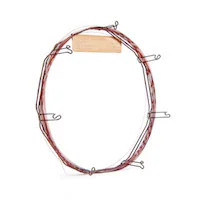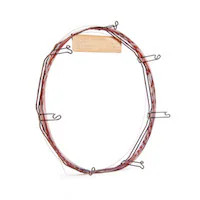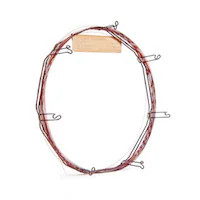
DB-5ht

DB-5ht column

High Temperature GC Columns

Agilent J&W DB-5ht is a low-polarity high-temperature GC column based on a stabilized (5 percent phenyl)-methylpolysiloxane stationary phase. Engineered specifically for applications requiring extended thermal endurance, DB-5ht maintains exceptional stability, low bleed, and consistent retention behavior even during continuous operation at temperatures up to 400 °C.

The bonded, crosslinked, and solvent-rinsable phase provides durability under harsh analytical conditions, supporting efficient elution of high-boiling compounds with sharp peak shapes and reliable quantitative performance. Its balanced phenyl content enhances selectivity for aromatic species, complex hydrocarbon matrices, and thermally stable semivolatiles, while preserving the fast elution characteristics needed in high-temperature workflows.

DB-5ht columns are constructed using precision-engineered high-temperature polyimide-coated fused silica tubing, allowing them to operate safely across a broad temperature range from –60 °C to 400 °C. This rugged design ensures extended column lifetime, cleaner baselines, and dependable reproducibility in GC and GC/MS applications that push the limits of conventional column stability.


Key Definitions
(5 Percent Phenyl)-Methylpolysiloxane Phase
A low-polarity stationary phase that incorporates five percent phenyl groups for enhanced selectivity toward aromatic compounds and complex hydrocarbon mixtures. This chemistry improves resolution while retaining nonpolar separation characteristics.
High-Temperature Stabilization
A specialized manufacturing process used to reinforce the stationary phase and fused silica tubing so the column can operate at temperatures up to 400 °C without excessive bleed or degradation of chromatographic performance.
Polyimide-Coated Fused Silica
A reinforced capillary tubing design that provides mechanical strength and thermal resilience. This coating allows DB-5ht columns to withstand rapid temperature programming and extreme high-temperature holds.
High-Boiling Compound Elution
The process of separating compounds with high boiling points, often requiring temperatures greater than 350 °C. DB-5ht is optimized for fast elution and sharp peak shapes for these analytes, improving throughput and quantitation.
Low Bleed at High Temperature
The minimized release of stationary-phase components at elevated temperatures, resulting in cleaner baselines, improved MS sensitivity, and enhanced long-term stability during high-temperature GC/MS operation.
Frequently Asked Questions
What types of applications benefit from using DB-5ht columns?
DB-5ht is ideal for high-temperature applications such as petrochemical analysis, extended hydrocarbon range testing, aromatic compound profiling, and GC/MS workflows requiring oven temperatures up to 400 °C. It is particularly useful for high-boiling or thermally stable analytes that demand extreme temperature conditions for proper elution.
How does DB-5ht differ from standard DB-5 or DB-5ms columns?
DB-5ht is engineered for extreme thermal operation, offering significantly higher temperature limits than standard DB-5 or DB-5ms columns. It uses a reinforced polyimide-coated fused silica tubing and a specially stabilized stationary phase, resulting in lower bleed, longer lifetime, and better stability under repeated high-temperature cycles.
Is DB-5ht compatible with GC/MS instruments?
Yes. DB-5ht is fully compatible with GC/MS systems and provides low bleed even near its upper temperature limits. This results in cleaner mass spectral baselines and improved sensitivity for late-eluting compounds compared to many conventional high-temperature phases.
Can DB-5ht columns be solvent rinsed?
Yes. DB-5ht is bonded and crosslinked, allowing solvent rinsing to remove contaminants and extend column lifetime. This helps maintain strong chromatographic performance even in heavy-matrix or high-thermal-stress workflows.
What advantages does DB-5ht offer for high-boiling compounds?
DB-5ht provides faster elution, reduced thermal degradation, and better peak symmetry for high-boiling analytes. Its enhanced thermal stability allows late-eluting compounds to exit efficiently without excessive tailing, enabling more reliable quantitation and reduced run times.