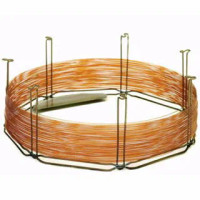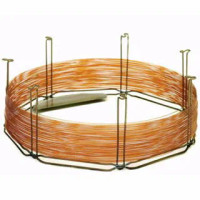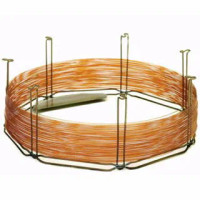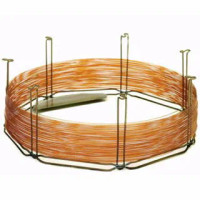
DB-5

DB-5 Column

Standard Polysiloxane GC Columns

Agilent J&W DB-5 is one of the most widely used nonpolar GC columns in analytical laboratories worldwide. Built on a (5%-phenyl)-methylpolysiloxane stationary phase, DB-5 provides highly predictable, boiling-point–driven separations with slightly enhanced selectivity for aromatic and semi-volatile compounds. Its nonpolar, low-bleed profile makes it a versatile and reliable choice for environmental testing, petrochemical analysis, forensics, industrial QC, and routine GC/MS workflows requiring stable baselines and precise mass-spectral integrity.

DB-5 columns are engineered for thermal stability and durability, featuring a bonded and crosslinked stationary phase that withstands aggressive temperature programs while remaining fully solvent-rinsable. With high maximum operating temperatures, DB-5 supports demanding methods involving semi-volatiles and thermally challenging analytes, enabling long-term consistency in high-throughput environments.

Equivalent to USP phase G27, DB-5 is compatible with regulated and compendial methods and is available in a wide range of column dimensions to support diverse application needs. Each column undergoes stringent Agilent QC evaluation—including tests for bleed, sensitivity, inertness, and chromatographic efficiency—to ensure reproducible performance and confidence in analytical results for both GC and GC/MS systems.


Key Definitions
(5%-Phenyl)-Methylpolysiloxane Phase
A low-polarity stationary phase containing 5% phenyl substitution, offering slightly enhanced selectivity compared to 100% PDMS columns. This chemistry improves separation of aromatic compounds, semi-volatiles, hydrocarbons, and complex sample mixtures typical of environmental and forensic workflows.
USP Phase G27
A United States Pharmacopeia–designated stationary phase category defined for specific GC applications. DB-5 is equivalent to USP G27, allowing it to be used in validated, pharmacopeial, and regulatory test methods that require this selectivity.
Bonded and Crosslinked
A manufacturing method in which the stationary phase is chemically anchored (“bonded”) to the inside of the column and further reinforced through crosslinking. This enhances thermal stability, prevents phase stripping, and allows solvent rinsing for longer operational life.
Low Bleed Performance
A characteristic indicating minimal release of stationary phase components at elevated temperatures. Low bleed is essential for GC/MS applications, ensuring clean mass spectra, higher signal-to-noise ratios, and accurate analyte identification.
Thermal Stability
The ability of the column to maintain performance under high-temperature oven conditions. DB-5’s robust bonded and crosslinked design supports high maximum operating temperatures, enabling aggressive temperature programs and long-term use in demanding analytical workflows.
Frequently Asked Questions
What types of applications are best suited for DB-5 columns?
DB-5 is ideal for analyzing aromatic compounds, semi-volatiles, hydrocarbons, pesticides, environmental contaminants, forensics samples, and complex industrial mixtures. Its balanced (5%-phenyl)-methylpolysiloxane selectivity makes it a versatile choice across both GC and GC/MS workflows.
Why is DB-5 considered a “standard” GC/MS column?
DB-5 offers low bleed, strong inertness, and predictable retention behavior—key requirements for accurate mass-spectral identification. It is widely used across environmental, industrial, and forensic labs because it delivers stable baselines, consistent peak shapes, and high signal-to-noise ratios.
Is DB-5 compatible with USP methods?
Yes. DB-5 is equivalent to USP phase G27, allowing it to be used in compendial and regulatory methods that specify G27 column selectivity. This makes it suitable for pharmaceutical and quality-control workflows requiring validated column types.
What are the advantages of a bonded and crosslinked DB-5 column?
Bonding and crosslinking increase thermal stability, reduce phase stripping, and allow the column to be rinsed with solvents—extending column life. This rugged construction supports aggressive oven temperature programs and high-throughput GC environments.
Is DB-5 suitable for high-temperature analyses?
Yes. DB-5 supports high maximum operating temperatures due to its bonded and crosslinked design. This makes it suitable for elevated-temperature separations and methods involving semi-volatile organic compounds or thermally demanding analytes.