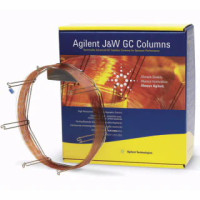
DB-35

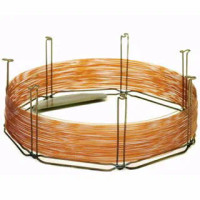
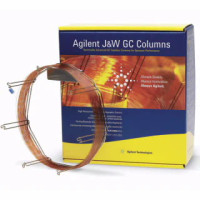
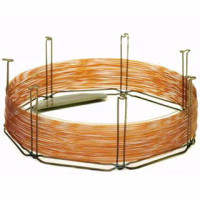
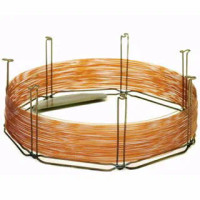
DB-35 Column

Standard Polysiloxane GC Columns

Agilent J&W DB-35 GC columns are mid-polarity (35%-phenyl)-methylpolysiloxane phases designed to deliver excellent separation of structurally similar compounds, making them a strong choice for conformational and isomeric analysis. The elevated phenyl content provides significantly greater aromatic and polar interaction compared to low-phenyl phases such as DB-5 or DB-17, enabling enhanced resolution of complex sample matrices that require more selective chromatographic behavior.

DB-35 columns are bonded, crosslinked, and fully solvent-rinsable, ensuring excellent inertness toward active solutes and strong resistance to degradation during aggressive temperature programs. This rugged construction supports consistently sharp peak shapes and stable baselines, even when analyzing challenging analytes such as pesticides, semivolatiles, flavor and fragrance compounds, and structurally related hydrocarbons.

Equivalent to USP phase G42, DB-35 meets the selectivity requirements for compendial and regulated analytical methods that rely on this stationary phase. With its combination of mid-polarity selectivity, strong inertness, and high thermal stability, DB-35 is a versatile option for both routine separations and advanced method development in GC and GC/MS applications.
Key Definitions â–¸
(35%-Phenyl)-Methylpolysiloxane Phase
A mid-polarity stationary phase containing 35% phenyl substitution. This higher phenyl content enhances aromatic interactions and improves resolution of structurally similar or conformationally related compounds, making it ideal for isomer separations and advanced method development.
USP Phase G42
A United States Pharmacopeia–defined selectivity class used in regulated GC methods. DB-35 is equivalent to USP G42, enabling use in compendial workflows that require this specific stationary phase designation.
Conformational Analysis
The chromatographic evaluation of compounds with different structural conformations or isomers. DB-35’s mid-polarity selectivity enhances separation of closely related molecular structures, making it a strong choice for analytical workflows requiring fine selectivity tuning.
Bonded and Crosslinked
A manufacturing process in which the stationary phase is chemically attached and reinforced through crosslinking. This improves thermal stability, minimizes phase bleed, and permits solvent rinsing, extending column lifetime under demanding GC conditions.
Mid-Polarity Selectivity
A chromatographic behavior between fully nonpolar and highly polar phases. DB-35’s mid-polarity profile improves separation of aromatics, semi-volatiles, pesticides, pharmaceutical intermediates, and structurally complex mixtures.
Frequently Asked Questions â–¸
What applications are best suited for DB-35 columns?
DB-35 is ideal for separating structurally similar or conformationally related compounds, such as isomers, aromatic species, pharmaceuticals, pesticides, and complex organic mixtures. Its mid-polarity behavior provides enhanced selectivity where nonpolar phases like DB-5 may not fully resolve target analytes.
Why is DB-35 considered a good choice for conformational analysis?
The 35% phenyl content increases aromatic and dipole-related interactions, enabling DB-35 to better differentiate closely related structures. This enhanced selectivity supports separations of isomers and conformers that require finer resolution than fully nonpolar phases can offer.
Is DB-35 equivalent to any USP phases?
Yes. DB-35 is equivalent to USP phase G42, allowing it to be used in compendial, pharmaceutical, and regulated GC methods that specify this stationary phase selectivity.
Is DB-35 suitable for GC/MS applications?
Yes. DB-35 provides low bleed, strong inertness, and outstanding peak shape stability, making it excellent for GC/MS when analyzing mid-polarity or aromatic compounds that benefit from enhanced phenyl interactions.
What is the advantage of a bonded and crosslinked DB-35 column?
Bonding and crosslinking increase thermal stability, reduce phase bleed, and allow solvent rinsing. This durability ensures consistent performance during aggressive temperature programming and supports long-term reliability in demanding laboratory environments.