DB-23

DB-23 Column

Standard Polysiloxane GC Columns

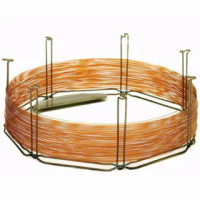
Agilent J&W DB-23 is a high-selectivity GC column engineered specifically for the precise separation of fatty acid methyl esters (FAMEs). Featuring a specially optimized (50%-cyanopropyl)-methylpolysiloxane stationary phase, DB-23 delivers outstanding resolution for saturated, unsaturated, cis-, and trans-FAME isomers—making it a leading choice for food, nutritional, agricultural, and industrial lipid analysis.

The column is bonded, crosslinked, and fully solvent-rinsable, ensuring excellent thermal stability, low bleed, and strong inertness when working with thermally sensitive or reactive analytes. DB-23 is a close equivalent to **USP phases G5 and G48**, ensuring compatibility with compendial and regulated methods requiring these selectivity profiles. Its finely tuned polarity provides superior discrimination between geometric and positional FAME isomers—an essential capability for laboratories performing nutritional labeling, lipid profiling, or regulatory compliance testing.

With its wide operating temperature range and highly reproducible performance, DB-23 is ideal for methods focused on EPA, AOAC, AOCS, and international FAME testing protocols. Whether performing routine food analysis, biodiesel characterization, or advanced lipid structure studies, DB-23 provides the reliability, selectivity, and peak-shape consistency required for accurate quantitation of complex FAME mixtures.


Key Definitions â–¸
(50%-Cyanopropyl)-Methylpolysiloxane Phase
A highly selective mid-polar stationary phase engineered to separate fatty acid methyl esters with exceptional resolution. The 50% cyanopropyl substitution provides strong dipole and polarity-based interactions necessary for distinguishing cis-, trans-, and positional FAME isomers.
USP Phase G5
A United States Pharmacopeia stationary phase classification associated with specific polar GC selectivity. DB-23 is equivalent to USP G5, enabling use in compendial and regulatory methods requiring this phase type.
USP Phase G48
Another USP-defined stationary phase category for polar GC columns. DB-23 matches USP G48 selectivity, supporting lipid profiling and pharmaceutical workflows that rely on this designation.
FAME (Fatty Acid Methyl Esters)
Chemical derivatives of fatty acids commonly analyzed in food, nutritional, and biodiesel testing. FAMEs are prepared via transesterification and separated chromatographically to determine lipid composition, including cis/trans ratios and chain-length distributions.
Bonded and Crosslinked Construction
A chemically reinforced stationary-phase design in which the polymer is permanently attached to the column wall and strengthened through crosslinking. This improves thermal stability, reduces bleed, and allows solvent rinsing—critical for reproducible FAME analysis and long column lifetime.
Frequently Asked Questions â–¸
What applications are DB-23 columns best suited for?
DB-23 is optimized for fatty acid methyl ester (FAME) analysis, including cis/trans isomer separation, nutritional lipid profiling, biodiesel characterization, and food and agricultural testing. Its polarity provides superior discrimination for structurally similar FAME species.
Why is DB-23 preferred for cis/trans FAME separations?
The 50% cyanopropyl stationary phase provides strong polarity-based interactions, allowing DB-23 to resolve geometric isomers with exceptional clarity. This is essential for nutritional labeling, regulatory compliance, and research applications where accurate cis/trans ratios must be quantified.
Is DB-23 equivalent to USP phases G5 or G48?
Yes. DB-23 matches both USP G5 and G48 designations, making it appropriate for compendial and pharmaceutical workflows that rely on these phase classifications for method compliance and reproducibility.
Can DB-23 be used for GC/MS applications?
Yes. DB-23 provides low bleed and strong inertness, making it fully compatible with GC/MS workflows when analyzing FAMEs or other moderately polar compounds. Its clean baselines support high mass spectral fidelity.
What advantages does bonded and crosslinked construction provide for DB-23?
Bonded and crosslinked construction enhances thermal durability, improves peak shape stability, reduces bleed, and allows solvent rinsing for extended column lifetime. This is especially beneficial for high-throughput FAME workflows involving repeated sample injections and complex matrices.