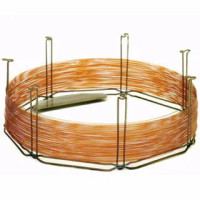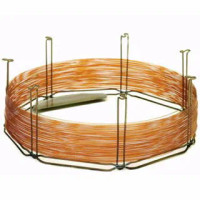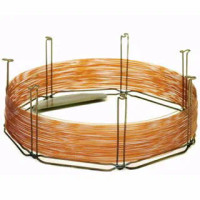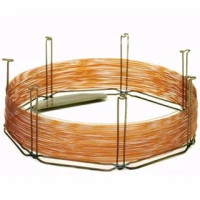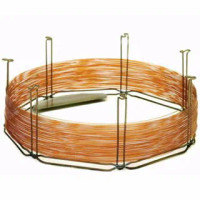
DB-17

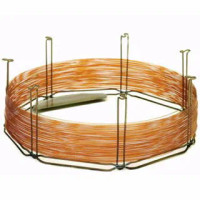
DB-17 Column

Standard Polysiloxane GC Columns

Agilent J&W DB-17 is a mid-polarity GC column engineered with a (50%-phenyl)-methylpolysiloxane stationary phase, offering significantly greater aromatic and dipole-based selectivity compared to lower phenyl-content phases such as DB-5, DB-35, or DB-1. With 50% phenyl substitution, DB-17 provides strong retention and improved resolution for moderately polar analytes, structurally related compounds, and complex organic mixtures that require more discriminating chromatographic separation.

DB-17 is equivalent to **USP phase G3**, making it suitable for regulated methods and compendial analyses that require this stationary phase classification. Its heightened polarity delivers excellent performance for confirmation analysis, particularly in workflows that involve pesticides, pharmaceuticals, industrial chemicals, environmental semivolatiles, and aromatic compounds where orthogonal selectivity to low-polarity columns is essential.

Bonded, crosslinked, and solvent-rinsable, DB-17 provides strong thermal stability, low bleed, and reliable inertness for challenging analytes. Its rugged construction supports aggressive temperature programs, making it suitable for both GC and GC/MS applications that require clean baselines, consistent retention behavior, and high-quality mass spectral integrity. With its balanced mid-polarity profile and rigorous Agilent QC standards, DB-17 is an excellent choice for both routine separations and advanced confirmation workflows.
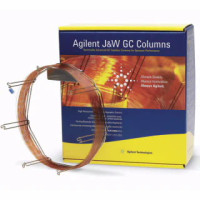
Key Definitions â–¸
(50%-Phenyl)-Methylpolysiloxane Phase
A mid-polarity stationary phase containing 50% phenyl substitution—far higher than typical phenyl levels in GC columns. This chemistry provides strong aromatic, dispersive, and dipole-related interactions, greatly enhancing separation of moderately polar compounds, isomers, and structurally similar analytes.
USP Phase G3
A stationary phase classification defined by the United States Pharmacopeia. DB-17 is equivalent to USP G3, making it suitable for regulated pharmaceutical and compendial GC methods that require this specific selectivity profile.
Confirmation Analysis
The process of verifying analyte identity using a secondary chromatographic column with different selectivity. DB-17’s mid-polarity phase provides orthogonal separation relative to nonpolar columns (e.g., DB-5), making it ideal for confirmatory workflows in environmental, pesticide, and forensic testing.
Mid-Polarity Selectivity
A chromatographic behavior that bridges low-polarity and high-polarity phases. Mid-polarity columns like DB-17 provide enhanced resolution for moderately polar or structurally related analytes, including pharmaceuticals, semivolatile organics, and aromatic compounds.
Bonded and Crosslinked
A durable stationary-phase construction method in which the polymer is chemically anchored to the column wall (bonded) and further reinforced via crosslinking. DB-17’s bonded and crosslinked design ensures thermal stability, low bleed, and compatibility with solvent rinsing for extended column use.
Frequently Asked Questions â–¸
What applications are best suited for DB-17 columns?
DB-17 is ideal for moderately polar analytes, including pesticides, herbicides, pharmaceuticals, semivolatiles, and aromatic compounds. Its 50% phenyl content provides enhanced separation power for structurally similar or conformationally related compounds.
Why is DB-17 recommended for confirmation analysis?
Confirmation analysis requires a secondary column with different selectivity than the primary column. DB-17’s mid-polarity and higher phenyl content provide orthogonal selectivity relative to nonpolar columns like DB-5, making it ideal for confirming analyte identity in environmental, forensic, and regulatory workflows.
Is DB-17 equivalent to any USP phases?
Yes. DB-17 is equivalent to USP phase G3, enabling compliance with compendial and pharmaceutical methods that require this stationary phase classification.
Can DB-17 be used for GC/MS applications?
Yes. DB-17’s bonded and crosslinked construction delivers low bleed, excellent thermal stability, and clean mass spectral backgrounds, making it highly suitable for GC/MS analyses that require high signal-to-noise ratios and reproducible retention behavior.
What benefits does a bonded and crosslinked DB-17 column provide?
Bonding and crosslinking strengthen the stationary phase, enabling high-temperature operation, reduced bleed, and the ability to solvent-rinse the column without degrading performance. This extends column lifetime and maintains peak shape quality over demanding analytical cycles.