CP-Sil 5 CB

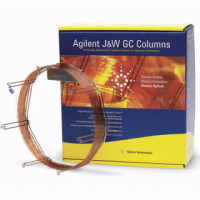
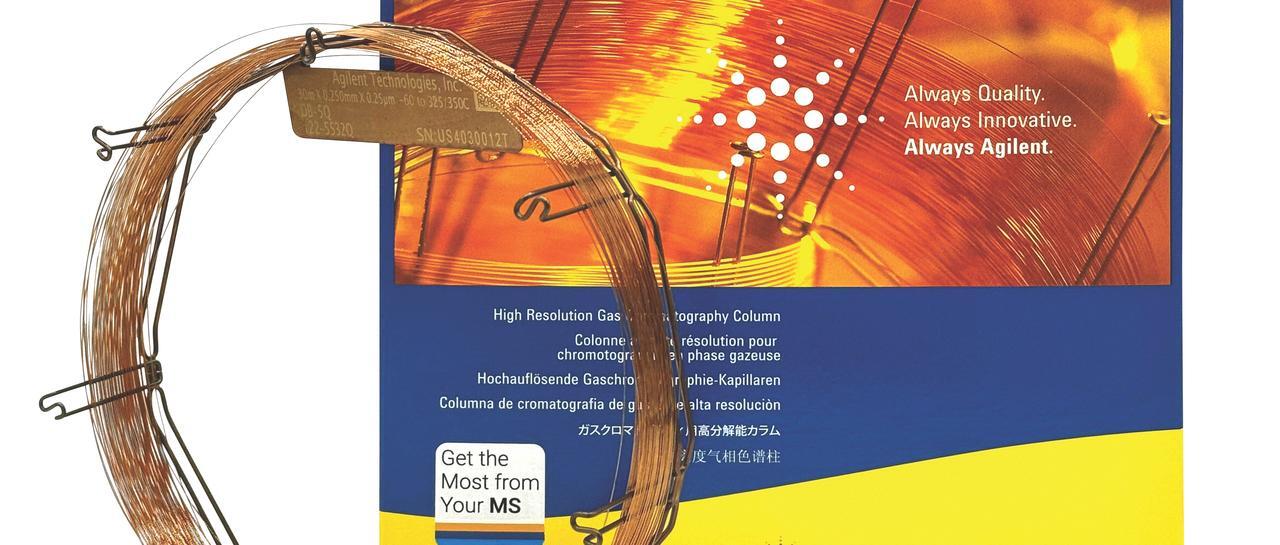
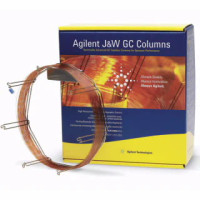
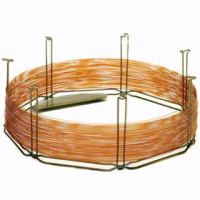
CP-Sil 5 CB Column

Standard Polysiloxane GC Columns

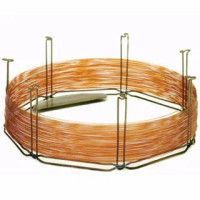
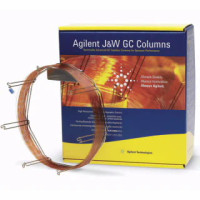
Agilent J&W CP-Sil 5 CB is a robust, general-purpose GC column built on a 100% dimethylpolysiloxane (PDMS) stationary phase, offering highly predictable nonpolar selectivity. Because separations on PDMS phases are driven primarily by boiling point differences, CP-Sil 5 CB delivers consistent, reproducible retention behavior across a wide array of volatile and semi-volatile analytes. This makes it an excellent choice for environmental testing, petrochemical profiling, chemical manufacturing QC, food and fragrance analysis, and everyday method development in GC and GC/MS systems.

CP-Sil 5 CB is engineered with extensive crosslinking and an exceptionally inert surface, enabling reliable analysis of reactive compounds while maintaining stable peak shapes over long analytical sequences. Its rugged design withstands large or repeated solvent injections without compromising chromatographic integrity—an advantage for laboratories processing heavy matrices or performing high-throughput sample runs.

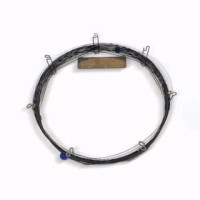
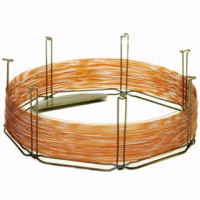
The column is also available in Agilent’s UltiMetal deactivated stainless-steel tubing for the highest operating temperatures and added mechanical durability. This configuration provides improved thermal performance, enhanced resistance to oxygen and moisture exposure, and longer column lifetime under demanding conditions.
Key Definitions â–¸
100% Dimethylpolysiloxane (PDMS) Phase
A fully nonpolar stationary phase commonly used in GC for its predictable retention behavior. PDMS phases separate compounds primarily by boiling point, making them highly versatile for a wide range of volatile and semi-volatile analytes.
Crosslinking
A process that chemically stabilizes the stationary phase by linking polymer chains, increasing thermal stability and mechanical strength. Crosslinking allows CP-Sil 5 CB to tolerate large solvent injections and extended high-temperature operation.
Inertness
The resistance of the column surface to chemical interactions with analytes. High inertness improves peak shape and reduces adsorption, enabling accurate quantitation of reactive, polar, or thermally sensitive compounds.
UltiMetal Tubing
A deactivated stainless-steel column material engineered for higher mechanical strength and superior thermal resistance. UltiMetal columns maintain inertness and perform reliably at elevated temperatures or under harsh analytical conditions.
Boiling Point–Driven Selectivity
A retention mechanism where compound separation is governed primarily by differences in boiling points rather than polar interactions. This makes CP-Sil 5 CB ideal for analyzing diverse nonpolar and semi-volatile mixtures across broad temperature ranges.
Frequently Asked Questions â–¸
What types of applications are ideal for CP-Sil 5 CB?
CP-Sil 5 CB is well suited for analyzing volatile and semi-volatile compounds that separate primarily based on boiling point. Typical applications include environmental volatiles, petrochemical fractions, solvents, hydrocarbons, flavor and fragrance components, and a wide range of industrial organics.
Can CP-Sil 5 CB be used in GC/MS workflows?
Yes. Its low bleed and strong inertness support stable baselines and clean mass spectra, making CP-Sil 5 CB compatible with GC/MS methods requiring high sensitivity and reliable quantitation of nonpolar analytes.
How does CP-Sil 5 CB handle large solvent injections?
Due to its extensive crosslinking and high inertness, CP-Sil 5 CB tolerates large solvent loads without degradation of peak shape or column performance. This makes it ideal for samples with heavy matrices or for methods requiring repeated solvent rinsing.
What benefits does the UltiMetal version provide?
UltiMetal deactivated stainless-steel tubing offers improved mechanical strength and enhanced thermal stability. It is ideal for high-temperature applications, rugged industrial environments, and conditions where maximum durability is required.
How does CP-Sil 5 CB compare to other 100% PDMS columns?
CP-Sil 5 CB offers similar nonpolar selectivity to other 100% PDMS phases, but its enhanced inertness, rugged crosslinking, and tolerance for large solvent injections give it added durability and improved reproducibility—especially in demanding or high-throughput labs.