
Posted by Chrom Tech on 23rd Feb 2026
GC Gas Purification Systems: How to Protect Columns, Detectors, and Analytical Results
GC Gas Purification Systems: How to Protect Columns, Detectors, and Analytical Results
Why Gas Purification is Critical in GC Systems
Gas purity directly impacts chromatographic performance, detector stability, and instrument longevity. Even trace contaminants such as oxygen, moisture, hydrocarbons, or sulfur compounds can degrade stationary phases, increase baseline noise, shorten detector life, and compromise quantitative accuracy.
Gas purification systems remove these contaminants at the source—delivering clean carrier, make-up, and detector gases tailored to specific GC configurations including FID, MS, TCD, ICP-OES, and ICP-MS platforms.
Core Principles of GC Gas Purification
Modern gas purification follows a modular approach: each gas line is treated independently based on detector requirements and sensitivity. Purifiers are installed upstream of columns and detectors to eliminate oxygen, moisture, and hydrocarbons before they enter the analytical flow path.
This targeted strategy ensures maximum column lifetime, reduced background interference, and consistent retention times across all detector types.
Type of Purification Filters
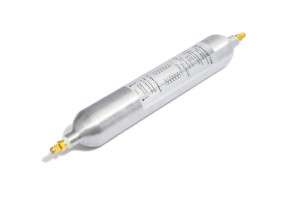
Oxygen Filters remove residual O2 that causes column oxidation and detector instability.
Moisture Filters eliminate water vapor responsible for peak tailing, baseline drift, and stationary phase damage.
Hydrocarbon / Charcoal Filters capture organic vapors and compressor contaminants that increase noise and ghost peaks.
GC/MS Filters combine multiple media to deliver ultra-pure carrier gas required for mass spectrometry sensitivity.
How do purifier configurations differ depending on detector type (FID, GC/MS, TCD, ICP-OES, ICP-MS)?
Detector-Specific Configurations
FID Systems typically require oxygen and moisture purification on the carrier gas (and make up gas, if same), while the fuel lines (hydrogen and air) pass through charcoal filters before entering the detector. If the carrier gas differs from the make-up gas, the make-up gas should also go through a charcoal filter.
GC/MS Systems demand ultra-low oxygen and moisture levels using combined GC/MS filters to protect filaments and maintain vacuum integrity.
TCD Configurations use oxygen and moisture traps on carrier gas lines, with optional make-up gas purification for reference channels.
ICP-OES and ICP-MS systems rely on dual oxygen filtration for plasma and nebulizer gases, often supported by high-flow base plates for continuous operation and optical flush gas purification.
Installation Guidelines and Best Practices
- Install purifiers as close to the GC as possible.
- Minimize fittings to reduce leak points.
- Match purifier type to each individual gas line.
- Use indicating traps after larger trap to visually confirm cartridge exhaustion.
- Maintain service logs to establish replacement schedules.
Proper placement and maintenance dramatically extend column life while stabilizing detector response.
Why On-Demand Purification Matters
Bulk gas cylinders may meet industrial purity standards, but analytical instrumentation requires significantly tighter control. Inline purification delivers laboratory-grade gas at the instrument, eliminating variability introduced by regulators, tubing, and plumbing connections.
The result is lower operating costs, reduced downtime, and higher analytical confidence.