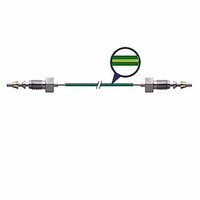
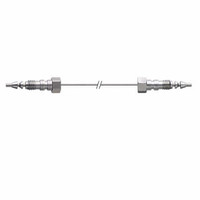
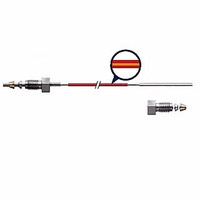
Agilent Capillaries

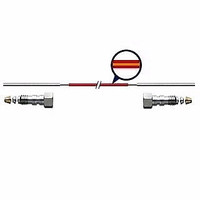
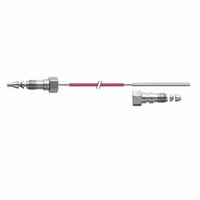
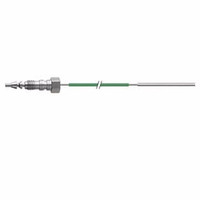
Agilent HPLC capillaries are precision-engineered for use in the high-pressure flow path of liquid chromatography systems, providing reliable connections between LC modules and columns. Each capillary is manufactured to exact Agilent specifications to ensure optimal system fit and help preserve chromatographic performance across your entire LC workflow.

Agilent’s proprietary laser welding process produces perfectly flat capillary ends, virtually eliminating capillary-induced dead volume and supporting accurate, reproducible results. This precision construction helps maintain peak integrity while minimizing dispersion at critical connection points.

Available in a range of materials to support diverse applications, Agilent HPLC capillaries include stainless steel for durability and flexibility in standard analyses, as well as MP35N, PEEK-lined stainless steel, and titanium options for enhanced inertness and corrosion resistance in bio and sensitive workflows.

All Agilent HPLC capillary tubing is color-coded by inner diameter, allowing quick visual identification during installation and maintenance while helping reduce connection errors in complex systems.

Application Highlights

• High-pressure LC flow path connections
• Module-to-column and inter-module plumbing
• Standard and bio-inert chromatography workflows
• Low-dead-volume system optimization

Chrom Tech stocks a broad selection of Agilent HPLC capillaries in multiple materials, lengths, and inner diameters to support routine HPLC, UHPLC, and bio-LC applications, with many common configurations available for fast shipment.

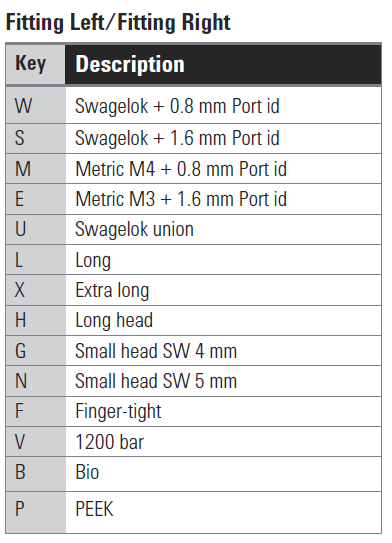
Color Code TableFitting Codes

Key Definitions â–
HPLC Capillary
Precision tubing used in the high-pressure LC flow path to connect modules, valves, and columns while maintaining low dispersion and consistent chromatographic performance.
Dead Volume
Unwanted internal volume at a connection that can cause peak broadening and loss of resolution; minimized by properly matched capillary ID and flat, well-seated ends.
Laser-Welded Flat End
A precisely finished capillary end face produced by laser welding to create a flat, consistent sealing surface that helps prevent capillary-induced dead volume.
Capillary Inner Diameter (ID)
The internal bore size that influences system dispersion and backpressure; Agilent capillaries are color-coded to help quickly identify the correct ID.
Bio-Inert Capillary Materials
Corrosion-resistant and low-interaction materials such as MP35N, titanium, and PEEK-lined stainless steel used to reduce adsorption and metal interactions in bio and sensitive LC workflows.
Frequently Asked Questions â–
What are Agilent HPLC capillaries used for?
Agilent HPLC capillaries are used in the high-pressure LC flow path to connect modules, valves, and columns while maintaining low dispersion and consistent chromatographic performance.
Why are Agilent capillary ends laser welded?
Agilent’s laser welding process produces perfectly flat capillary ends, helping eliminate capillary-induced dead volume and supporting accurate, reproducible results.
What materials are available for Agilent HPLC capillaries?
Agilent offers stainless steel capillaries for standard applications, as well as MP35N, PEEK-lined stainless steel, and titanium options for enhanced inertness and corrosion resistance in bio workflows.
How do I identify the inner diameter of Agilent capillaries?
All Agilent HPLC capillary tubing is color-coded by inner diameter, allowing quick visual identification during installation and maintenance.
Why is matching capillary ID important?
Properly matched capillary ID helps minimize dead volume and peak broadening, preserving resolution and ensuring optimal LC system performance.